Transitioning portable medical equipment and precision instruments from legacy lead-acid power systems to custom lithium-ion battery packs requires rigorous supply chain verification to eliminate heavy-metal contamination. While lithium-ion cell chemistries eliminate the bulk lead grid plates inherent in lead-acid batteries, sub-tier manufacturing processes—such as Battery Management System (BMS) surface-mount technology (SMT) soldering, terminal plating, and raw material processing—can reintroduce hazardous lead exposure risks. For original equipment manufacturers (OEMs) exporting medical electrical equipment under FDA 510(k) or EU Medical Device Regulation (MDR 2017/745) mandates, specifying 100% lead-free lithium-ion battery manufacturing is essential to maintain regulatory compliance, worker safety, and environmental stewardship.
How Does Lithium-Ion Battery Manufacturing Eliminate Industrial Lead Exposure?
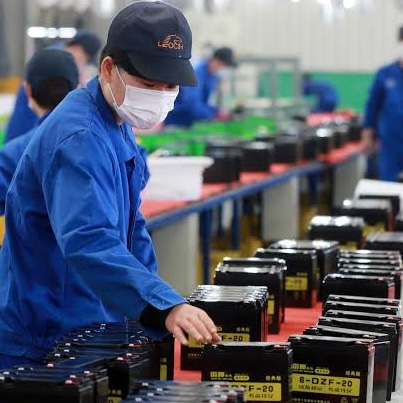
Replacing legacy lead-acid battery manufacturing with lithium-ion cell production removes bulk toxic lead grid plates while requiring strict lead-free solder controls during BMS assembly.
Lead-Acid Grid Casting vs. Lithium-Ion Cell Assembly Chemistry
Lithium-ion battery manufacturing utilizes nickel-manganese-cobalt (NMC) or lithium iron phosphate ($\text{LiFePO}_4$) cathodes instead of toxic lead dioxide ($\text{PbO}_2$) plates, completely eliminating primary lead dust hazards during cell fabrication. In traditional lead-acid battery manufacturing, workers and environmental systems face severe lead exposure from molten lead grid casting, lead oxide paste mixing, and plate curing operations. Conversely, lithium-ion cell production operates within sealed dry rooms using aluminum cathode current collectors and copper anode current collectors. This electrochemistry completely excludes lead ($\text{Pb}$) from the active cell materials, protecting manufacturing personnel and eliminating heavy-metal leaching risks in finished battery cells.
RoHS-Compliant Lead-Free Solder Standards in BMS Production
Battery Management System (BMS) printed circuit boards must utilize SAC305 (Tin-Silver-Copper) lead-free solder paste to prevent heavy-metal contamination during SMT manufacturing. Although lithium-ion battery cells are lead-free, the electronic protection circuit module (PCM) or Smart BMS that controls cell balancing, overcharge protection, and SMBus telemetry can introduce lead if legacy tin-lead ($\text{Sn63Pb37}$) solder paste is used. Certified medical battery manufacturers enforce strict automated SMT assembly protocols using SAC305 alloy ($\text{96.5\% Sn}, \text{3.0\% Ag}, \text{0.5\% Cu}$). This guarantees that all solder joints, surface-mount resistors, integrated circuits (ICs), and terminal wire connections strictly adhere to lead exposure mitigation protocols.
| Manufacturing & Compliance Feature |
Legacy Lead-Acid Battery Manufacturing |
Custom Lithium-Ion Battery Manufacturing |
| Primary Electrochemistry Materials |
Metallic Lead ($\text{Pb}$), Lead Dioxide ($\text{PbO}_2$), Sulfuric Acid |
Lithium Nickel Manganese Cobalt Oxide (NMC) / $\text{LiFePO}_4$ |
| Active Material Lead Hazard |
Extreme (bulk toxic lead grid casting & oxide paste) |
Zero Lead (aluminum cathode & copper anode foils) |
| BMS Solder Alloy Standard |
N/A (rarely utilizes internal smart BMS circuits) |
SAC305 Lead-Free Solder ($\text{Sn96.5/Ag3.0/Cu0.5}$) |
| RoHS Concentration Limit |
Exempt in legacy lead-acid; restricted in electronics |
$< 0.1\%$ ($< 1,000\text{ ppm}$) lead by weight in homogeneous materials |
| Occupational Exposure Concern |
High lead oxide dust inhalation & blood lead level (BLL) monitoring |
Minimal (strictly controlled cleanroom solder fume extraction) |
| Medical Device Export Suitability |
Poor (heavy mass, short cycle life, environmental hazards) |
Excellent (high volumetric energy density, EU MDR ready) |
What Are the Regulatory Standards Governing Lead-Free Lithium Battery Manufacturing?
Global medical device export requires custom lithium-ion battery manufacturers to demonstrate compliance with EU RoHS Directive 2011/65/EU, REACH SVHC regulations, and ISO 13485 quality management systems.
EU RoHS Directive 2011/65/EU and Heavy-Metal Exemption Limits
The EU RoHS Directive restricts lead concentration in medical battery electronics and terminal contacts to less than 0.1% (1,000 ppm) by weight in homogeneous materials. Under Directive 2011/65/EU (and amendment Directive 2015/863), lead is classified as a restricted hazardous substance due to its neurotoxicity and environmental persistence. Medical equipment OEMs must verify that sub-tier battery suppliers obtain certified material declarations for every raw component. This includes verifying that cell steel cans, nickel interconnect tabs, wiring harnesses, thermistors, and printed circuit boards maintain lead concentrations well below the $1,000\text{ ppm}$ statutory threshold without relying on expired industrial exemptions.
ISO 13485 Cleanroom Manufacturing and Traceability Protocols
ISO 13485 cleanroom manufacturing protocols prevent cross-contamination between industrial soldering stations and medical lithium-ion battery assembly lines. In facilities that manufacture both industrial and medical battery packs, cross-contamination from legacy soldering irons or unsegregated rework stations poses a latent compliance risk. ISO 13485 certified battery facilities enforce dedicated, positive-pressure medical assembly lines equipped with dedicated lead-free tooling, automated solder paste inspection (SPI), and full lot-level component traceability from raw cell batches to the finished battery pack serial number.
How Can Medical Device Engineers Verify Lead-Free Integrity in Custom Lithium Battery Supply Chains?
Medical device R&D engineers must audit custom battery suppliers using X-Ray Fluorescence (XRF) material screening, Bill of Materials (BOM) declaration reviews, and third-party laboratory test reports.
X-Ray Fluorescence (XRF) Spectroscopy for Incoming Quality Control
Non-destructive X-Ray Fluorescence (XRF) spectroscopy verifies that BMS connectors, terminal nickel tabs, and solder joints maintain zero lead contamination prior to pack assembly. During Incoming Quality Control (IQC), qualified battery manufacturers utilize handheld or benchtop XRF analyzers to screen incoming electronic components, PCB terminal pads, and hardware fasteners. XRF screening provides instantaneous elemental analysis, detecting trace lead contamination down to parts-per-million levels before components are approved for medical battery production lines.
Supply Chain Auditing and ISO 14971 Hazardous Material dFMEA
Integrating ISO 14971 risk management requires performing Design Failure Modes and Effects Analysis (dFMEA) to evaluate hazardous material exposure and ensure compliance with IEC 62133 vs IEC 60601-1 battery testing requirements. During the preliminary battery design phase, engineering teams map all potential hazardous material exposure vectors—including heavy metals, toxic off-gassing under thermal stress, and chemical electrolyte leakage. Selecting tier-1 lithium-ion cells combined with lead-free BMS construction reduces the environmental risk priority number (RPN), ensuring the power system passes both component-level safety standards and medical system-level evaluations.
Frequently Asked Questions
Q1: Do custom lithium-ion battery cells contain toxic lead?
Lithium-ion battery cells do not contain lead in their active electrochemistry or housing structures.
-
Cathodes utilize lithium transition metal oxides (such as NMC or $\text{LiFePO}_4$).
-
Anodes utilize graphite coated on copper foil current collectors.
-
Enclosures utilize nickel-plated steel or aluminum alloys.
Q2: What lead limit applies to custom battery packs under the RoHS Directive?
The RoHS Directive restricts lead concentration to less than 0.1% (1,000 ppm) by weight in homogeneous materials.
-
Applies to all BMS PCB components, solder joints, and wire terminals.
-
Requires certified material declarations from sub-tier component vendors.
-
Mandates verification testing via X-Ray Fluorescence (XRF) or ICP-AES analysis.
Q3: Which solder alloy replaces lead-based solder in medical lithium-ion BMS assembly?
SAC305 solder alloy is the global standard for lead-free medical battery BMS manufacturing.
-
Composed of 96.5% Tin, 3.0% Silver, and 0.5% Copper.
-
Eliminates hazardous lead exposure during SMT reflow and wave soldering.
-
Provides high thermal fatigue resistance and mechanical bond reliability.
Q4: How does lead-free battery manufacturing support EU MDR 2017/745 compliance?
Lead-free manufacturing satisfies EU MDR requirements regarding CMR (Carcinogenic, Mutagenic, or Toxic for Reproduction) substances.
-
Prevents patient and clinical operator exposure to toxic heavy metals.
-
Simplifies technical file compilation for notified body audits.
-
Ensures full alignment with REACH SVHC restricted substance disclosures.
Q5: How can medical OEMs audit a battery supplier for lead-free manufacturing controls?
OEMs evaluate supplier ISO 13485 quality systems, IQC procedures, and material testing records.
-
Request product-level RoHS 3 and REACH compliance declaration letters.
-
Verify incoming material XRF screening logs for BMS components.
-
Inspect dedicated lead-free SMT assembly lines and soldering stations.
Secure Your Medical Power Supply Chain with Tefoo Energy
Engineering custom lithium-ion battery packs that eliminate lead exposure while meeting strict medical safety standards requires an experienced electrochemical partner. Tefoo Energy manufactures fully compliant 18650, 21700, and custom lithium polymer battery assemblies manufactured under strict ISO 13485 quality management systems.
Request Lead-Free Compliance Documentation & Engineering Support
Accelerate your medical device regulatory submission timeline. Contact senior application engineers at Tefoo Energy to receive product-specific RoHS 3 compliance certificates, REACH declarations, 3D STEP CAD models, and custom smart BMS engineering proposals.