Experiencing Premature Cell Failure? How Do The Internal Parts Of Battery Architecture Dictate System Reliability?
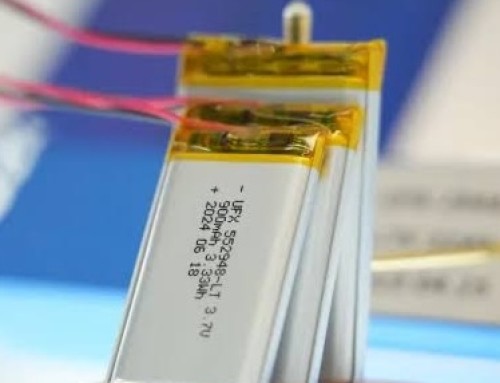
Designing a custom power module for a robotic medical device only to experience a sudden voltage drop during clinical trials is a critical failure for hardware engineers. Battery professionals cannot rely on external software to fix fundamental hardware limitations. The physical and chemical integrity of the power cell dictates the absolute limits of safety, energy density, and cycle life. To prevent thermal runaway and premature capacity degradation, engineers must rigorously specify and optimize every internal component. A complete understanding of the exact parts of battery systems empowers engineering teams to select the appropriate electrochemistry and structural safeguards for demanding B2B industrial applications.
What Are The Core Electrochemical Parts Of Battery Cells That Drive Ion Transfer?
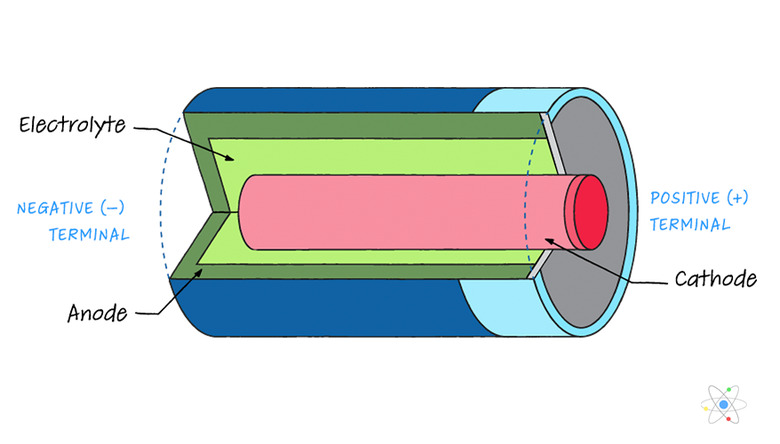
The core electrochemical parts of battery cells responsible for ion transfer include the anode, the cathode, and the electrolyte medium. These fundamental chemical components dictate the absolute energy capacity and the fundamental charging speed of the power module.
Anode and Cathode Electrode Compositions
Electrodes act as the foundational backbone of the energy system, facilitating the exact flow of lithium ions during both the charging and discharging phases. Modifying the physical surface of these electrodes significantly enhances the total electrochemical activity and overall battery performance.
-
Ion Storage and Release: The anode negative electrode stores lithium ions during the charging cycle, while the cathode positive electrode releases lithium ions during the discharging cycle.
-
Material Selection: Modern lithium-ion architectures utilize graphite materials for anode construction, whereas cathode construction relies heavily on lithium cobalt oxide (LCO) or nickel-cobalt-manganese (NCM) chemistries.
-
Engineering Optimization: Battery professionals utilize advanced analytical techniques, including X-ray absorption spectroscopy (XAS) and density functional theory (DFT), to optimize electrode materials for maximum energy efficiency.
-
Conclusion: Specifying the correct active species on carbon electrodes directly determines the high energy density and long cycle life required for consumer electronics and electric vehicles.
Liquid and Solid Electrolyte Solutions
The electrolyte serves as the critical transport medium allowing ions to travel seamlessly between the anode and cathode structures. Engineering the precise chemical formulation of the electrolyte directly impacts the battery’s total capacity, voltage limits, and overall electrochemical performance.
-
Liquid Electrolyte Composition: Standard lithium-ion liquid electrolytes consist of lithium salts, specifically lithium hexafluorophosphate (LiPF6), dissolved within organic solvents such as ethylene carbonate (EC) and propylene carbonate (PC).
-
Conductivity Optimization: Altering the specific mass ratio of EC to PC and adjusting the concentration of conducting salts yields significant variations in ionic conductivity, which engineers measure through electrochemical impedance spectroscopy (EIS).
-
Solid-State Advancements: Solid-state batteries replace liquid solutions with a solid electrolyte, significantly reducing the risk of fire and catastrophic thermal runaway.
| Metric | Solid-State Batteries | Lithium-Ion Batteries |
| Energy Density |
2-3x higher
|
Lower
|
| Production Cost |
8x more
|
Lower
|
| Charging Speed |
Faster
|
Slower
|
| Cycle Life |
8,000-10,000 cycles
|
1,500-2,000 cycles
|
| Safety |
Less prone to risks
|
Higher risk
|
-
Conclusion: Transitioning from liquid organic solvents to solid electrolytes offers superior safety and higher energy density, establishing solid-state architecture as the future of energy storage.
Which Structural Parts Of Battery Modules Prevent Catastrophic Thermal Runaway?
The primary structural parts of battery modules designed to prevent thermal runaway include the internal separator membranes and the metallic current collectors. These physical barriers and conductive pathways ensure smooth operation while minimizing the risk of internal short circuits.
Advanced Battery Separator Technologies
The separator functions as a critical safety membrane that prevents direct physical contact between the anode and cathode while actively permitting ion transmission. Without a structurally intact separator, internal short circuits immediately trigger cell failure and potential fires.
-
Thermal Runaway Prevention: Advanced separator components, such as the LiOnSafe battery separator technology, actively prevent thermal runaway by effectively managing internal cell overheating.
-
Proactive Mitigation: Unlike traditional mechanical safeguards that only contain chemical explosions after they occur, specialized separator innovations stop thermal runaway before the thermal event actually starts.
-
Conclusion: Integrating high-quality separator materials enhances overall operational safety and actively reduces manufacturing production costs by completely eliminating the need for redundant safety features.
Metallic Current Collectors
Current collectors transfer electrons seamlessly between the internal active electrodes and the external electrical circuit. These metallic foils play a vital role in maintaining the total efficiency and long-term reliability of all industrial battery systems.
-
Material Specification: Lithium-ion battery designs dictate the use of specific metals for these parts of battery construction; engineers utilize aluminum foils for cathode current collectors and copper foils for anode current collectors.
| Battery Type | Energy Density | Discharge Time | Overall Efficiency |
| Lithium-Ion |
High
|
Short
|
High
|
| Nickel-Cadmium |
Medium
|
Medium
|
Medium
|
| Nickel-Metal Hydride |
Medium
|
Long
|
Low
|
-
Conclusion: Lithium-ion current collectors deliver superior energy density and overall efficiency, establishing them as the preferred choice for industrial applications requiring highly reliable power delivery.
How Do Electronic Parts Of Battery Systems Optimize Cycle Life And Safety?
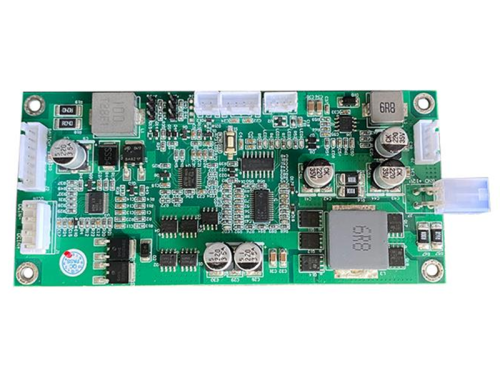
The electronic parts of battery systems, specifically the Battery Management System (BMS), optimize overall cycle life by actively controlling the charging and discharging processes. This central processing unit tracks critical metrics to prevent the mechanical degradation of the internal electrochemistry.
Battery Management System (BMS) Architecture
The BMS operates as the electronic brain of modern battery packs, ensuring optimal performance and uncompromising safety. A robustly designed BMS actively prevents destructive overcharging and deep discharging events, which rapidly degrade total battery capacity over time.
-
State of Charge (SOC): The BMS continuously monitors the SOC to precisely indicate the remaining energy inside the battery cell, ensuring accurate energy availability tracking.
-
State of Health (SOH): The system tracks the SOH of every individual cell to monitor long-term degradation and predict maintenance schedules.
-
State of Power (SOP): The BMS calculates the SOP to guarantee the battery pack can deliver sufficient instantaneous power for high-demand scenarios, such as electric vehicle acceleration.
-
Conclusion: Accurate data collection by the BMS improves energy management, ensuring absolute safety and operational efficiency in complex electric vehicles and battery energy storage systems (BESS).
Controller Area Network (CAN) Integration
The BMS utilizes a Controller Area Network (CAN) protocol for all internal communications, vastly improving the reliability of the interconnected battery components. This integrated communication network allows the electronic control unit to read distributed sensors instantly.
-
Data Transmission: CAN integration provides a resilient pathway for the BMS to receive instantaneous voltage, current, and temperature readings from individual cell modules.
-
System Responsiveness: Rapid communication allows the electronic hardware to disconnect the primary contactors immediately if a localized temperature spike threatens the integrity of the physical separator.
-
Conclusion: Implementing a secure CAN architecture ensures all electronic and chemical parts of battery systems work in perfect synchronization to extend operational longevity.