>>>Contents
1.
What diagnostic parameters dictate how to load test car battery modules for industrial machinery?
Why Do Industrial Vehicles Fail Unpredictably, and how do you load test a car battery or Smart Lithium Pack Correctly?
Hardware engineers managing automated guided vehicles (AGVs) and industrial utility fleets frequently encounter a catastrophic field failure: the vehicle abruptly loses power during a high-torque operation, even though the integrated battery management system (BMS) previously indicated a healthy 90% charge. This severe voltage collapse under operational stress highlights the critical diagnostic flaw of relying solely on open-circuit voltage (OCV) measurements. To guarantee reliable energy delivery for heavy-duty robotics and medical infrastructure, engineers must implement a rigorous battery stress test. This technical guide details the precise electromechanical procedures and equipment specifications required to evaluate true capacity retention and internal resistance under simulated real-world conditions.
What diagnostic parameters dictate how to load test car battery modules for industrial machinery?
To evaluate how to load test car battery modules accurately, engineers must measure the voltage drop against a specific simulated current to calculate internal resistance and confirm power delivery capabilities. A standard open-circuit voltage check routinely fails to reveal degraded internal cell structures or weak connections. By applying a controlled load on battery terminals, technicians can accurately simulate the demanding operational conditions that industrial power supplies face daily.
Evaluating the active battery load versus Open-Circuit Voltage (OCV)
-
Core Conclusion: Evaluating an active battery load provides the only empirical method to identify high internal resistance, weak individual cells, and overall capacity loss within a multi-cell battery pack.
-
Detailed Analysis: When technicians load test a car battery or an industrial lithium pack, the diagnostic equipment draws a heavy electrical current that forces the internal chemical components to react rapidly. While an OCV check might display a perfectly normal voltage reading on a heavily degraded lead-acid or lithium-ion unit, applying a massive current will cause the voltage output to plummet below acceptable operational thresholds. This severe voltage drop under stress proves that the power supply can no longer sustain high-performance tasks.
-
Concluding Statement: Consequently, a formal load capacity test remains the definitive engineering standard to verify that the energy storage unit can sustain continuous power delivery for critical machinery without triggering unexpected shutdowns.
Which hardware specifications define a reliable battery tester with load test functionality for LiFePO4 chemistry?
A professional battery tester with load test functionality must handle discharging currents up to 40A and support a broad voltage range from 9V to 99V to accommodate diverse energy architectures. Utilizing specialized diagnostic equipment, such as the BCT40 tester, ensures consistent performance evaluations across various modern chemistries, including complex LiFePO4 and NMC batteries.
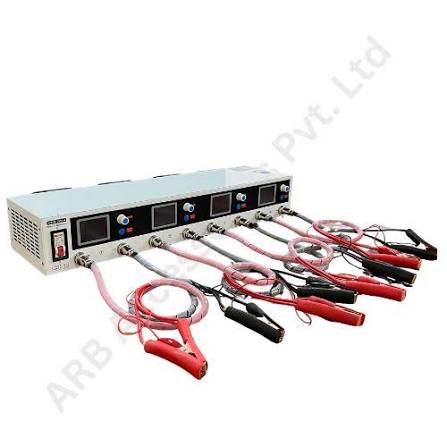
Equipment selection for heavy battery loading and operational simulation
-
Core Conclusion: Selecting industrial-grade testing hardware allows engineers to simulate exact operational profiles and measure continuous battery loading behavior without triggering premature BMS safety cut-offs.
-
Detailed Analysis: Advanced diagnostic tools offer precise software control over the discharge parameters to ensure high accuracy and consistency.
-
High Current Capacity: The hardware must sustain high discharging currents (up to 40A) to successfully mimic the extreme start-up sequence of industrial motors and robotic actuators.
-
Broad Voltage Range: Wide voltage compatibility (9V to 99V) ensures the testing equipment can evaluate everything from standard 12V starter batteries to complex 48V infrastructure power supplies.
-
Automated Safety Integration: The testing hardware must incorporate automated safety functions to prevent over-discharging and overheating, thereby ensuring total operator safety during high-throughput testing.
-
-
Concluding Statement: Deploying high-capacity automated testers guarantees that the collected performance data accurately reflects the actual field reliability and efficiency of the lithium power supply.
What are the exact engineering procedures defining how to load test a car battery and smart lithium pack?
The exact procedures defining how to load test a car battery or lithium pack require technicians to inspect terminal integrity, verify a high state of charge, secure the tester leads, and apply a manufacturer-specified continuous discharge. Adhering strictly to these sequential engineering steps ensures precise data collection and prevents hazardous thermal events or external short circuits during the evaluation.
Executing the diagnostic procedure and verifying how to pass a load safely
-
Core Conclusion: Verifying how to pass a load safely requires connecting the positive and negative leads flawlessly before applying the simulated operational stress to prevent severe electrical hazards.
-
Detailed Analysis: Hardware engineers must follow strict step-by-step protocols to generate accurate readings and maintain industrial safety standards.
-
Step 1: Physical Inspection & Charge Verification: Inspect the battery casing for physical deformation, swelling, or corrosion, and use a multimeter to verify the State of Charge (SoC) is at least 80% prior to testing.
-
Step 2: Secure Hardware Connection: Attach the tester’s positive lead to the positive terminal, followed immediately by the negative lead to the negative terminal, ensuring zero debris interferes with the metal contacts.
-
Step 3: Apply Load & Monitor Voltage: Apply the specific load designed for the battery chemistry and continuously monitor the real-time voltage drop using an integrated multimeter to observe thermodynamic changes.
-
-
Concluding Statement: Maintaining rigorous hardware connection standards and closely monitoring thermodynamic behavior ensures both operator safety and high-fidelity performance data collection for subsequent analysis.
Which electromechanical parameters indicate a battery failed load test requiring immediate replacement?
A battery failed load test is definitively indicated when the State of Health (SOH) metric drops below 70% of nominal capacity or when the operational voltage drops significantly outside the manufacturer’s specified range. Identifying these specific degradation markers early allows maintenance teams to schedule targeted replacements before unexpected battery failures disrupt critical industrial operations.
Interpreting State of Health (SOH) and critical degradation metrics
-
Core Conclusion: Analyzing the active voltage curve and capacity retention data successfully identifies severe internal degradation mechanisms, such as the Loss of Lithium Inventory (LLI) or dangerously high internal resistance.
-
Detailed Analysis: Proper diagnostic interpretation relies on comparing baseline nominal specifications against the active test results to evaluate degradation modes.
| Diagnostic Parameter | Engineering Definition | Critical Failure Threshold |
| State of Health (SOH) |
The precise ratio of present measured capacity or resistance to the fresh battery’s nominal specifications.
|
SOH metric drops below 70%.
|
| Voltage Stability |
The hardware’s ability to maintain voltage within the specified operational range while under a severe simulated load.
|
Significant voltage drop below the minimum operating threshold.
|
| Remaining Useful Life (RUL) |
The estimated number of remaining operational cycles before the power supply reaches the end of its service life.
|
Approaching the 70% or 80% capacity retention limit.
|
-
Concluding Statement: When electrochemical impedance data confirms a depleted SOH or severe voltage instability, B2B hardware engineers must immediately initiate replacement protocols to maintain the strict safety and efficiency standards of industrial power systems.