Applying ISO 13485 Clause 7.3 design controls to custom 18650 medical battery packs mandates a disciplined engineering framework: defining explicit design inputs, compiling a complete Design History File (DHF), conducting ISO 14971 dFMEA risk management, executing rigorous Verification and Validation (V&V) testing (IEC 62133-2/UL 2054), and enforcing strict Engineering Change Order (ECO) controls.
What Are ISO 13485 Design Controls and Why Are They Critical for Medical 18650 Battery Packs?
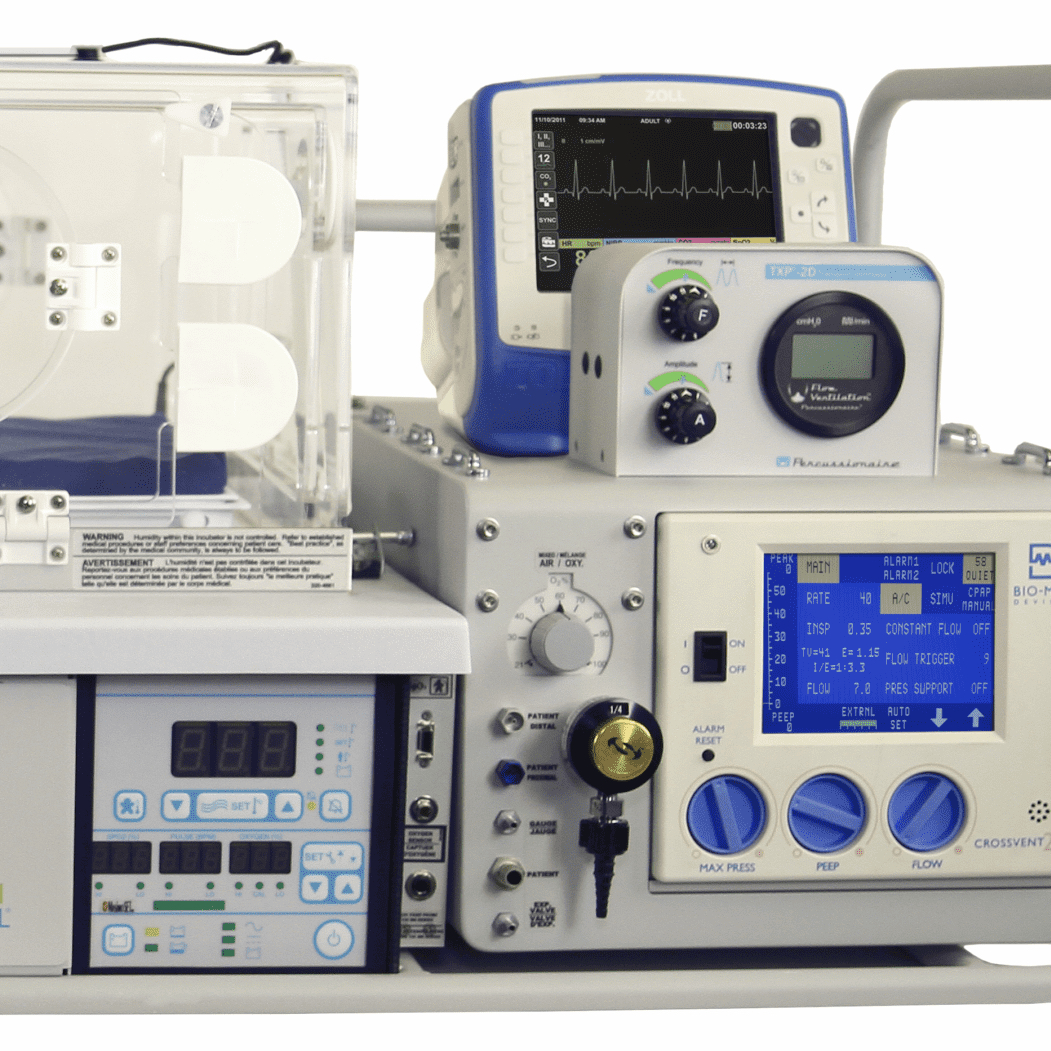
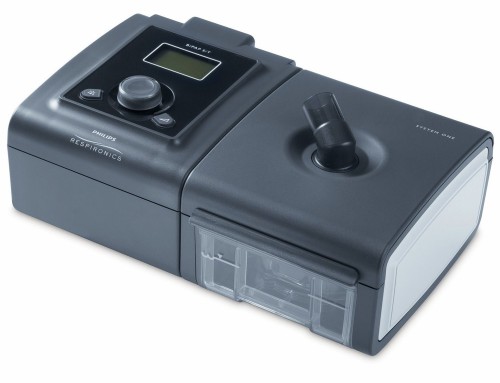
Medical devices such as portable infusion pumps, surgical power tools, patient monitors, ventilators, and handheld diagnostic ultrasounds rely on internal lithium-ion battery packs as primary power sources or critical un-interruptible backup systems. Unlike consumer electronics or industrial hand tools, medical electrical equipment operates in environments where power disruption, thermal instability, or unexpected shutdown can directly compromise patient safety and cause irreversible clinical harm.
ISO 13485:2016 Clause 7.3 (“Design and Development”) specifies regulatory quality system requirements to ensure medical products are engineered systematically, safely, and reproducibly. When applied to custom 18650 lithium-ion battery pack engineering, ISO 13485 design controls bridge the gap between electrochemistry and medical device compliance (such as FDA 21 CFR 820.30 and EU MDR 2017/745). Standard commercial off-the-shelf (COTS) battery packs lack documented risk assessments, full component traceability, and formal design verification. In contrast, an ISO 13485 design-controlled battery pack guarantees that every engineering decision—from cell chemistry selection to dual-layer BMS protection circuits—is documented, validated, and traceable throughout the product lifecycle.
Under ISO 13485 design controls integrated with ISO 14971 risk management, medical battery BMS designs mandate secondary hardware protection independent of software/MCU control. The circuit must trigger a secondary chemical fuse or high-side solid-state cut-off within $t_{\text{response}} < 100\,\mu\text{s}$ upon detecting an overvoltage condition above $V_{\text{ov}} = 4.280\text{ V} \pm 0.025\text{ V}$ per cell, reducing the Risk Priority Number (RPN) from an unacceptable severity level to $\text{RPN} < 10$.
How to Implement Clause 7.3 Design Controls Across the Battery Pack Development Lifecycle
1. Design and Development Planning (ISO 13485 Clause 7.3.2)
The design phase initiates with a formal Design and Development Plan (DDP). The DDP defines engineering responsibilities, project milestones, quality gate reviews, and risk management activities. It identifies cross-functional teams comprising electrochemical engineers, BMS hardware design engineers, firmware developers, mechanical engineers, and quality assurance specialists.
2. Defining Comprehensive Design Inputs (ISO 13485 Clause 7.3.3)
Design inputs establish the unambiguous technical requirements for the 18650 pack. Inputs must cover functional, operational, environmental, and safety criteria:
-
Electrical Inputs: Nominal voltage (e.g., 14.4V for 4S configuration), rated capacity (e.g., 3,350 mAh per cell), continuous current load, pulse load profile (e.g., motor inrush current spikes up to 12A for 500ms), and SMBus v1.1 / I2C communication protocol requirements.
-
Environmental & Mechanical Inputs: Ambient operating temperature range (-20°C to +60°C during discharge; 0°C to +45°C during charge), mechanical drop resistance (1.2m drop tests onto concrete), IP level sealing (IP65/IP67), and UL 94-V0 enclosure flame retardancy.
-
Regulatory Inputs: Compliance mandates including IEC 62133-2, UL 2054, UN 38.3, and ISO 10993 cytotoxicity standards for skin-contact housing materials.
3. Generating Compliant Design Outputs (ISO 13485 Clause 7.3.4)
Design outputs represent the physical and technical deliverables that must satisfy design inputs. Core battery design outputs include multi-layer PCB schematics and Gerber files, 3D CAD models (STEP format) defining mechanical enclosures, Bill of Materials (BOM) specifying medical-grade components, cell grading and sorting specifications, assembly SOPs, and automated end-of-line (EOL) test scripts.
4. Formal Design Reviews (ISO 13485 Clause 7.3.5)
At designated project gates (e.g., Concept Freeze, Prototype Verification, Pre-Production Transfer), formal multi-disciplinary design reviews are conducted. Reviewers evaluate whether the design outputs satisfy design inputs, assess ISO 14971 dFMEA risk controls, and verify that prototype testing yields no unexplained failures.
5. Design Verification (DV) vs. Design Validation (VAL) (ISO 13485 Clauses 7.3.6 & 7.3.7)
Design Verification proves through objective evidence that design outputs meet design inputs. DV testing encompasses electrical load stress testing, dual-protection hardware triggering speed, EMC/EMI immunity, temperature chamber cycling, and single-fault testing (e.g., shorting a balancing resistor or failing a MOSFET).
Design Validation ensures the finished battery pack performs reliably under actual or simulated clinical operating conditions. Validation evaluates human factors during hot-swapping, battery fuel gauge accuracy (SMBus remaining state-of-charge readout within ±1%) during extended clinical usage, and runtime stability in mobile medical carts or portable oxygen concentrators.
Technical Comparison Matrix: ISO 13485 Medical vs. Standard Commercial Battery Pack Engineering
| Engineering & Quality Attribute |
Standard Commercial 18650 Battery Pack |
ISO 13485 Medical Design-Controlled 18650 Pack |
| Documentation Framework |
Basic datasheet and simplified BOM |
Complete Design History File (DHF) & Device Master Record (DMR) |
| Risk Management Protocol |
Standard PCM overcharge/overdischarge circuit |
ISO 14971 dFMEA & pFMEA with single-fault hardware redundancy |
| Cell Sorting & Grading Criteria |
General voltage sorting ($\Delta V \le 20\text{mV}$) |
5-point grading: $\Delta R_{\text{DC}} \le 2.0\text{ m}\Omega$, $\Delta Q \le 0.5\%$, $\Delta V \le 5\text{mV}$ |
| BMS Protection Architecture |
Single IC protection board, basic switching FETs |
Dual independent protection (Primary BMS IC + 2nd-Level Hardware IC + Thermal/Chemical Fuse) |
| Component Traceability |
Batch-level tracking, vendor substitution allowed |
100% full component traceability from raw cell lot to finished pack serial number |
| Change Control (ECN/ECO) |
Unannounced BOM component substitutions common |
Strict ECO process; zero BOM changes without customer notification & re-qualification |
| Regulatory Compliance |
UN 38.3 transport safety only |
IEC 62133-2, UL 2054, UN 38.3, ISO 14971, ISO 13485, CE MDR ready |
Integrating ISO 14971 Risk Management with Battery Hardware Design
Under ISO 13485 design controls, risk management is not a one-time checklist but a continuous process governed by ISO 14971. A thorough Design Failure Modes and Effects Analysis (dFMEA) must be performed on the 18650 battery architecture prior to schematic freeze.
High-risk hazards in custom medical 18650 battery packs include:
-
Internal Micro-Short Circuits: Mitigated by selecting premium tier-1 cells (e.g., Panasonic/LG/Samsung) subject to 100% X-ray inspection, coupled with cell-to-cell structural isolation using UL 94-V0 cell holders to prevent thermal runaway propagation.
-
BMS MOSFET Latch-Up under Overvoltage: Mitigated by adding an independent secondary protection IC (e.g., TI BQ2947 series) that monitors individual cell voltages and independently blows a secondary chemical fuse (e.g., Schott SEFUSE) if primary protection fails.
-
Firmware Freeze in Smart Fuel Gauge: Mitigated by dedicated hardware watchdogs that automatically reset the SMBus communications processor without interrupting power output from the cells to the host medical device.
What Belongs in the Medical Battery Pack Design History File (DHF)?
For medical device OEMs seeking FDA 510(k) clearance or CE MDR certification, notified bodies and regulatory auditors strictly examine the battery pack Design History File (DHF). An ISO 13485 compliant battery DHF compiled by Tefoo Energy contains:
-
Design Inputs Document (DID): Formally approved specifications defining electrical, mechanical, environmental, and safety requirements.
-
ISO 14971 dFMEA and pFMEA Reports: Quantitative risk analyses documenting initial RPNs, mitigation controls, and post-mitigation residual risk verification.
-
Complete Engineering Outputs: Schematic drawings, multi-layer PCB layout files, mechanical enclosure 3D STEP models, component datasheets, and approved vendor list (AVL).
-
Design Verification and Validation Reports (DVR/DVAR): Certified lab test reports covering IEC 62133-2, UL 2054, UN 38.3, temperature cycling, vibration/shock, drop tests, and single-fault simulation data.
-
Traceability Matrix: A bidirectional matrix mapping every design input requirement directly to its corresponding design output, dFMEA risk control, and passed verification test clause.
Frequently Asked Questions by Medical Device OEM Engineers
Q1: What is the primary difference between Design Verification and Design Validation for a medical battery pack?
Design Verification confirms through objective testing that engineering outputs satisfy design inputs (e.g., testing that the BMS cuts off current at exactly 14.8V). Design Validation confirms that the final battery pack meets user needs and intended clinical use (e.g., verifying a ventilator operates for 8 hours on battery power during patient transport).
Q2: Why is unannounced component substitution prohibited in ISO 13485 medical battery manufacturing?
In medical manufacturing, replacing a BMS MOSFET or passive component without formal Engineering Change Notice (ECN) review can alter safety timings, EMC characteristics, or thermal parameters. Unannounced changes invalidate the battery’s regulatory certifications (IEC 62133-2) and create unacceptable patient safety risks.
Q3: How does ISO 13485 enforce secondary hardware protection in custom 18650 packs?
ISO 13485 requires single-fault tolerance. If the primary BMS microcontroller or switching FET fails during an overcharge event, an independent secondary hardware circuit must detect the fault and physically permanently blow a secondary thermal/chemical fuse, preventing cell overcharge and thermal runaway.
Q4: How does a battery manufacturer’s DHF support our FDA 510(k) or CE MDR submission?
A complete battery DHF provides medical OEMs with turnkey regulatory documentation. Instead of spending months testing and compiling risk files, OEMs can directly integrate our ISO 14971 dFMEA, IEC 62133-2 test reports, and traceability matrix into their device’s master technical file for accelerated regulatory approval.
Partner with Tefoo Energy for ISO 13485 Certified Medical Power Solutions
Navigating medical device power supply regulations requires a custom battery partner who understands electrochemical engineering and ISO 13485 design controls. Tefoo Energy delivers fully compliant 18650, 21700, and lithium polymer battery packs tailored to your device’s exact mechanical and electrical specifications.
Request ISO 13485 DHF Sample Documentation & CAD Files
Accelerate your medical device development cycle. Contact our senior medical battery engineering team to receive complete DHF sample packages, 3D STEP models, custom BMS SMBus protocol documentation, and IEC 62133-2 test reports.