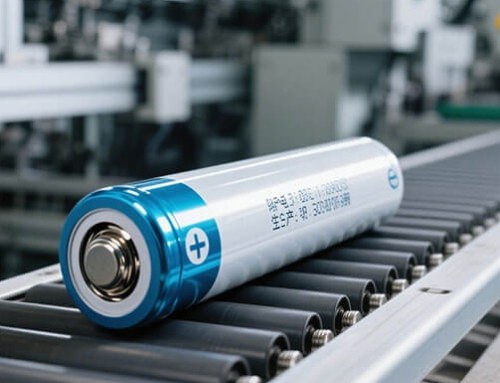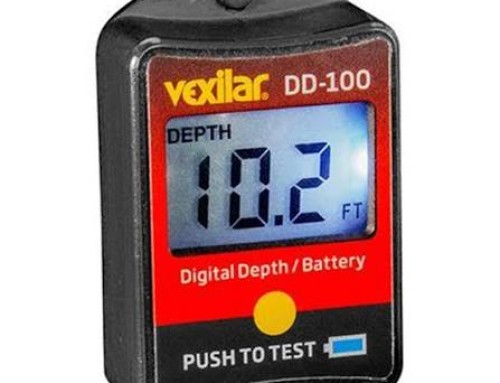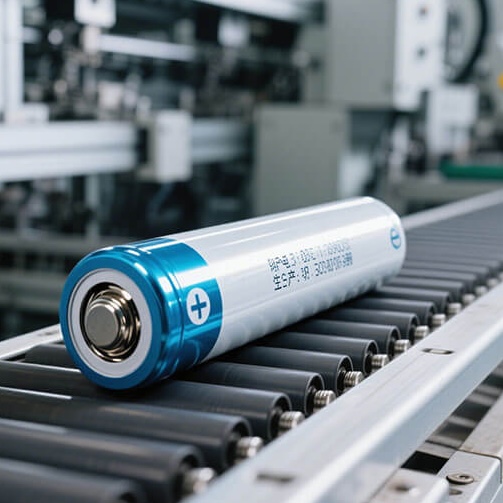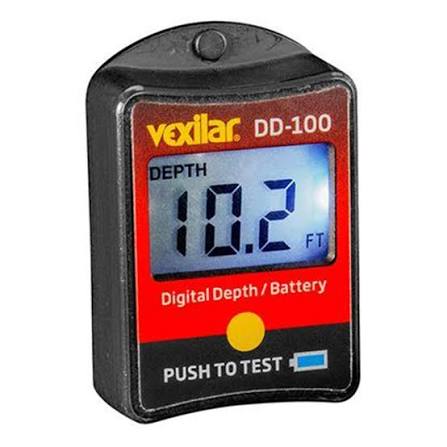
Hardware engineering teams building industrial instrumentation, such as oscilloscopes and specialized diagnostic medical equipment, face strict constraints regarding volumetric energy density, thermal dissipation, and sustained peak current loads. Effective lithium ion battery pack design requires the precise integration of fundamental electrochemical cells into structurally sound, thermally regulated modules governed by advanced silicon microprocessors. Engineers design batteries to meet defined operational parameters by calculating accurate watt-hour (Wh) capacities, selecting appropriate lithium-intercalation anode materials, and implementing hardware-level fault isolation protocols to prevent catastrophic thermal propagation.
Key Takeaways
-
Implementing a modular battery architecture reduces total physical disassembly time by 60% and lowers lifetime field service costs by 40% compared to monolithic pack constructions.
-
Advanced Battery Management Systems (BMS) integrated into industrial packs maintain individual cell voltage monitoring precision within ±15mV and temperature measurement accuracy within ±1.0°C (±1.8°F).
-
Engineered thermoplastic enclosure materials withstand direct 1100°C (2012°F) flame exposure for over five minutes while maintaining internal cell temperatures strictly below 200°C (392°F).
How Do Engineers Configure Cell Architectures for Specific Power Loads?
Electrochemical Chemistry and Form Factor Selection
Lithium-ion cells utilizing Lithium Nickel Manganese Cobalt Oxide (NMC) or Lithium Iron Phosphate (LFP) chemistries dictate the baseline gravimetric energy density and thermal stability limits for the entire power system. The physical geometry of the cell—whether cylindrical, prismatic, or pouch—directly impacts spatial utilization and mechanical robustness. Prismatic cells utilize a rectangular geometry that maximizes volumetric efficiency within the battery enclosure while delivering superior cycle life performance and enhanced physical safety characteristics. Conversely, pouch cells packaged in flexible aluminum foil enclosures provide the highest energy density available, allowing direct integration into compact diagnostic hardware profiles without requiring heavy secondary structural casings. The electrochemical reaction continuously transfers lithium ions between the graphite-based anode and the specific metal oxide cathode through the liquid electrolyte.
Standard Cell Format Technical Specification Comparison
| Cell Form Factor | Physical Enclosure | Primary Advantage | Typical Industrial Application | Integration Characteristics |
| Cylindrical | Rigid Metal Can |
Proven thermal stability and mechanical strength
|
High-discharge motorized equipment |
High power output capability, lower overall energy density
|
| Prismatic | Rectangular Metal/Plastic |
Superior volumetric space utilization
|
Automated machinery, Grid Storage |
Reduces required electrical interconnections, simplifies assembly
|
| Pouch | Flexible Aluminum Foil |
Maximum achievable energy density
|
Portable electronic testing devices |
Requires careful external mechanical compression and structural housing
|
Modularity versus Cell-to-Pack (CTP) Integration
Cell-to-pack (CTP) manufacturing approaches increase total internal volume utilization by 20% to 30% and reduce total component counts by 40% by eliminating traditional intermediate module structures entirely. However, modular designs remain heavily favored for high-reliability industrial hardware because they provide superior electrical isolation between cell blocks, effectively containing short-circuit events and limiting thermal runaway propagation to a single segmented module. By grouping multiple cells in series configurations to scale voltage and parallel configurations to scale ampere-hour capacity, engineers create isolated sub-systems equipped with localized temperature sensing arrays. A standard portable diagnostic instrument utilizing a 4s2p configuration (four cells in series, two cells in parallel) yields a nominal operating voltage of 14.4V while doubling the base capacity from 2,400mAh (2.4Ah) to 4,800mAh (4.8Ah). While standard module form factors fulfill most baseline industrial requirements, original equipment manufacturers developing sensitive spectrum analyzers or medical test equipment often require custom lithium ion battery pack design solutions featuring specialized structural integration, such as 0.15 mm (0.006 in) laser-welded pure nickel tabs and conformal IP67-rated potting to protect printed circuit boards from chemical and environmental ingress.
What Thermal and Electrical Safety Systems Prevent Operational Failures?
Thermal Management and Heat Dissipation Topologies
Lithium-ion chemistries maintain optimal electrochemical performance and cycle longevity exclusively within a strict temperature window of 15°C to 35°C (59°F to 95°F). Operating a battery pack above 50°C (122°F) accelerates irreversible capacity fade, while continuous operation exceeding 60°C (140°F) drastically escalates the statistical probability of thermal runaway events. Conversely, sub-zero ambient conditions physically reduce discharge capacity and heavily increase direct current internal resistance, limiting operational efficiency. Modern pack engineering utilizes sophisticated thermal management techniques to maintain this equilibrium, including phase change materials (PCM) for passive buffering and microchannel liquid cooling systems for active heat rejection. Implementing advanced dual-PCM thermal management architectures reduces peak internal operating temperatures by 1.3°C (2.34°F) compared to legacy single-PCM legacy designs, ensuring safe sustained peak load currents.
Battery Management System (BMS) Protection Parameters
Advanced Battery Management Systems utilized in demanding applications execute high-accuracy cell monitoring, delivering continuous current measurement precision within ±1% to 2%. The BMS operates as the primary logic controller for the entire energy storage system, executing critical active cell balancing algorithms to equalize the state of charge across series-connected cell strings. Voltage regulation circuits managed by the BMS enforce strict hardware cutoffs to protect individual electrochemical cells from dangerous overcharge and destructive deep discharge states. When voltage or thermal thresholds exceed programmed safe limits, the logic board commands integrated contactors and pyrofuses to immediately disconnect the high-voltage bus, isolating the hazard and preserving the integrity of both the battery modules and the attached industrial hardware.
How Do Procurement Specifications Influence Lifecycle Total Cost of Ownership?
Evaluation of Enclosure Materials and Structural Integrity
Transitioning battery module enclosures from conventional aluminum alloys to advanced engineered thermoplastic compounds provides robust thermal runaway containment while significantly reducing overall system mass. Enclosure materials must fulfill strict criteria for mechanical protection, electrical isolation, and environmental sealing to shield the internal modules from impact and vibration. Proprietary protection mechanisms, such as Fyre Jacket 1650, facilitate streamlined manufacturing assembly while providing localized thermal containment that eliminates the need for heavy secondary thermal blanketing. Engineering teams frequently standardize baseline battery configurations across their B2B catalog to maintain steady supply chains, yet maintain the capability to engineer deep custom modifications—including customized AWG 8 silicone wire harnesses and tailored structural mounts—for instrumentation OEM clients requiring precise dimensional compatibility.
B2B Procurement and Software Validation Frameworks
Stationary and industrial energy storage systems must comply with stringent IEEE 2686-2024 standards, which govern precise design configuration and strict security requirements for hardware deployment. Validating a lithium ion battery pack design prior to physical prototyping relies heavily on Artificial Intelligence and deep learning models to predict long-term performance characteristics based on continuous usage data. Utilizing Large Quantitative Models (LQMs) reduces lithium-ion cell end-of-life prediction calculation times by 95%—compressing analysis periods from months to days—while yielding 35 times greater statistical accuracy. Procurement managers validate these digital designs against specific metrics, evaluating systems on specific energy density measured in watt-hours per kilogram (Wh/kg) and volumetric density measured in watt-hours per liter (Wh/liter) to determine cost-effectiveness in dollars per kilowatt-hour ($/kWh).
B2B Pack Architecture and Total Cost of Ownership (TCO) Matrix
| Application Sector | Primary Engineering Priority | Recommended Electrochemical Anode/Cathode | Structural Design Approach | Software Validation Tools |
| Stationary Grid Storage |
Operational longevity, critical-material-free sourcing
|
Lithium Titanate (LTO) / Lithium Manganese Oxide (LMO)
|
Modular Master-Slave Racks |
IEEE 2686-2024 compliance checking
|
| Diagnostic Medical & Instruments | Predictable voltage decay, specific volumetric limits |
Lithium Nickel Manganese Cobalt (NMC)
|
Custom IP67 Packaged Modules |
PyBaMM open-source electrochemical modeling
|
| Heavy Electric Machinery | High structural impact resistance, active cooling integration |
Lithium Iron Phosphate (LFP)
|
Standardized Cell-to-Pack (CTP)
|
Simscape Battery / Simcenter FLOEFD thermal fluid analysis
|
Engineers utilize simulation frameworks like MATLAB-based Simscape Battery to define pack geometries automatically and execute computational fluid dynamics testing directly within native CAD environments. This systematic verification ensures that every customized industrial power system operates safely, efficiently, and predictably across its entire service life.