Which Rechargeable Batteries Are Better for Medical Equipment and Instrumentation?
Medical equipment manufacturers face strict engineering constraints when selecting internal power sources for portable diagnostic monitors, infusion pumps, and surgical power tools. Evaluating which rechargeable batteries are better requires analyzing cell chemistry, continuous discharge capabilities, thermal stability under fault conditions, and regulatory compliance with IEC 62133-2 and UL 2054 standards. Selecting an inappropriate cell formulation or uncertified battery pack can result in thermal runaway, premature capacity degradation, or regulatory rejection by global healthcare authorities.
Which battery chemistry provides the best balance of safety and energy density for medical devices?
Lithium Iron Phosphate (LiFePO4) offers superior thermal stability and cycle life for stationary or high-safety medical equipment, while Lithium Nickel Manganese Cobalt Oxide (NMC) provides higher energy density for compact portable instrumentation. Engineering teams must weigh volumetric constraints against thermal safety margins when determining the optimal cell chemistry.
How do LiFePO4, NMC, and LMO chemistries compare in medical power applications?
LiFePO4 chemistry resists thermal runaway up to 270°C and delivers over 2,000 charge-discharge cycles, whereas NMC chemistry yields up to 250 Wh/kg energy density for space-constrained medical devices. Standardizing on a chemistry requires evaluating nominal voltage, volumetric energy density, cycle life, and thermal tolerance.
| Battery Chemistry |
Nominal Voltage (V) |
Energy Density (Wh/kg) |
Cycle Life (80% DOD) |
Thermal Runaway Threshold (°C) |
Primary Medical Application |
| LiFePO4 (Lithium Iron Phosphate) |
3.2 |
90 – 160 |
2,000 – 3,500 |
~270 |
Mobile carts, ventilators, backup power |
| NMC (Nickel Manganese Cobalt) |
3.6 – 3.7 |
180 – 250 |
500 – 1,000 |
~210 |
Portable ultrasound, infusion pumps |
| LMO (Lithium Manganese Oxide) |
3.7 – 3.8 |
100 – 150 |
300 – 700 |
~250 |
High-power surgical tools, defibrillators |
| NiMH (Nickel-Metal Hydride) |
1.2 |
60 – 120 |
500 – 1,000 |
~150 |
Legacy monitors, low-drain devices |
LiFePO4 cell chemistry demonstrates structural stability due to strong covalent iron-phosphate bonds. This chemical structure prevents oxygen release during abusive electrical states, eliminating internal thermal runaway risks in enclosed medical housings. However, the 3.2V nominal voltage and lower volumetric density of LiFePO4 require larger battery enclosure dimensions. NMC cell chemistry provides high specific energy density, allowing engineers to design lightweight handheld devices. NMC packs require robust secondary hardware protection circuitry to monitor cell skin temperatures and individual cell voltages.
Which rechargeable batteries are better for high-drain surgical tools versus continuous patient monitors?
High-rate Lithium Manganese Oxide (LMO) and high-discharge NMC 18650 or 21700 cylindrical cells suit high-drain surgical tools, whereas high-capacity NMC or LiFePO4 prismatic cells suit continuous patient monitoring systems. Selecting the correct battery config depends directly on duty cycles, continuous current draw, and peak pulse requirements.
What electrical characteristics dictate cell selection for pulse load surgical instruments?
Pulse load applications require battery cells with low equivalent series resistance (ESR) capable of delivering 10C to 20C continuous discharge pulses without triggering low-voltage cutoffs. Medical surgical saws, drills, and powered staplers demand high power bursts lasting several seconds during bone cutting or tissue clamping procedures.
High-drain surgical tools rely on 18650 or 21700 cylindrical cells constructed with wide tab connections and specialized cathode materials. These mechanical features lower internal resistance below 15 milliohms, minimizing internal $I^2R$ heating during high-current discharge pulses. Continuous patient monitors operate under low-drain profiles ranging from 100 mA to 2 A over 12-to-24-hour shifts. Patient monitors prioritize maximum milliamp-hour (mAh) capacity and low self-discharge rates over high continuous C-ratings. High-capacity NMC cells optimized for energy density provide stable 3.7V nominal output throughout extended operational cycles.
How do Smart BMS architectures influence battery reliability in medical instrumentation?
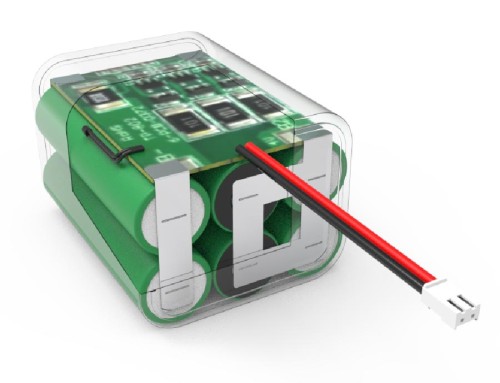
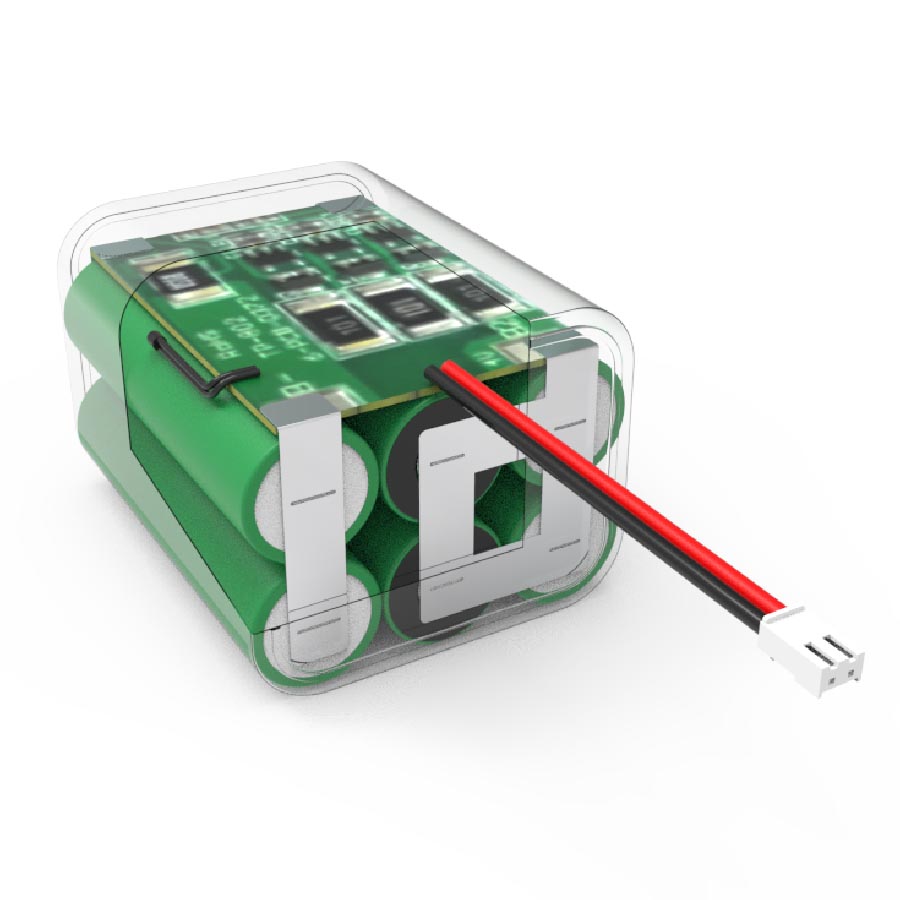
Integrated Smart Battery Management Systems (BMS) utilizing System Management Bus (SMBus) or I2C communication protocols guarantee cell balancing, accurate fuel gauging, and single-fault tolerance in critical medical equipment. A medical battery pack functions as an active subsystem rather than a passive component.
Why is SMBus protocol integration essential for ISO 13485 compliant medical devices?
The SMBus protocol provides real-time digital telemetry on cell state-of-charge (SOC), state-of-health (SOH), and cell temperatures directly to the host system microcontroller. Accurate SOC data prevents unexpected system shutdowns during critical surgical or diagnostic procedures.
Smart BMS architectures integrate dedicated fuel gauge integrated circuits (ICs) that implement state-of-charge tracking algorithms. These algorithms calculate remaining battery capacity by measuring coulomb counting, cell temperature, and internal cell impedance shifts over operational lifetimes. The Smart BMS reports parameters including cell voltage array data, cycle count, remaining time-to-empty, and error status flags over SMBus v1.1 or I2C buses. Redundant hardware protection circuits operate independently of the primary microcontrollers. Secondary hardware protection disconnects the charge/discharge MOSFETs or opens an inline chemical fuse if cell voltage exceeds 4.25V, skin temperature breaches 65°C, or short-circuit overcurrent events occur.
Which safety standards determine the qualification of medical rechargeable battery packs?
Medical battery qualification requires mandatory compliance with IEC 62133-2 for international electrical safety, UL 2054 for North American safety assurance, and UN 38.3 for global transport testing. Design engineers must verify compliance metrics prior to completing product architecture specifications.
What specific test criteria differentiate IEC 62133-2 from UL 2054 certification?
IEC 62133-2 evaluates internal mechanical short-circuit and thermal abuse conditions for portable lithium cells, while UL 2054 enforces abnormal charge and component fault conditions on complete battery packs. Medical OEM procurement teams must ensure battery suppliers hold active certificates for both regional testing frameworks.
IEC 62133-2:2017 specifies requirements for secondary lithium cells and packs used in portable applications. Key test procedures include continuous charging at constant voltage, external short-circuit testing at 55°C, thermal abuse exposure at 130°C for 10 minutes, and mechanical drop tests. UL 2054 applies stricter requirements for double-fault protection within complete battery enclosure assemblies. UL 2054 mandates limited power source testing, forced discharge testing, single-component failure simulation, and 250 N mechanical enclosure crush testing. UN 38.3 certification remains a legal prerequisite for transporting lithium batteries via commercial air cargo, ocean freight, or ground transport, comprising eight environmental and mechanical vibration stress tests.
Frequently Asked Questions
Which rechargeable batteries are better for portable ultrasound devices?
Lithium Nickel Manganese Cobalt Oxide (NMC) 18650 or 21700 battery packs are better for portable ultrasound devices because NMC offers high volumetric energy density (200–250 Wh/kg) required for high-draw digital signal processing.
What cycle life can engineers expect from medical-grade LiFePO4 battery packs?
Medical-grade LiFePO4 battery packs deliver between 2,000 and 3,500 charge-discharge cycles at 80% depth of discharge (DOD) before capacity drops below 80% of original nominal rating.
Why are non-rechargeable alkaline batteries unsuitable for critical medical instrumentation?
Alkaline batteries exhibit high internal resistance, steep voltage degradation curves under load, and insufficient pulse discharge capabilities required by high-power medical equipment components.
Which certifications are mandatory for shipping medical lithium battery packs internationally?
UN 38.3 transport testing certification is mandatory for shipping lithium battery packs globally by air, sea, or ground, alongside regional safety standards like IEC 62133-2.
How does an SMBus fuel gauge prevent medical device shutdown?
An SMBus fuel gauge reports continuous state-of-charge data with ±1% accuracy, enabling medical hardware controllers to trigger low-power warnings and graceful shut-offs prior to energy depletion.