Basic Parameter Analysis of 18650 Lithium Batteries
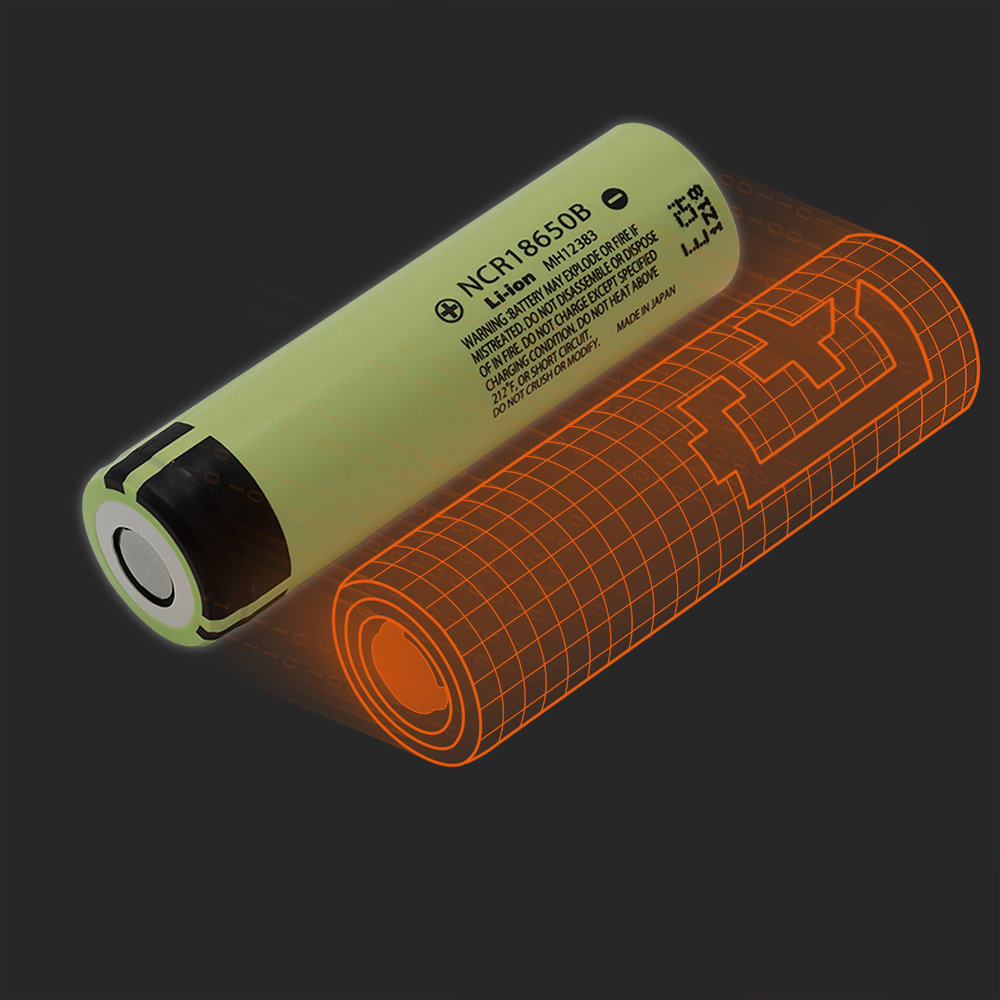
When first encountering 18650 lithium batteries, the densely packed parameters on the datasheet can be overwhelming. Taking the common NCR18650B as an example, I’ve compiled a list of the most crucial parameters, which are essential indicators to consider when selecting a battery.
Capacity is the first parameter to look at. A battery with a nominal capacity of 3200mAh may actually fluctuate between 3250-3350mAh; this range is more important than the nominal value. I remember last year, while working on a smart device project, the measured capacity of different batches of batteries could differ by 5%, which significantly impacted battery life calculations. The meaning of the capacity unit mAh is quite intuitive – for example, 3350mAh means it can last for 1 hour at a discharge current of 3350mA, or 33.5 hours at a discharge current of 100mA.
Three points require special attention regarding voltage characteristics: rated voltage 3.6V, charging cut-off voltage 4.2V, and discharging cut-off voltage 2.5V. In actual testing, it was found that many protection boards set the discharge cut-off voltage to 3V for safety. Here’s a pitfall to note: Batteries with a nominal voltage of 3.7V and 3.6V show significant differences in their discharge performance. When selecting a battery, check the specific discharge curves.
Temperature range directly impacts usage scenarios. Most 18650 batteries operate from 0℃ to 45℃, but high-end models can reach -20℃ to 60℃. Last winter, when testing outdoor equipment, ordinary batteries experienced a 30% capacity reduction at -5℃; switching to a low-temperature model resolved the issue.
Energy density is divided into volumetric energy density and gravimetric energy density. For example, the NCR18650B, with a weight of 48.5g, corresponds to approximately 250Wh/kg of energy density. This parameter is particularly important for portable devices; in one drone project I handled, a 0.5g weight difference forced a re-selection of the battery.
Precise Battery Selection Guide
Load Characteristic Matching Techniques: Choosing a battery isn’t about having the largest capacity; the key is to consider the load characteristics. I’ve summarized four principles:
- Current Requirements
- Voltage Platform
- Operating Environment
- Size Limitations
For devices requiring continuous current, such as smart home gateways, I recommend high-capacity batteries (e.g., NCR18650GA). Last year, when developing a solution for a company, a 3400mAh battery was 30% more expensive than a 3200mAh battery, but the battery life only improved by 6%, making it very poor value for money.
For devices requiring pulsed current, such as power tools, you must choose a high-capacity battery (e.g., VTC6). If you use a regular high-capacity battery, the voltage will drop significantly under high current. Although high-capacity batteries have smaller capacities, they can withstand discharges of over 20A.
Special attention is needed in temperature-sensitive scenarios. For low-temperature environments, the Sanyo UR18650ZY is the first choice, while for high-temperature environments, the Panasonic NCR18650B is recommended. Real-world testing data shows that regular batteries experience capacity degradation twice as fast as dedicated models at 50℃.
Brand and Model Comparison Analysis
The mainstream 18650 batteries on the market can be divided into three tiers:
- Tier 1: Panasonic, Samsung, LG
- Tier 2: EVE, Lishen
- Tier 3: Various white-label batteries
My comparative tests show that top-tier brands retain over 85% capacity after 300 cycles, while generic batteries may drop below 70% after 200 cycles. However, top-tier brands are 50%-100% more expensive, so budget and lifespan need to be weighed.
A common selection pitfall to avoid: blindly pursuing high capacity. A teardown revealed that a generic battery labeled 3800mAh actually only had 2800mAh and extremely high internal resistance. It’s recommended to prioritize models with a nominal capacity below 3500mAh; anything exceeding this is generally inflated.
Accurate Battery Life Calculation Method
Optimized Basic Calculation Formula
The common battery life formula is: Capacity (mAh) / Current (mA) = Time (h). However, in practical use, two correction factors need to be added:
- Depth of discharge factor (usually 0.8)
- Efficiency factor (usually 0.9)
The optimized formula is:
- Actual battery life = Nominal capacity × 0.8 × 0.9 / Operating current
- Taking a 3350mAh battery and a 100mA load as an example:
- 3.35 × 0.8 × 0.9 / 0.1 = 24.12 hours
However, this method still has shortcomings. Last year, when working on a smart water meter project, we found that the actual battery life was 15% shorter than the calculated value. Investigation revealed that the influence of pulse current was not considered; later, we switched to the integral method for accurate calculation.
Advanced Calculation Method
The discharge curve integration method is the most accurate. It requires obtaining the complete discharge curve of the battery and then performing piecewise integration calculations. I usually use Excel for this calculation, dividing the discharge curve into several small segments, each treated as a constant current discharge.
Temperature compensation calculation is also very important. According to measured data, for every 10°C decrease in temperature, the capacity decreases by approximately 15%. The corrected formula is: Low-temperature capacity = Nominal capacity × (1 – 0.015 × (20 – Actual temperature)). Aging correction must consider the number of cycles. Taking the NCR18650B as an example, the relationship between cycle number and capacity retention is shown in the table below:
|
Loop count |
Capacity Retention |
|
100 |
95% |
|
300 |
85% |
|
500 |
75% |
Lifespan Prediction and Maintenance Strategy
Cycle Lifespan Estimation
Lithium battery lifespan is expressed in terms of cycle number, but the definition of “cycle” is important. A complete cycle refers to the process of discharging and then fully charging. If you charge after using 50% each time, it counts as 0.5 cycles.
Actual test data shows that shallow charging and discharging can extend lifespan. It is recommended to maintain a charge range of 20%-80% for daily use, which can extend battery life by 2-3 times. One of my customers’ flashlight batteries still has 70% capacity after 5 years, thanks to adhering to this principle.
Temperature has a significant impact on lifespan. Battery life at 45℃ is halved compared to 25℃. Therefore, in high-temperature environments, it is essential to choose a high-temperature resistant model or enhance heat dissipation.
Daily Maintenance Recommendations
Based on years of experience, I have summarized several practical suggestions:
- For long-term storage, maintain a charge level of 40%-60%, and recharge every 3 months.
- Avoid charging in high-temperature environments; actual tests show that charging at 35℃ results in 30% faster capacity decay than charging at 25℃.
- Use a smart charger that can adjust charging parameters based on battery status.
- Perform a complete charge-discharge calibration regularly (once a month is sufficient).
- When using batteries in parallel, ensure that the battery parameters are consistent, ideally from the same batch.
A common misconception is that “using up the battery before charging” is good for it. In reality, lithium batteries are most vulnerable to over-discharge; a voltage below 2.5V can cause permanent damage. It is recommended that all devices have low-voltage protection.