Lithium-ion batteries have become the core power source for electric vehicles, energy storage systems, and portable electronic devices due to their advantages of high energy density, long cycle life, and no memory effect. However, their actual performance is influenced by the coupling of multiple factors such as battery pack topology, load characteristics, discharge rate (C-rate), capacity attenuation mechanism, and state of charge (SOC) management. Through theoretical analysis and experimental verification, this paper reveals the interaction mechanism among various parameters, proposes a lithium-ion battery model optimization strategy based on application scenarios, and provides technical support for improving system efficiency and extending service life.
Battery Pack Configuration: Topological Structure and Parameter Matching
Engineering Practice of Series-Parallel Hybrid Topology
- Series configuration: Increases the total voltage by increasing the number of individual battery cells (total voltage = cell voltage × number of cells in series), suitable for high-voltage demand scenarios (such as electric vehicle drive systems). For example, the Tesla Model 3 battery pack uses 4,416 18650 cells connected in series, with a total voltage of approximately 350V. However, the series structure has strict requirements for cell consistency: if the voltage deviation of a certain cell exceeds 0.1V, the capacity attenuation of the entire pack will exceed 15%.
- Parallel configuration: Increases the total capacity by increasing the number of individual battery cells (total capacity = cell capacity × number of cells in parallel), enhancing the high-current discharge capability (such as short-term high-power output of energy storage power stations). Experiments show that when the internal resistance difference within the parallel group exceeds 5mΩ, the unevenness of current distribution reaches 20%, triggering the risk of local overheating.
- Mixed topology optimization: Large-scale energy storage systems adopt a “parallel first, then series” strategy (such as 10 groups of 2P5S modules connected in series), which not only meets the 400V system voltage requirement but also reduces the impact of cell inconsistency through modular design. Simulation data shows that this structure can increase the cycle life of the system by 30%.
Consistency Control Strategy
- Capacity loss mechanism: In series, the total capacity of the battery pack is determined by the cell with the lowest capacity; in parallel, the internal resistance difference leads to uneven current distribution, and the cell with large internal resistance is incompletely discharged, causing capacity waste. Optimization strategy:
- Active balancing: Transfers the energy of high-capacity cells to low-capacity cells through inductor and capacitor energy transfer technology, achieving a balancing efficiency of over 80% (much higher than the 30% of passive balancing).
- Passive balancing: Adopts parallel resistor discharging, suitable for small-capacity scenarios, and flattens voltage differences by discharging high-voltage cells.
Heat Dissipation Design and Efficiency Improvement
- Thermal management challenges: The battery pack generates Joule heat during charging and discharging (Heat = I²Rt); the more the number of series and parallel connections, the more obvious the heat accumulation. If heat dissipation is poor, for every 10°C increase in temperature, the lithium-ion migration rate decreases by 5%-10%, and may even trigger thermal runaway. Heat dissipation schemes:
- Series heat dissipation: Adopts “serpentine water cooling tubes” or “flake radiators” attached to the side of the cells, taking away heat through forced convection.
- Parallel heat dissipation: Equips independent cooling fans for cells in the central position where the current is concentrated to avoid local overheating.
- Effect verification: Reasonable heat dissipation design can control the operating temperature of the battery pack at 25-35°C (the optimal temperature range), increase the charging and discharging efficiency by 5%-8%, and extend the cycle life by more than 30%.
Load Selection: Dynamic Matching and Power Management The Impact of Load Type on Battery Response
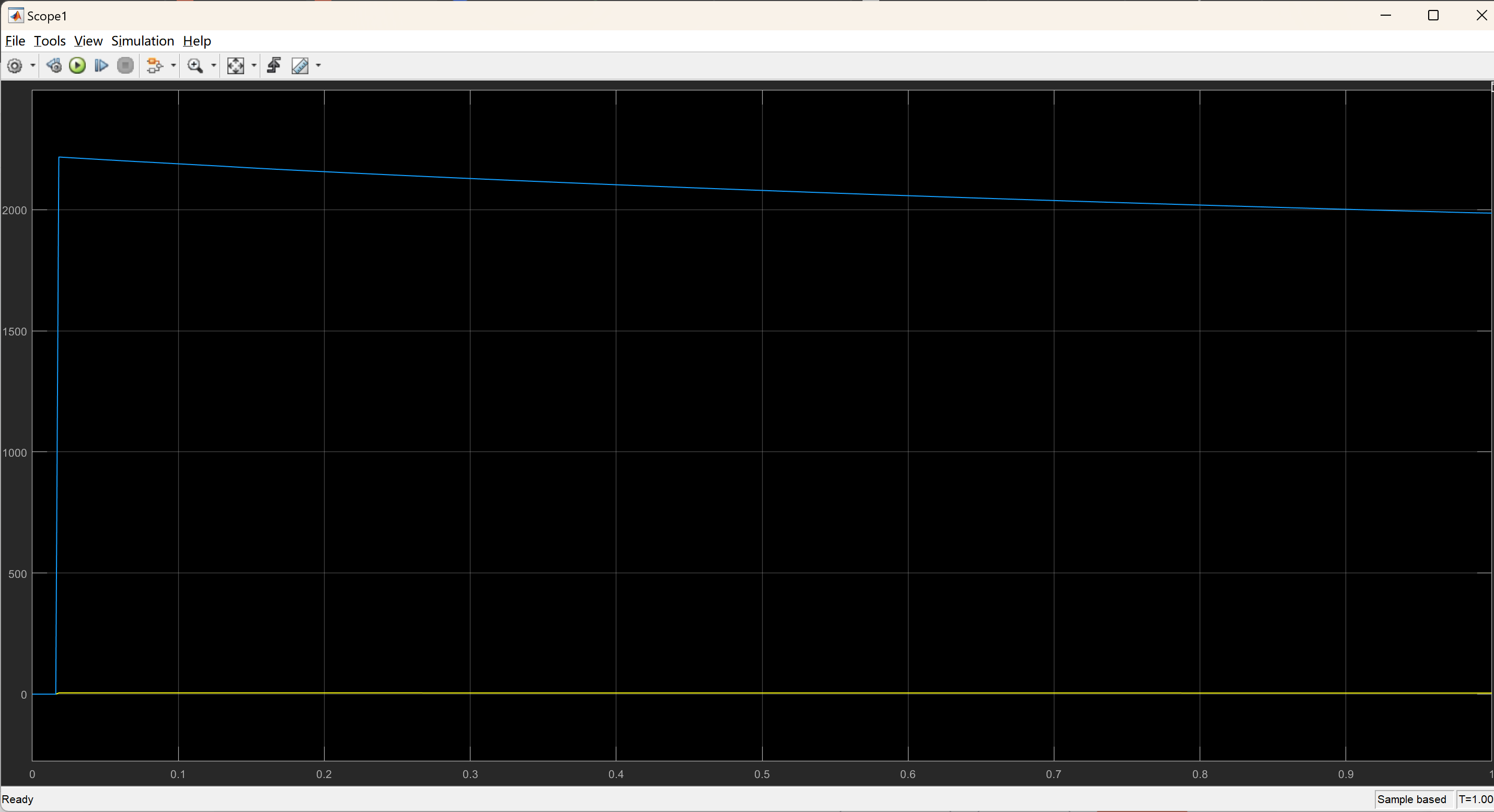
Effect of Load Type on Battery Response
- Resistive load (such as electric heaters): Current and voltage are in the same phase, and power consumption is stable. Experiments show that under 0.5C constant current discharge, the battery temperature rise is ≤5°C, and the capacity retention rate reaches 98%.
- Inductive load (such as motor startup): Generates an impact of 3-5 times the rated current at the moment of connection, requiring the configuration of a pre-charge circuit to limit the surge current and prevent negative electrode lithium deposition.
- Capacitive load (such as supercapacitor charging): The initial current can reach over 10C, requiring a graded current limiting strategy (0.1C pre-charging in the first stage, switching to 1C constant current mode after the voltage is balanced).
Dynamic Load Matching Algorithm
- Power demand prediction: Trains an LSTM neural network based on historical data to predict the power demand of electric vehicles for the next 10 seconds, with an error rate of <3%.
- Multi-objective optimization model: Constructs an optimization problem constrained by SOC deviation, temperature rise rate, and efficiency, and solves the optimal discharge curve through the particle swarm algorithm. Simulations show that this model can improve the range of electric vehicles by 8%.
- Real-time parameter adjustment: The BMS dynamically adjusts the C-rate according to the load power. For example, an energy storage system switches to 2C discharging during peak load and to 0.2C trickle charging during the off-peak period.
C-Rate: Threshold Effect and Thermal Runaway Prevention and Control The Non-linear Impact of C-Rate on Performance
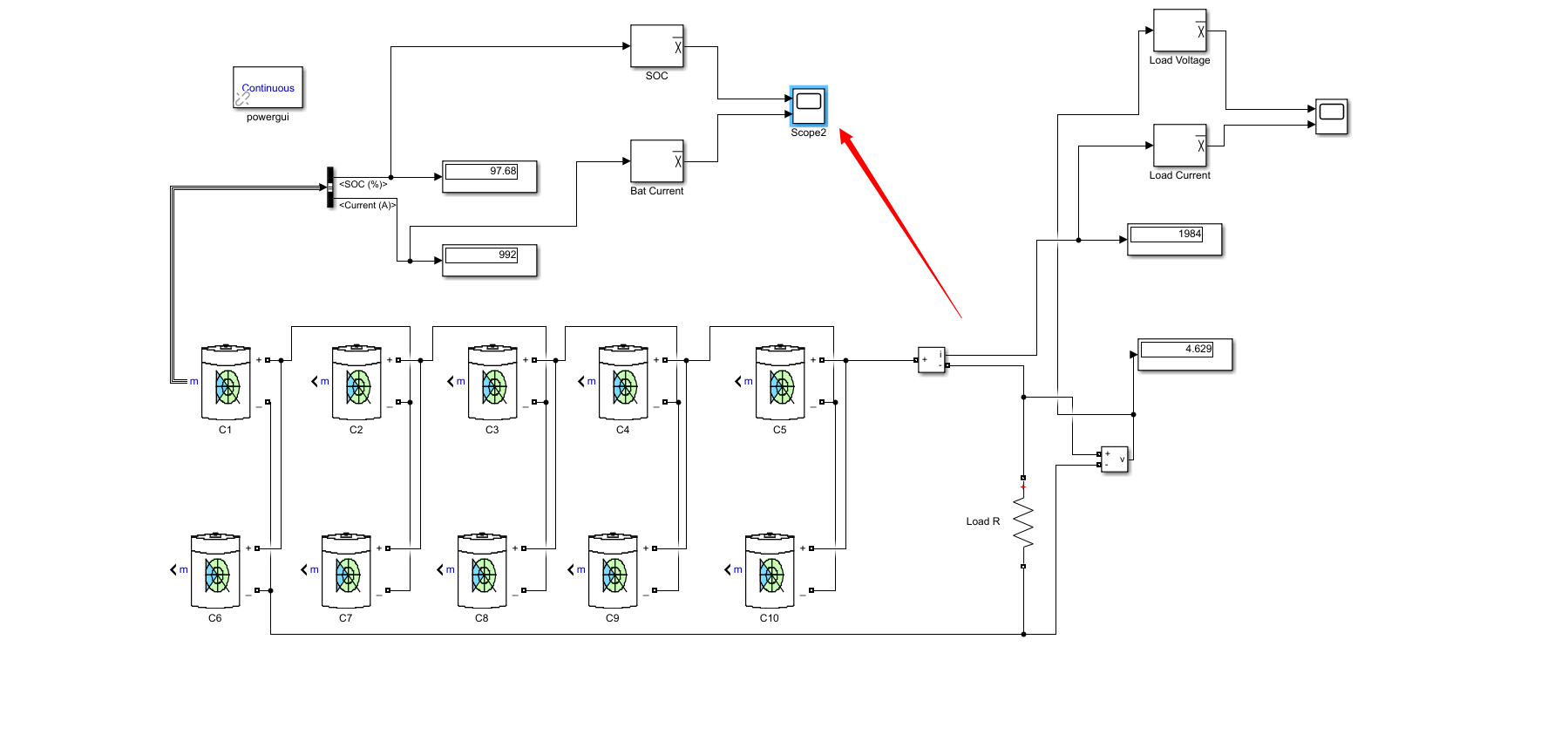
Non-linear effect of C-rate on performance
- Capacity attenuation rule: The capacity retention rate is 95% at 1C discharge, and plummets to 82% at 3C discharge. This is mainly because the lithium-ion de-intercalation rate exceeds the kinetic limit of the electrode reaction at high rates, resulting in a 30% increase in polarization internal resistance.
- Life loss mechanism: After 1000 cycles at 1C, the capacity drops to 80%, while it takes only 500 cycles to reach this threshold at 3C. High temperatures (>50°C) will accelerate electrolyte decomposition, further shortening the lifespan by 40%.
- Thermal runaway risk: The battery surface temperature can reach 70°C during 5C discharge, triggering a phase change in the positive electrode material (such as NCM811 transforming from a layered structure to a spinel structure), releasing oxygen and triggering a chain thermal runaway reaction.
Intelligent Thermal Management System Design
- Phase change material (PCM) cooling: Filling paraffin-based PCM between battery modules can absorb 200J/g of latent heat, reducing the 5C discharge temperature rise from 70°C to 45°C.
- Liquid cooling system optimization: Adopts a micro-channel cold plate design. When the channel width is 0.5mm, the convective heat transfer coefficient reaches 5000W/(m²·K), improving efficiency by 5 times compared to traditional air cooling.
- Thermal-electrical coupling model: Establishes a three-dimensional thermal-electrical coupling simulation platform to predict temperature distribution under different C-rates and guide the parameter setting of the cooling system. For example, during 2C discharging, the coolant flow rate needs to be increased to 5L/min to maintain the temperature rise at <10°C
Capacity Attenuation Mechanism and State of Health (SOH) Evaluation Multi-Scale Capacity Attenuation Model
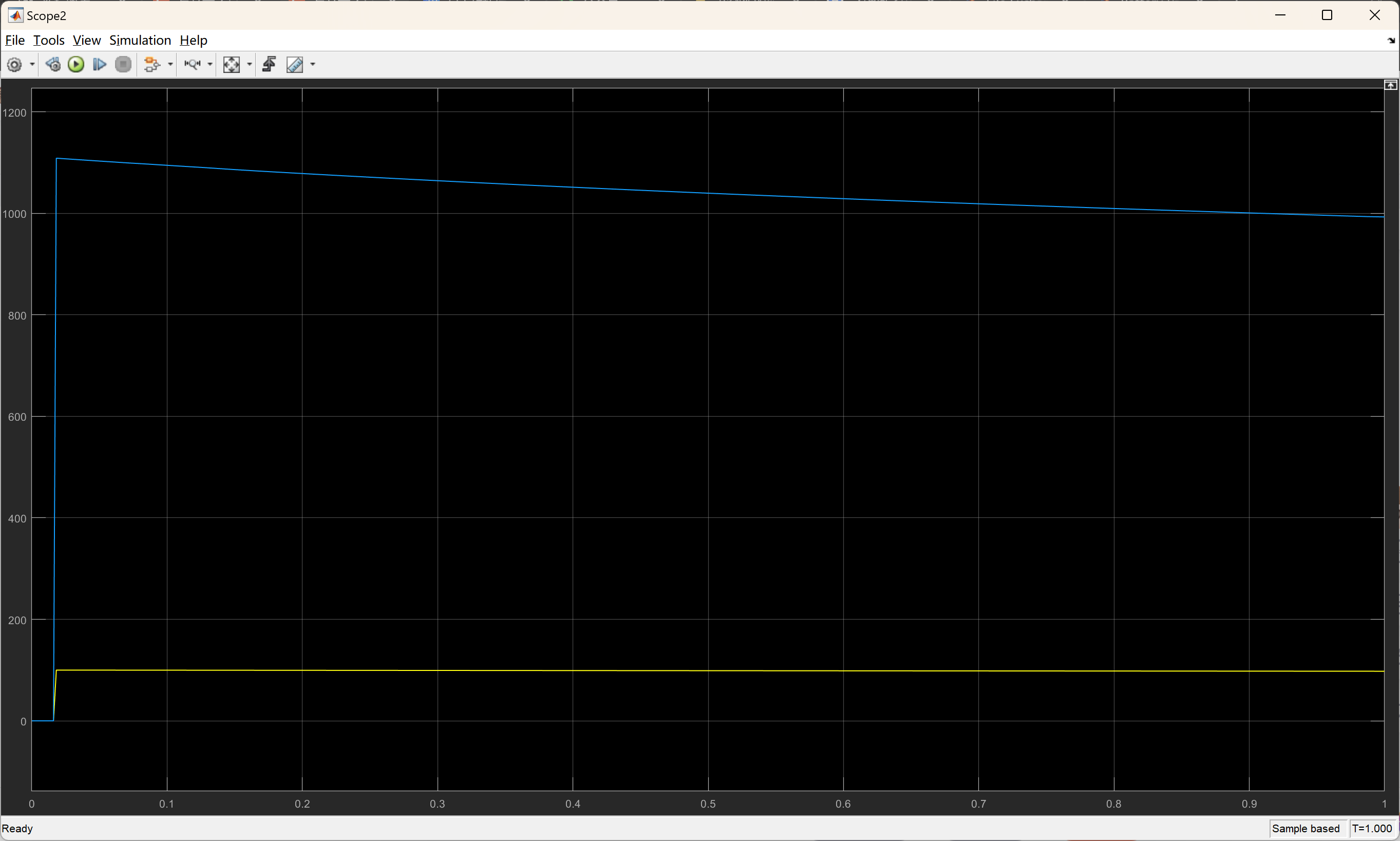
Multi-scale capacity degradation model
- Electrode material degradation: During the cycle, changes in the lattice parameters of the positive electrode material (such as LFP) cause the lithium-ion diffusion coefficient to decrease by 40%, and the shrinkage of the negative electrode graphite interlayer spacing triggers a 15% capacity attenuation.
- Electrolyte decomposition: Under high temperatures, LiPF6 decomposes to generate HF, which corrodes the SEI film and consumes active lithium; every 1mol of Li⁺ consumed leads to a capacity loss of 0.34Ah.
- Self-discharge effect: After 30 days of storage in a fully charged state, the SOC drops from 100% to 95%, mainly due to electrolyte oxidation and micro-short circuit current (usually <1μA) continuously consuming power.
Accurate SOH Evaluation Method
- Incremental Capacity Analysis (ICA): Quantifies capacity attenuation through the shift amount of the characteristic peak of the dQ/dV curve (such as the 3.42V peak of LFP shifting to 3.38V), achieving an accuracy of ±1%.
- Electrochemical Impedance Spectroscopy (EIS): The diameter of the semicircle in the high-frequency region is proportional to the SEI film impedance, and the slope of the oblique line in the low-frequency region reflects the lithium-ion diffusion rate. Combined with the equivalent circuit model, the ohmic internal resistance, charge transfer impedance, and diffusion impedance can be separated.
- Machine learning prediction: Collects 12-dimensional characteristic parameters such as voltage, temperature, and internal resistance to train the XGBoost model to predict SOH. The test set R² reaches 0.98, and the error is reduced by 60% compared to the traditional Ampere-hour integration method.
Accurate Estimation and Balancing Control of State of Charge (SOC) Multi-Sensor Fusion Estimation Technology
Multi-sensor fusion estimation technology
- Extended Kalman Filter (EKF): Fuses Ampere-hour integration and open circuit voltage (OCV) data, reducing the SOC estimation error from 5% to 1.5%. However, the OCV-SOC curve needs to be calibrated regularly to compensate for aging effects.
- Sliding Mode Observer (SMO): Designs a robust observer for parameter uncertainty, maintaining convergence even during sudden SOC changes (such as regenerative braking), with an overshoot of <3%.
- Deep learning assistance: Adopts an LSTM network to learn the nonlinear mapping relationship among voltage, current, temperature, and SOC, improving the estimation accuracy by 40% in a low-temperature (-10°C) environment.
Balancing Control Strategy
- Flying capacitor balancing: Achieves energy transfer between adjacent cells through high-frequency switch switching capacitors, reaching a balancing efficiency of 95%, but the switching frequency needs to be optimized to avoid electromagnetic interference.
- Inductor balancing circuit: Utilizes the energy storage characteristics of an inductor to achieve cross-cell balancing, suitable for large-capacity battery packs (such as >100Ah). Experiments show that the SOC deviation can be reduced from 20% to 5% within 10 minutes.
- Distributed balancing topology: Adopts a modular design, equipping each cell with an independent balancing chip, and achieving global coordinated control through the CAN bus. This scheme can be expanded to battery packs with over 1,000 cells, with a balancing time of <30 minutes.
Conclusion and Outlook
This study reveals the core contradiction in lithium-ion battery performance optimization: the trade-off between high energy density and long life, and between fast response and thermal safety.
Future research directions include:
- Material innovation: Developing high-rate silicon-based negative electrodes (such as SiOx/C composite materials) and lithium-rich manganese-based positive electrodes to break through the existing energy density limit.
- Intelligent algorithms: Combining digital twin technology to construct a full life cycle model of the battery, achieving full-chain optimization from design to recycling.
- Standardization system: Establishing international standards covering battery pack configuration, load matching, C-rate threshold, and SOC management to promote large-scale industrial application.
Through comprehensive optimization of battery pack configuration, load matching, C-rate control, capacity management, and SOC estimation, the performance and efficiency of lithium-ion battery systems can be significantly improved, providing key technical support for the development of electric vehicles, energy storage systems, and portable electronic devices.
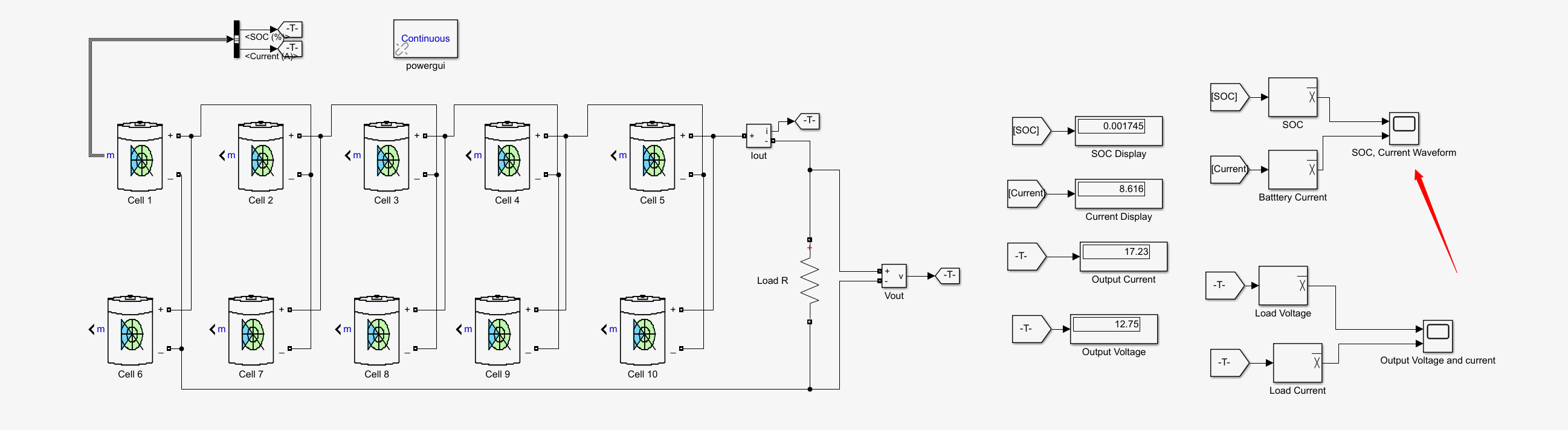
Run Results Battery pack configuration for the lithium-ion battery model, exploring the best performance and efficiency of the lithium-ion battery model: a comprehensive study on battery pack configuration, load selection, C-rate, capacity, and state of charge (SOC) for an 18.5V, 25Ah battery pack. Calculations:
- Battery cell voltage = 3.7V
- Battery cell capacity = 12.5Ah
- For battery cells with 5 in series and 2 in parallel, they form an 18.5V, 25Ah battery pack
- Initial load resistance = 18.5 / 25 = 0.74
- For 1C, resistance = initial resistance / C-rate = 0.74 ohms
- For 0.5C, resistance = initial resistance / C-rate = 1.48 ohms