During a routine regulatory audit, a medical device OEM faces severe scrutiny over a portable diagnostic unit’s power assembly. The auditor requests complete Design History Files (DHF) and lot-level traceability records down to the individual lithium-ion cell batches and BMS PCB solder runs. A lack of validated component grading procedures or undocumented engineering changes at the battery supplier level can trigger non-conformity findings, freeze product shipments, and compromise device safety. Unlike general commercial battery manufacturing, producing lithium battery packs for critical healthcare applications requires a comprehensive Quality Management System (QMS). Implementing ISO 13485 quality system requirements for medical battery manufacturers establishes the necessary framework for design controls, risk management, component traceability, and post-market safety.
Design Controls and Risk Management Integration (ISO 14971)
ISO 13485 mandates strict design control protocols for every phase of battery development, ensuring that power units meet specified safety, functional, and environmental requirements before entering mass production.
DFMEA and Hardware Risk Mitigations
Medical battery design begins with a comprehensive Design Failure Mode and Effects Analysis (DFMEA) aligned with ISO 14971 risk management standards. Engineers identify potential hazard vectors—such as cell internal short circuits, thermal runaway, software anomalies in SMBus fuel gauge communication, or overcurrent conditions—and design active hardware redundancies to eliminate single-point failures. For instance, a 3S1P smart battery pack utilizes both primary software-level MOS protection and secondary hardware thermal fuses to isolate cell strings under fault conditions.
Verification, Validation, and Design Transfer
Before releasing a medical battery configuration for clinical use, design verification protocols validate that electrical, thermal, and mechanical outputs conform to input specifications. Battery packs undergo environmental chamber stress, vibration testing, and charge-discharge cycling to verify retention of at least 80% initial capacity over 500 cycles. Design transfer procedures document every production parameter, establishing immutable assembly instructions and testing jigs for manufacturing operators.
Component Traceability and IQC Protocols in Battery Production
A fundamental requirement of ISO 13485 is end-to-end traceability across the entire supply chain, ensuring that every individual cell, protection IC, and raw material can be audited back to its original lot.
18650 Cell Incoming Inspection and Grading
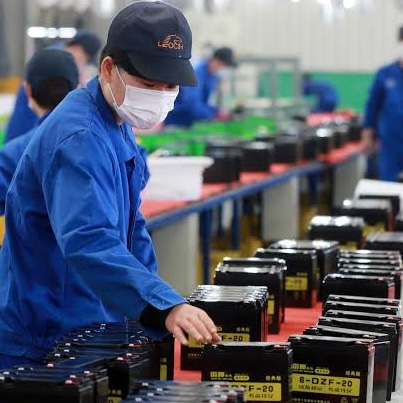
Quality control begins at Incoming Quality Control (IQC). Tier-1 cylindrical 18650 cells—such as Panasonic cells known for high energy density and stability—undergo 100% testing for open-circuit voltage (OCV) and internal resistance ($R_{\text{DC}}$) matching. Cells with voltage deviations greater than tight tolerance bands are rejected, preventing localized thermal stress and capacity mismatch in multi-series configurations.
Lot-Level Traceability and Production Logging
ISO 13485 requires detailed Device History Records (DHR) for every manufactured battery lot. Each smart battery pack receives a unique serial number that links directly to its constituent cell batch codes, BMS PCB revision, firmware version, and final end-of-line test data. This level of documentation guarantees complete root-cause analysis capability in the event of field quality inquiries.
| Quality Control Phase | ISO 13485 Medical Battery Protocol | Standard Commercial Battery Protocol |
| Cell Selection & IQC | 100% OCV and $R_{\text{DC}}$ sorting; strict batch-level isolation (e.g., Panasonic 18650 cells) | Statistical sampling; wider voltage/impedance grouping |
| BMS Validation | Automated functional testing of SMBus v1.1 protocols, JEITA limits, and safety cutoffs | Basic overcharge and short-circuit functional checks |
| Traceability (DHR) | Serialization linking single cells, PCB lots, and firmware build numbers | Batch-level lot tracking without individual component logging |
| Change Control | Formal Engineering Change Order (ECO) with customer notification | Internal revision changes without customer sign-off |
| Compliance Matrix | Pre-certified to IEC 62133, UN38.3, CE, FCC, PSE, UKCA | Basic transport UN38.3 testing only |
Change Control Management and CAPA Workflows
In medical device manufacturing, uncontrolled component substitutions can compromise regulatory filings and device safety profiles. ISO 13485 establishes strict change management and continuous improvement workflows.
Engineering Change Orders (ECO) and EOL Planning
Under an ISO 13485 QMS, a battery manufacturer cannot alter a single bill-of-materials (BOM) item—such as switching an internal NTC thermistor, changing a MOSFET, or updating fuel gauge firmware—without issuing a formal Engineering Change Order (ECO). The ECO process evaluates the impact of the proposed change on system performance, safety certifications, and host compatibility, requiring formal sign-off from quality engineering and the OEM client before implementation.
Closed-Loop CAPA and Field Return Analytics
When field issues or internal non-conformities arise, ISO 13485 enforces a structured Corrective and Preventive Action (CAPA) framework. Engineering teams analyze returned units using non-destructive testing (NDT), SMBus log analysis, and physical teardowns to isolate failure mechanisms. Corrective actions are implemented across manufacturing processes, and preventive updates are integrated into future design iterations to permanently eliminate recurrent defects.
Regulatory Alignment and Global Compliance Auditing
ISO 13485 certification forms the operational foundation that enables medical battery suppliers to support global regulatory submissions for their OEM partners.
Harmonization with IEC 62133 and UN38.3 Standards
ISO 13485 quality systems dictate that testing and verification must align with international safety and transport mandates. Battery production lines incorporate automated end-of-line (EOL) test stations that verify compliance with IEC 62133-2 (lithium cell safety) and UN38.3 (transportation safety requirements). This rigorous approach ensures that standardized platforms—such as 10.8V 3300mAh 3S1P smart battery packs—are fully compliant with CE, FCC, PSE, and UKCA standards for international distribution.
Audit Readiness and Technical File Compilation
A fully compliant medical battery manufacturer maintains complete Technical Files for its battery platforms, providing medical device OEMs with instant access to safety data sheets, UN38.3 test summaries, ISO certificates, and material compliance documentation. This audit-ready infrastructure dramatically accelerates the medical device approval process across global markets.
For medical device hardware teams seeking certified, high-reliability power systems backed by rigorous ISO 13485 quality management systems, partnering with an experienced battery manufacturer minimizes regulatory risk. Explore our engineering specifications and compliant standard battery packs to simplify your device commercialization pathway.
Frequently Asked Questions (FAQ)
1. What is the difference between ISO 9001 and ISO 13485 for battery manufacturers?
While ISO 9001 focuses on general quality management and customer satisfaction, ISO 13485 is specifically tailored to the medical device industry. ISO 13485 imposes far stricter requirements on risk management (ISO 14971), design controls, component traceability, clean manufacturing environments, and formal change control processes.
2. Why is lot-level component traceability critical in medical lithium battery packs?
Lot-level traceability ensures that every battery pack can be tracked back to its specific 18650 cell production batch, BMS board revision, and component supplier lot. If a component defect is identified, manufacturers can isolate affected packs immediately without recalling unaffected product lines.
3. How does an ISO 13485 battery manufacturer handle component end-of-life (EOL)?
Under ISO 13485 change control rules, manufacturers issue formal Product Change Notifications (PCN) and Last Time Buy (LTB) alerts before any key component is phased out. Replacement components undergo rigorous engineering verification to ensure zero impact on host device functionality or safety certifications.
4. Does using an ISO 13485 certified battery supplier help speed up FDA or CE approvals?
Yes. Partnering with an ISO 13485 certified battery supplier ensures that battery Design History Files (DHF), verification reports, and safety certifications (such as IEC 62133 and UN38.3) are audit-ready, streamlining the technical documentation package required for regulatory filings.
5. How are safety risks managed during the custom battery design process?
Risk is managed using ISO 14971 principles, incorporating hardware-level protections against overvoltage, undervoltage, overcurrent, short circuits, and thermal limits alongside intelligent SMBus fuel gauge monitoring and redundant physical fuses.