What Is an Explosion-Proof Battery?
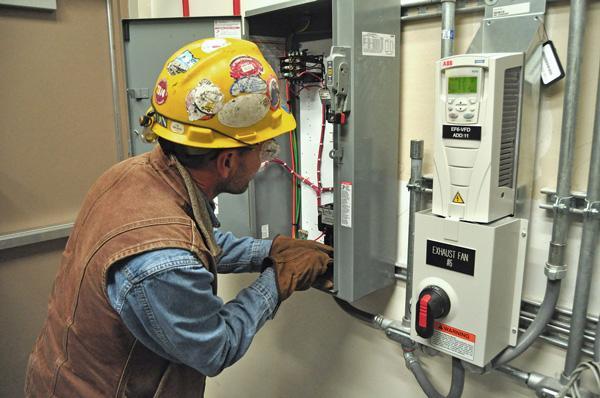
An explosion-proof battery is not a specific battery type, but a power system designed to meet strict safety requirements in hazardous environments.
In practice, “explosion-proof” refers to a combination of electrical control, structural protection, and certification compliance that ensures the battery will not ignite surrounding explosive atmospheres—even under fault conditions.
Where Do Explosion-Proof Requirements Come From?
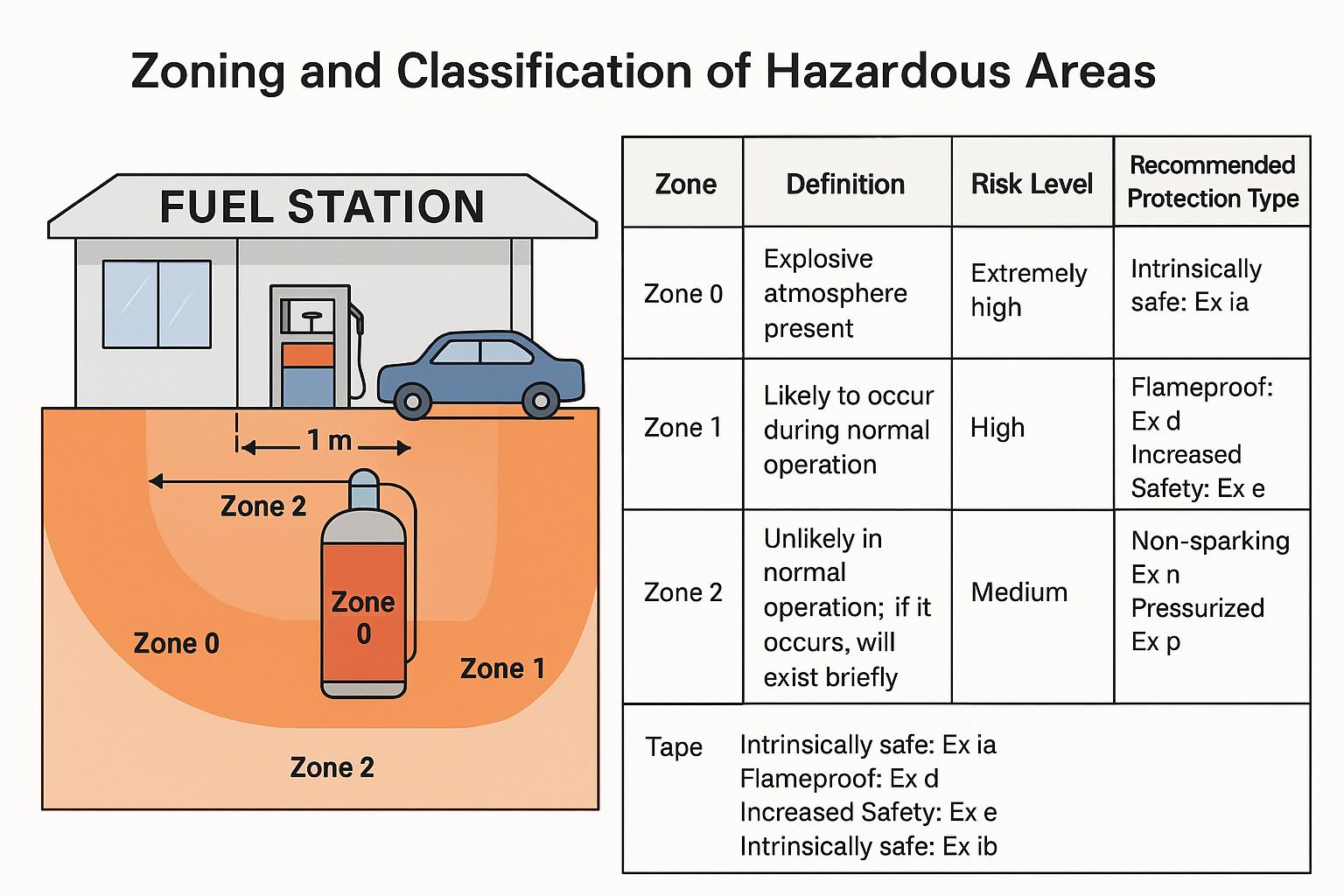
Explosion-proof requirements are defined by the environment, not by the battery itself.
These requirements typically apply in environments where flammable gases, vapors, or combustible dust may be present. In such conditions, even a small spark, arc, or thermal event from a battery system could trigger an explosion.
Typical hazardous environments include:
- Oil and gas facilities
- Chemical processing plants
- Mining operations
- Dust-heavy industrial environments
- Confined or poorly ventilated spaces
In these scenarios, batteries must be designed to operate safely without becoming an ignition source. In OEM projects, explosion-proof requirements are often defined at the system level. Engineering support plays a critical role in ensuring compatibility between the battery pack, device design, and certification requirements.
Core Principle: Controlling Energy Release
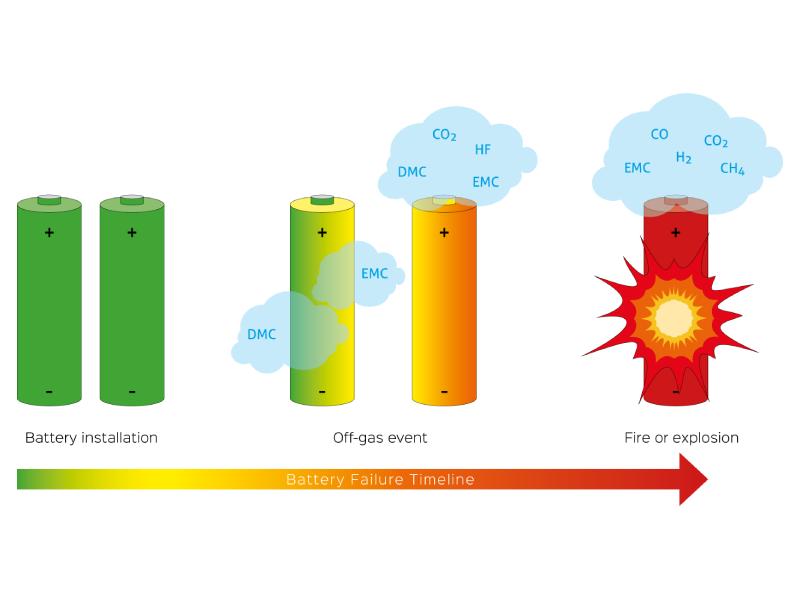
The core principle of explosion-proof battery design is not to eliminate failure, but to control energy release so that it does not ignite the surrounding atmosphere. This means that even if a fault occurs—such as overheating, internal short circuit, or mechanical damage—the system must prevent:
- Spark generation
- Excessive temperature rise
- Uncontrolled gas release
Explosion-proof design focuses on containment, limitation, and control, rather than absolute prevention.
Key Technical Requirements for Explosion-Proof Batteries
Explosion-proof battery systems are built through a multi-layer safety architecture that integrates electrical, thermal, and mechanical protection.
Electrical Safety Control
Electrical safety focuses on preventing abnormal energy release.
Key requirements include:
- Overcharge protection
- Over-discharge protection
- Short-circuit protection
- Current limiting
- Voltage monitoring
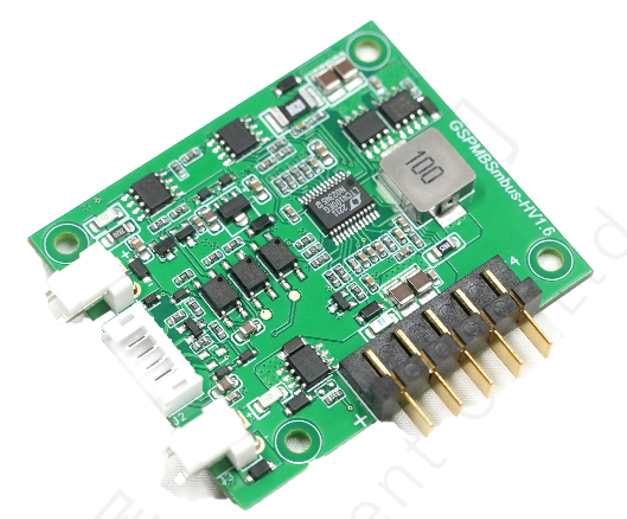
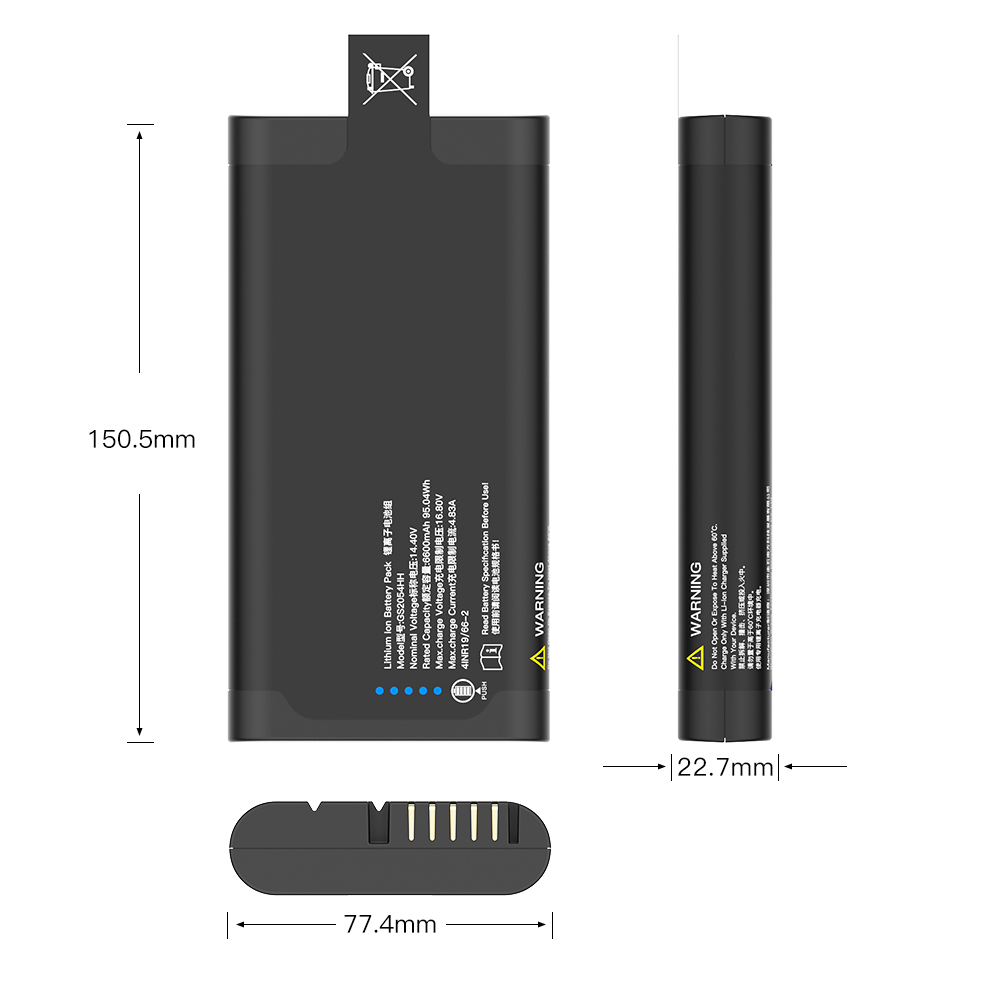
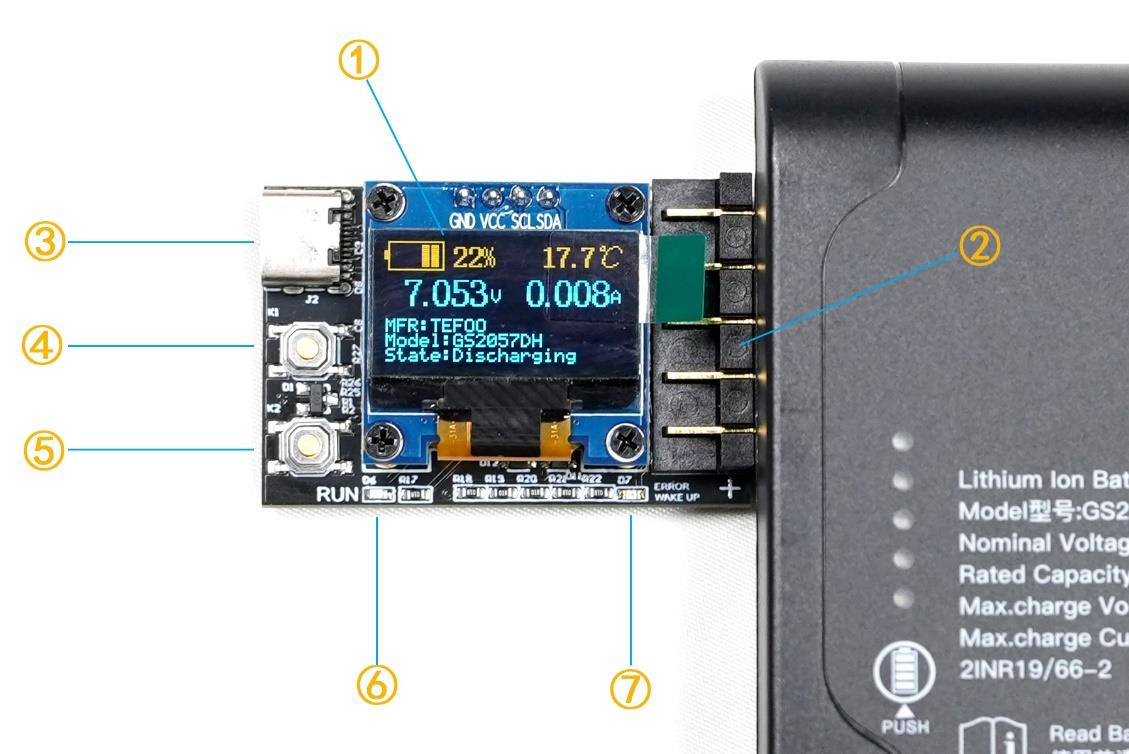
These functions are typically managed by a Battery Management System (BMS), which ensures that the battery operates within safe limits at all times. In practical applications, smart lithium battery packs with integrated BMS—such as standardized models used in portable instruments—are designed to ensure stable electrical performance under strict safety conditions.
Thermal Management
Thermal control is critical because excessive heat can trigger thermal runaway.
Explosion-proof batteries must:
- Control temperature rise during operation
- Prevent heat accumulation in confined spaces
- Reduce the risk of thermal propagation between cells
Effective thermal design ensures that even under stress conditions, the battery does not reach ignition temperatures.
Structural and Mechanical Design
Structural protection prevents internal failures from affecting the external environment.
Typical design features include:
- Reinforced enclosures (metal or flame-retardant materials)
- Sealed structures to prevent gas leakage
- Pressure relief mechanisms (e.g., venting systems)
- Impact-resistant housing
In many cases, the enclosure is designed to contain internal ignition without allowing it to propagate outside.
Energy Limitation and Ignition Prevention
A critical requirement in explosion-proof systems is limiting the energy available for ignition.
This includes:
- Controlling maximum discharge energy
- Preventing arc formation
- Limiting fault current levels
The goal is to ensure that any electrical or thermal event remains below the ignition threshold of the surrounding atmosphere.
Monitoring and Intelligent Control
Advanced explosion-proof battery systems may include real-time monitoring features, such as:
- Temperature sensing
- Voltage and current tracking
- Fault detection and shutdown mechanisms
In smart battery systems, communication interfaces (such as SMBus) can provide additional safety by enabling external systems to monitor battery status and respond to abnormal conditions.
Explosion-Proof Standards and Certifications
Explosion-proof requirements are defined by certification systems, not by battery design alone. To be used in hazardous environments, battery systems must comply with internationally recognized standards.
ATEX Directive
Applies to equipment used in explosive atmospheres within the European Union.
IECEx System
Provides a global certification framework for equipment used in hazardous environments.
Other relevant systems include:
- UL standards (North America)
- GB/T explosion-proof standards (China)
These certifications define requirements for design, testing, labeling, and safe operation.
Applications That Require Explosion-Proof Batteries
Explosion-proof batteries are used in equipment operating in hazardous or potentially explosive environments.
Typical applications include:
- Gas detection instruments
- Industrial inspection equipment
- Mining systems
- Oil and gas field devices
- Chemical processing equipment
- Specialized medical or portable diagnostic devices
- Robotics operating in confined or hazardous spaces
In these applications, the battery is part of a certified system and must meet the same safety requirements as the device. For equipment operating in hazardous environments, such as gas detection or industrial inspection systems, selecting the right battery solution is critical. You can explore our battery solutions for industrial control and portable instruments to understand how different applications define safety requirements.

Common Misunderstandings About Explosion-Proof Batteries
Several misconceptions exist in the market:
- Explosion-proof batteries are simply “safer batteries” ❌
- Any lithium battery can be made explosion-proof ❌
- Adding a protective case is sufficient ❌
- MSDS or basic certifications are enough ❌
In reality, explosion-proof capability depends on a combination of system-level design, strict certification, and application-specific requirements.
Final Insight
Explosion-proof batteries are not standalone products, but engineered safety systems designed to operate reliably in hazardous environments.
Their performance depends on the integration of electrical control, thermal management, structural protection, and compliance with international certification standards.
Understanding these requirements is essential for OEM manufacturers, engineers, and procurement teams working with equipment used in explosive or high-risk environments.