1. What Is a Smart Battery and a Non-Smart Battery?
As battery-powered systems become more advanced, the role of the battery has evolved beyond simply supplying energy. The distinction between smart and non-smart batteries reflects a shift from basic power delivery to system-level energy management.
A non-smart battery is a traditional battery that provides electrical energy without interacting with the system it powers. It operates passively, and most of its status must be inferred externally.

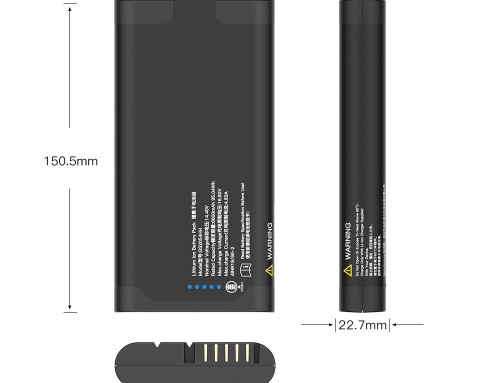
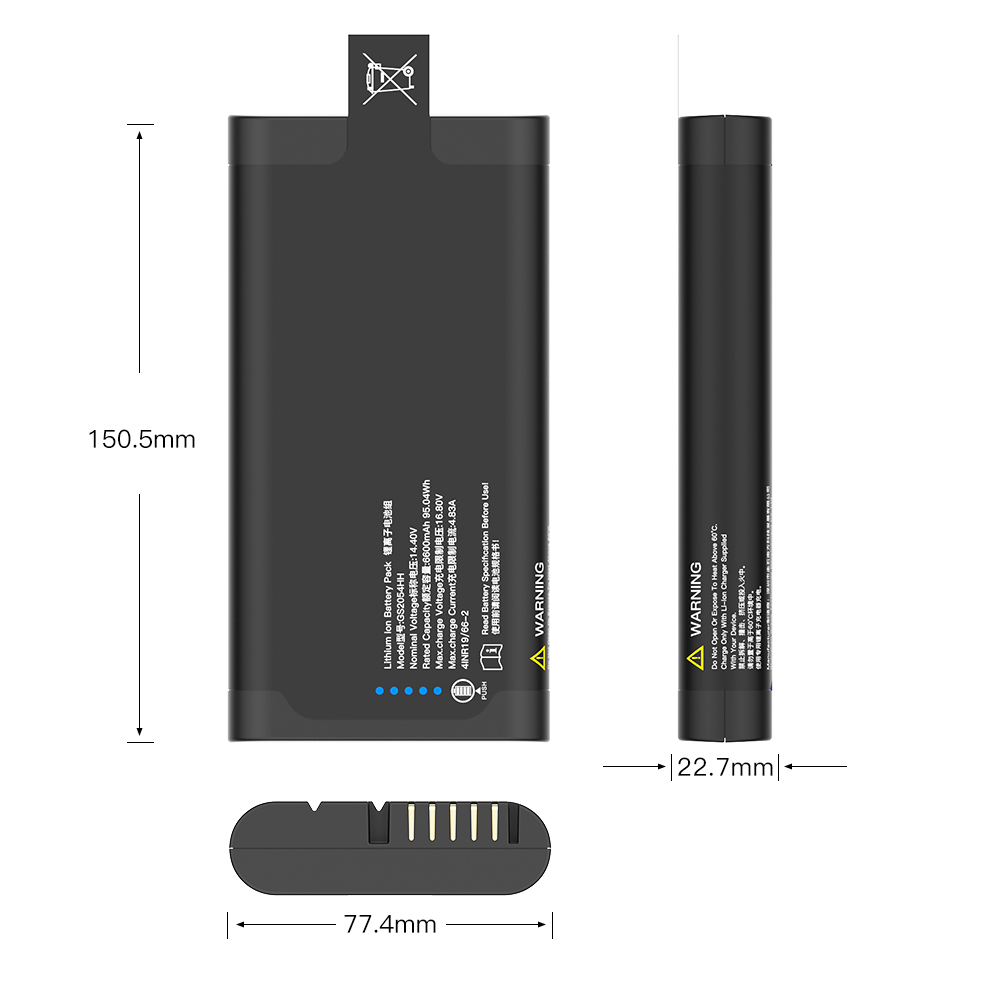
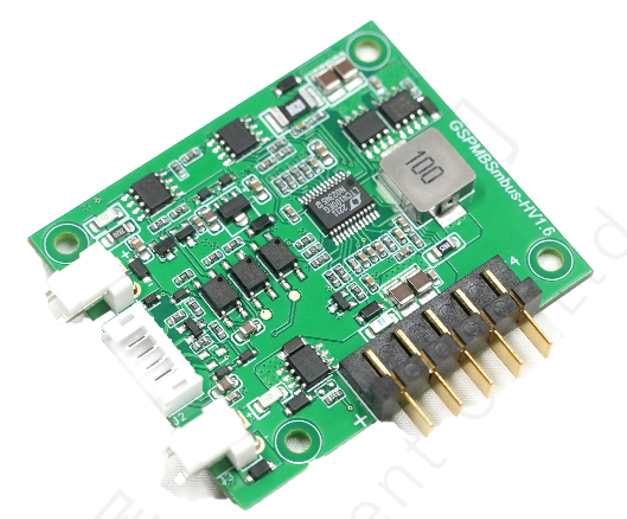
A smart battery, often referred to as a Smart Battery System (SBS), integrates internal electronics capable of measuring, calculating, and storing battery data. This allows the battery to actively participate in how power is managed within the system.
To put it simply:
Non-smart battery
- Provides basic electrical output
- No communication with the host system
- Limited internal processing
Smart battery
- Includes embedded electronics
- Supports communication (e.g., SMBus)
- Enables data-driven battery management
This difference marks the transition from a passive component to an intelligent subsystem.
2. System Architecture: SBS vs Conventional Battery Design
The most fundamental difference lies in how each type of battery is structured within a system.
A smart battery is typically part of a standardized Smart Battery System (SBS), which includes:
- A Smart Battery (with embedded control electronics)
- A Smart Battery Charger
- A communication interface such as SMBus (System Management Bus)
These components work together to form a coordinated system where data flows continuously between the battery, charger, and host. By comparison, a non-smart battery system is much simpler and usually consists of:
- Cells
- Basic protection circuitry
Without a unified communication framework, it operates independently of the host system.
This architectural difference can be visualized as:
Smart Battery ↔ Charger ↔ Host (via SMBus)
While a non-smart battery simply supplies power, an SBS-based system enables coordinated operation across multiple components.

3. Control Logic: Open-Loop vs Closed-Loop Systems
Beyond structure, the way batteries are controlled also differs significantly.
A non-smart battery operates in an open-loop system, where the battery provides power but does not actively report its internal state. The host system must rely on indirect indicators, such as voltage, to estimate battery behavior.
In contrast, a smart battery operates in a closed-loop system, where continuous feedback allows the system to make dynamic decisions.
This difference can be understood as follows:
Non-smart battery (open-loop)
- No real-time feedback
- Control based on estimation
- Limited adaptability
Smart battery (closed-loop)
- Continuous data exchange
- Real-time monitoring
- Adaptive charge/discharge control
In a closed-loop system, the battery can report:
- Remaining capacity
- Charge/discharge current
- Cycle count
- Health and predicted lifespan
The host system then uses this data to optimize operation.
4. Predictability and Data-Driven Battery Behavior
One of the most important advantages of smart batteries is their ability to make battery behavior predictable. In non-smart systems, battery performance is often uncertain. For example:
- Remaining runtime is difficult to estimate
- Voltage-based SOC can be misleading
- Unexpected shutdowns may occur
Smart batteries reduce this uncertainty by combining measurement, data storage, and algorithm-based estimation. A comparison of predictability looks like this:
Non-smart battery
- Limited visibility into battery status
- Behavior depends on external estimation
Smart battery
- Predictable runtime and performance
- Data-driven decision making
- More accurate lifecycle tracking
By turning raw battery data into actionable information, smart batteries allow systems to operate more reliably.
5. Functional Capabilities: Monitoring, Safety, and Management
The difference in system design directly affects functional capabilities. Non-smart batteries are limited to basic protection, while smart batteries integrate multiple layers of monitoring and control.

Key differences include:
Non-smart battery
- Basic protection (overcharge, over-discharge)
- No detailed data output
- Limited system interaction
Smart battery
- Real-time monitoring of voltage, current, and temperature
- Accurate State of Charge (SOC) via fuel gauging
- Temperature-aware charging strategies (e.g., JEITA)
- Historical data tracking and lifecycle analysis

These features enable the battery to act as a managed subsystem rather than a simple energy source.
6. System Complexity and Integration Requirements
While smart batteries offer more advanced functionality, they also introduce additional system complexity. Non-smart battery systems are relatively easy to implement because they do not require communication protocols or coordinated control.
Smart battery systems, on the other hand, require:
- Communication interfaces (such as SMBus)
- Firmware support for data exchange
- Coordination between battery, charger, and host
This leads to a trade-off:
Non-smart battery
- Simpler integration
- Lower system complexity
Smart battery
- Higher integration complexity
- Greater control and flexibility
In practice, this added complexity is often necessary for systems that demand precision and reliability.
7. Typical Use Cases Based on System Requirements
The choice between smart and non-smart batteries depends largely on how much control and visibility the system requires. In general:
Smart batteries are used in systems that require:
- High reliability
- Continuous monitoring
- Predictable performance
- Examples include medical devices and professional instruments
Non-smart batteries are used in systems that:
- Have simpler power requirements
- Do not require detailed monitoring
- Prioritize simplicity and cost
The more critical the system’s need for control and predictability, the more likely it is to use a smart battery. If you want to learn more about the applications of smart batteries, you can check out this blog.
8. Key Differences at a Glance
To summarize the comparison, the following table highlights the main differences:
| Aspect | Smart Battery | Non-Smart Battery |
|---|---|---|
| System Architecture | SBS (integrated system) | Standalone power source |
| Control Logic | Closed-loop | Open-loop |
| Communication | Yes (e.g., SMBus) | No |
| Data & Monitoring | Advanced | Limited |
| Predictability | High | Low |
| System Complexity | Higher | Lower |
Overall, the difference between smart and non-smart batteries is not just about features, but about how the battery interacts with the system.
Smart batteries introduce communication, data processing, and control, allowing them to function as part of a coordinated system. Non-smart batteries remain simple energy providers, suitable for applications where such capabilities are not required.