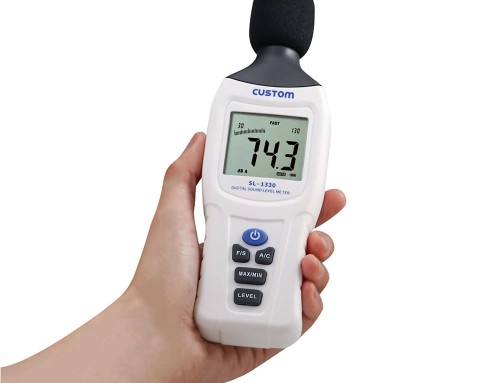
A field crew powers up a spectrum analyzer at a winter site, the battery indicator reads 60%, and the instrument dies twelve minutes later. The pack was not defective, and the fuel gauge was not lying — the energy was still inside the cells, but the cells were too cold to release it at the voltage the instrument demands. Scenarios like this one drive most “low-temperature battery” searches, and the marketing answers are usually a single unqualified number: “works at -40°C.” This guide replaces that slogan with the numbers that matter: what standard packs deliver at sub-zero temperatures, what a purpose-built low-temperature pack achieves, and which test conditions make those numbers comparable at all.
Key Takeaways
– Cold failure is mostly voltage collapse, not empty cells: electrolyte viscosity, SEI resistance, and slowed ion diffusion raise internal resistance until the BMS cuts off early — a standard lithium-ion pack may deliver only about 30% of its room-temperature capacity at -20°C.
– Purpose-built low-temperature packs change the outcome: TEFOO’s GS4040 low-temperature series, built on 18650 cells with a cold-rated design, retains more than 70% of nominal capacity at -40°C discharge.
– Discharging in the cold and charging in the cold are different problems: discharge capacity loss is largely reversible; charging below 0°C causes lithium plating, which permanently damages the cells — every cold-rated pack needs a BMS charge lockout.
Why Do Lithium Battery Packs Lose Capacity in Extreme Cold?
The Three Mechanisms Behind Cold-Weather Voltage Sag
Low temperature attacks a lithium-ion cell through three stacked mechanisms. First, electrolyte viscosity rises: the carbonate-based liquid electrolyte thickens as temperature falls, and its ionic conductivity drops sharply — measurements put conductivity at -20°C below 12% of its value at 45°C. Second, interfacial resistance climbs: the SEI (solid-electrolyte interphase) film on the graphite anode becomes less conductive, and charge-transfer resistance at the electrode-electrolyte interface increases, slowing the very reaction that delivers current. Third, ion diffusion inside the electrode materials slows, so lithium ions cannot intercalate and de-intercalate fast enough to support normal discharge rates.

The combined effect is polarization: internal resistance climbs until, under load, the cell voltage sags to the cutoff threshold long before the stored energy is exhausted. The BMS sees 3.0 V per cell and shuts the pack down with usable energy still trapped inside — which is exactly why the field crew’s “60%” battery died in twelve minutes.
Reversible Suppression vs Permanent Damage
Discharge capacity loss in the cold is largely reversible: warm the pack back to room temperature, and most of the “lost” capacity returns. Charging is a different story. Below 0°C, the graphite anode cannot absorb lithium ions fast enough, so metallic lithium deposits on the anode surface instead — a process called lithium plating. Plated lithium is irreversibly lost from the active inventory, thickens the SEI film, and can grow dendrites that pierce the separator and short the cell internally. This asymmetry defines correct cold-weather pack design: wide discharge temperature range, strictly limited charge temperature range.
How Much Capacity Actually Survives at -20°C and -40°C?
What Published Data Shows — and Why Test Conditions Matter
Capacity retention figures circulating in marketing material are meaningless without three attached conditions: discharge rate, cutoff voltage, and soak time. With that caveat, the industry picture for standard NMC lithium-ion packs at moderate discharge rates looks like this:
|
Temperature |
Typical Deliverable Capacity (Standard Li-ion Pack) |
Notes |
|---|---|---|
|
0°C (32°F) |
~80–90% of rated capacity |
Mild losses; charging still permitted with reduced current |
|
-10°C (14°F) |
~50–70% |
Voltage sag becomes visible under load |
|
-20°C (-4°F) |
~30–50%; one reported measurement: 31.5% |
Early BMS cutoff common; conventional packs approach their rated limit |
|
-40°C (-40°F) |
Often below 15–20% |
Beyond the rated range of standard packs; even good general-purpose cells can fall to roughly 12% |
The spread inside each row is exactly why serious buyers demand discharge curves instead of a single percentage: at 0.2C a pack may hold twice the capacity it delivers at 1C at the same temperature.
A Measured Example: The GS4040 Low-Temperature Series
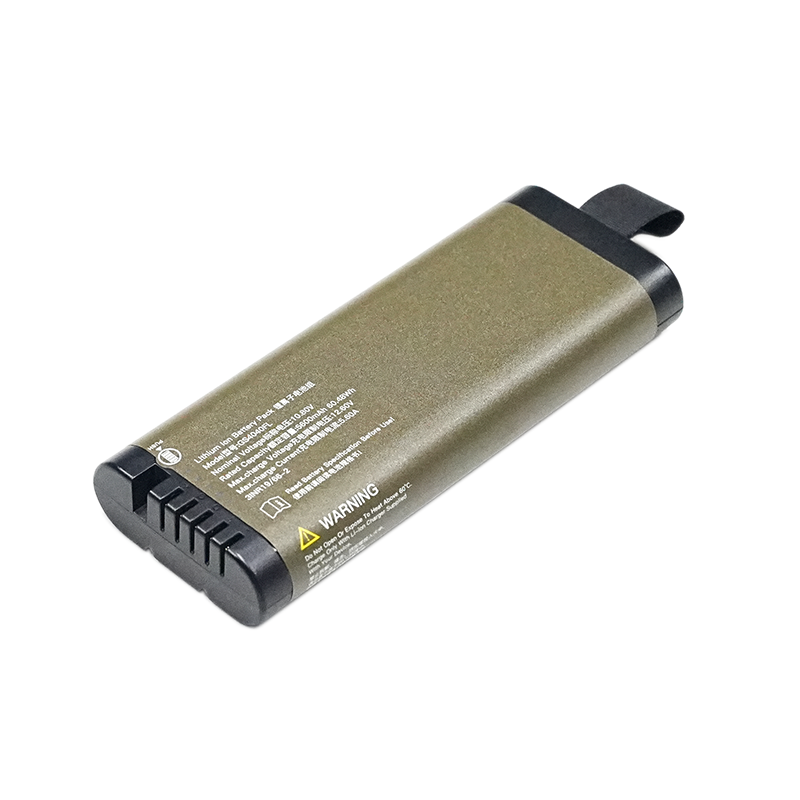
Purpose-built low-temperature packs shift every row of that table. TEFOO’s GS4040 series, designed around cold-rated 18650 cells, publishes its low-temperature figure with the product specification:
|
Model |
Configuration |
Nominal Spec |
Discharge Power |
Dimensions |
Low-Temperature Rating |
|---|---|---|---|---|---|
|
GS4040FL |
3S2P |
10.8 V / 5,400 mAh / 58.32 Wh |
80 W |
150 × 58.5 × 22 mm (5.91 × 2.30 × 0.87 in) |
>70% of nominal capacity at -40°C |
|
GS4040IL |
3S3P |
10.8 V / 8,100 mAh / 87.48 Wh |
80 W |
214 × 58.5 × 22 mm (8.43 × 2.30 × 0.87 in) |
>70% of nominal capacity at -40°C |
At -40°C, where a standard pack delivers perhaps one-seventh of its rating, the GS4040FL still provides roughly 41 Wh of usable energy — enough to keep a 20 W field instrument running for about two hours. Both models share the standard-series platform: SMBus smart battery interface, LED state-of-charge indication, and mechanical compatibility with the same chargers and docks, so an instrument family can offer a cold-weather variant without a second mechanical design.
What Design Features Make a Battery Pack Work at -40°C?
Cell Level: Electrolyte and Electrode Engineering
Low-temperature capability starts inside the cell. Cold-rated cells use electrolyte formulations with lower-viscosity solvents and additives that keep ionic conductivity usable at sub-zero temperatures, together with electrode designs — particle size, porosity, coating thickness — that reduce diffusion resistance. These are cell-manufacturer decisions, which is why pack-level “low-temperature” claims should always trace back to a specified cell model, not a marketing adjective.
Pack Level: BMS Thermal Policy and Mechanical Design
The pack designer controls four things that determine real-world cold performance:
- Charge temperature lockout: the BMS must block or sharply reduce charging below 0°C to prevent lithium plating — a non-negotiable protection for any cold-deployed pack.
- Temperature sensing placement: NTC sensors positioned to read actual cell temperature, not enclosure air, so protection triggers on the cell’s real state.
- Thermal design of the enclosure: insulation slows the pack’s cool-down rate; self-discharge heat during operation then works in the user’s favor.
- Accurate gauging in the cold: a fuel gauge compensating for temperature-dependent resistance gives the operator a trustworthy remaining-runtime figure instead of the misleading “60%” that fails in twelve minutes.
How Should Buyers Specify and Verify Low-Temperature Performance?
The Specification Checklist for Cold-Rated Packs
Procurement teams writing a low-temperature battery requirement should demand five items in the supplier’s datasheet and test documentation:
- Separate discharge and charge temperature ranges — a pack rated “-40°C to 60°C” that does not state a charge range is hiding the plating problem.
- Capacity retention at stated temperature, with test conditions — discharge rate, cutoff voltage, and soak time must accompany any percentage.
- Discharge curves at multiple temperatures — room temperature, -20°C, and -40°C on one chart reveals far more than any single number.
- BMS low-temperature charge behavior in writing — lockout threshold and reduced-current policy.
- Cell model disclosure — the cold rating must trace to a named, cold-rated cell, and the cell model must be frozen for production consistency.
Standard Pack vs Low-Temperature Pack: The Sourcing Decision
|
Dimension |
Standard Pack (rated to -20°C) |
Low-Temperature Pack (rated to -40°C) |
|---|---|---|
|
Usable capacity at -40°C |
~10–20% of rating; often unusable |
>70% of rating (GS4040 series data) |
|
Instrument runtime in deep cold |
Minutes; early BMS cutoff |
Hours; predictable, gauge-readable |
|
Risk of field failure |
High below -20°C |
Designed for the environment |
|
Price premium |
Baseline |
Higher cell cost; offset by fewer failures and less oversizing |
|
Best for |
Temperate climates, indoor use |
Outdoor instruments, emergency rescue, geophysical survey, defense field equipment |
Teams specifying power for outdoor instruments, emergency rescue equipment, or geophysical survey gear can evaluate the GS4040 low-temperature series directly: TEFOO provides the low-temperature discharge data, 2D/3D drawings, and SMBus protocol documentation needed for design-in, and the engineering team can run a capacity check against your instrument’s actual load profile before you commit.
Conclusion
A battery pack that “works at -40°C” is a meaningless claim until it is attached to a capacity figure, a discharge rate, and a cutoff voltage. Standard lithium-ion packs lose the majority of their deliverable capacity below -20°C and fail almost entirely at -40°C, while purpose-built low-temperature packs — through cold-rated cells, correct BMS thermal policy, and enclosure design — keep more than 70% of nominal capacity at -40°C. Buyers who specify test conditions instead of slogans get instruments that survive the winter site visit.