Why Does Sub-100Wh Battery Pack Design Simplify UN 38.3 and Air Shipping for Portable Instruments?
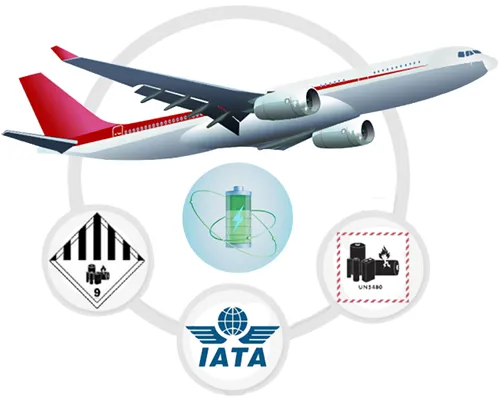
A handheld spectrometer ships to a distributor in Germany, and the freight forwarder kicks the booking back: the battery is over 100 Wh, so the shipment now needs a Shipper’s Declaration for Dangerous Goods, Class 9 hazard labels, UN-specification packaging, and a trained signatory. The same instrument with a 95 Wh pack would have moved as ordinary air cargo with a simple lithium battery mark. That 5 Wh difference is one of the most expensive design decisions in portable instrument engineering — and one of the easiest to get right at the battery selection stage. One clarification first, because even experienced buyers mix the two up: UN 38.3 is a test standard that applies to every lithium battery regardless of size; the 100 Wh threshold belongs to the IATA transport rules and decides which shipping regime the battery falls under. This guide separates the two and shows where the real cost savings sit.
Key Takeaways
– The 100 Wh line splits air shipping into two regimes: battery packs at or under 100 Wh (cells at or under 20 Wh) qualify for Section II — no Shipper’s Declaration, no UN-spec packaging, no Class 9 label. Above 100 Wh, the shipment becomes fully regulated Class 9 dangerous goods.
– UN 38.3 testing is mandatory at any size: every cell and battery type must pass the eight UN 38.3 tests, and the manufacturer must provide a test summary. Sub-100Wh design simplifies the shipping paperwork, not the testing obligation.
– Since January 1, 2026, the 30% state-of-charge rule is mandatory for batteries packed with equipment (PI 966), so a factory ship-mode or low-charge default is now part of shipping compliance, not a courtesy.
What Does the 100 Wh Threshold Actually Change in Air Transport?
Section II vs Section I: The Two Shipping Regimes
Under the IATA Dangerous Goods Regulations (67th edition, 2026) and the matching US rule in 49 CFR 173.185, lithium-ion cells up to 20 Wh and batteries up to 100 Wh qualify for the lighter Section II regime. Cross that line and the same box becomes a fully regulated dangerous goods consignment:
|
Requirement |
Battery ≤100 Wh (Section II) |
Battery >100 Wh (Section I) |
|---|---|---|
|
Package mark |
Lithium battery mark only |
Class 9 lithium battery hazard label |
|
Shipper’s Declaration for Dangerous Goods |
Not required |
Required, signed by DG-trained staff |
|
Packaging |
Strong rigid outer packaging |
UN-specification (PG II) packaging |
|
Staff training |
“Adequate instruction” suffices |
Formal dangerous goods training |
|
Carrier acceptance |
Widely accepted, passenger and cargo aircraft |
Cargo-aircraft constraints; fewer carriers accept |
|
Freight cost impact |
Standard DG surcharge or none |
DG handling fees, limited routings |
The gap compounds across a distribution program: every Section I shipment pays DG handling, waits for DG-capable flights, and risks rejection at the airline terminal if any document is inconsistent.
How to Calculate Wh and Where Designs Cross the Line
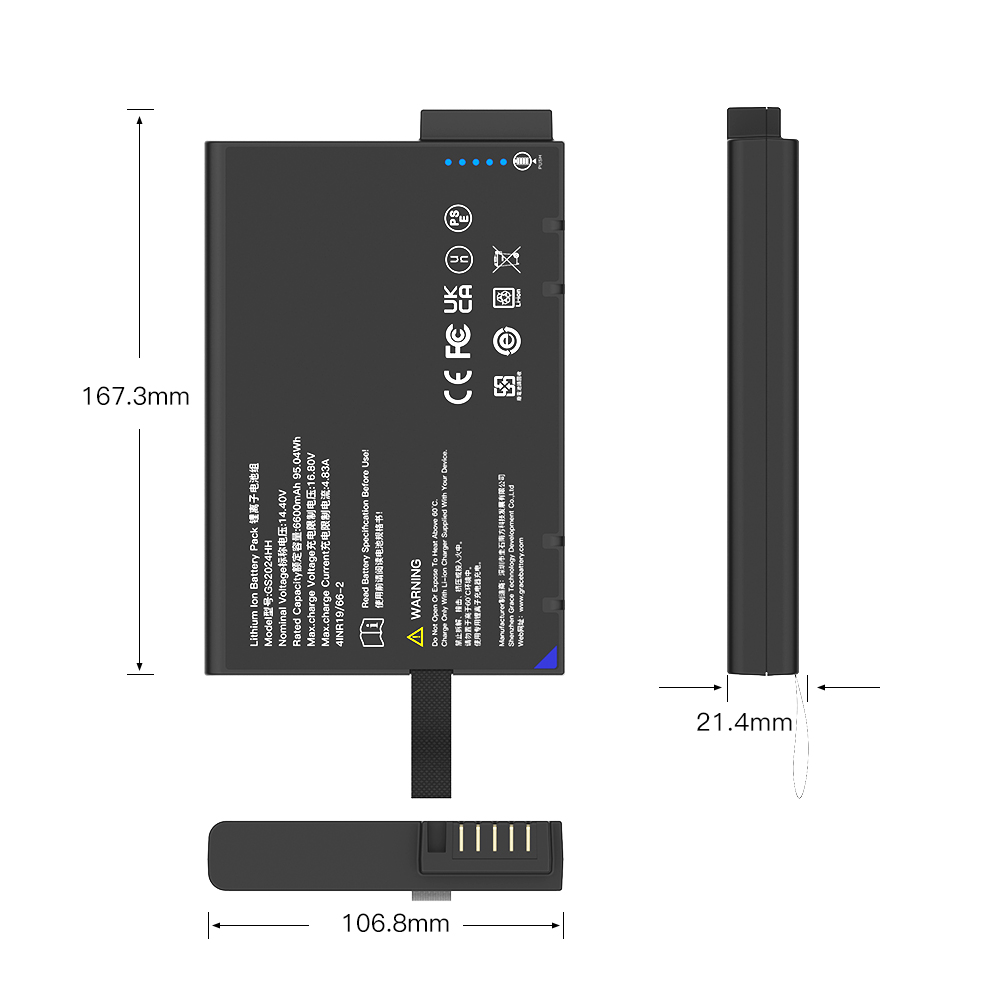
Watt-hours are simply nominal voltage multiplied by rated capacity in amp-hours — a 14.4 V, 6.6 Ah pack is 95 Wh. The threshold creates a hard design ceiling that pack engineers work against deliberately. A 4S2P pack built on 3.3 Ah 18650 cells lands at 95 Wh and ships under Section II; the same architecture stretched to 4S3P reaches 142.6 Wh and becomes fully regulated. Experienced pack platforms therefore cap their standard models just under the line — TEFOO’s standard smart Li-ion battery series, for example, spans 11.88 Wh to 97.2 Wh precisely so that every model ships under the Section II regime by air.
Does UN 38.3 Still Apply to Sub-100Wh Battery Packs?
Yes — Eight Tests and a Test Summary, at Any Size
UN 38.3 is sub-section 38.3 of the UN Manual of Tests and Criteria, and size does not exempt any cell or battery from it. Every lithium cell and battery type offered for transport must pass:
- T.1 Altitude simulation — low-pressure exposure simulating air transport
- T.2 Thermal test — temperature cycling between extremes
- T.3 Vibration — sinusoidal vibration across the transport frequency range
- T.4 Shock — half-sine mechanical shocks
- T.5 External short circuit — shorted terminals at elevated temperature
- T.6 Impact/Crush — mechanical abuse of the cell casing
- T.7 Overcharge — charging beyond specified limits (battery packs)
- T.8 Forced discharge — reversal stress on cells
The compliance artifact buyers must hold is the UN 38.3 test summary — a standardized document listing the report number, battery description, Wh rating, and pass results — which manufacturers and distributors are required to make available on request. Two confusions cause real shipment delays here: the test summary is not the full laboratory report, and it is not an SDS. IATA does not require an SDS for batteries at all, because safety data sheets cover substances and mixtures, not manufactured articles. Carriers and marketplaces reject bookings and listings over a missing test summary even when every other document is perfect.
What Changed in 2026: The 30% State-of-Charge Rules
Charge Limits Now Depend on How the Battery Travels
The 2026 ICAO Technical Instructions and IATA DGR extended the long-standing 30% state-of-charge limit for standalone batteries to batteries packed with equipment. The current picture:
|
Shipping Configuration |
UN Number / Packing Instruction |
30% SoC Status in 2026 |
|---|---|---|
|
Battery shipped alone (spare pack) |
UN 3480 / PI 965 |
Mandatory (in force since 2016); cargo aircraft only |
|
Battery packed with equipment |
UN 3481 / PI 966 |
Mandatory since January 1, 2026 — all Section I, and Section II above 2.7 Wh |
|
Battery installed in equipment |
UN 3481 / PI 967 |
Strong recommendation: ≤30% SoC or ≤25% indicated capacity |
The engineering implication sits upstream: state of charge is fixed at the factory, not at the forwarder’s warehouse. A smart battery pack with a fuel gauge and SMBus interface makes compliance auditable — the shipper can verify and document the actual charge level before the box closes, and a firmware ship-mode can park the pack at a defined low state of charge automatically. Packs without gauging force the shipper to trust a production-line setting nobody can re-verify.
How Should OEMs Source Battery Packs for Predictable Global Shipping?
A Shipping-Ready Battery Pack Checklist
Procurement teams can screen battery suppliers on five shipping-compliance points before discussing price:
- Wh rating on the label and datasheet — confirms Section II eligibility at a glance; the mark must be legible on the pack itself.
- UN 38.3 test summary per model — request it by document name and match the model number to your purchase order.
- Documented ship-mode charge level — written confirmation that packs leave the line at or under 30% SoC.
- Certified cells with frozen models — design changes after certification invalidate documents.
- Fuel gauge accuracy for indicated capacity — supports the PI 967 “25% indicated capacity” option and end-user charge management.
Standard Platform vs Oversized Custom Pack: The Shipping Math
|
Dimension |
Sub-100Wh Standard Pack Platform |
Custom Pack >100 Wh |
|---|---|---|
|
Air freight regime |
Section II: mark only, no declaration |
Section I: declaration, UN packaging, DG training |
|
Carrier availability |
Broad; passenger and cargo routings |
Narrowed; cargo-aircraft dependence for standalone spares |
|
Per-shipment cost |
Standard or low DG surcharge |
DG handling on every consignment |
|
Document maintenance |
Test summary per standard model, maintained by manufacturer |
New UN 38.3 program and summaries per custom design |
|
Energy budget |
≤100 Wh per pack; runtime extended via swappable packs |
Higher single-pack energy at full DG cost |
When runtime demands exceed what one 95 Wh pack delivers, the field-proven pattern is hot-swappable sub-100Wh packs rather than one oversized battery — each swap unit stays inside Section II, and spares still travel legally. OEMs evaluating this route can review TEFOO’s sub-100Wh standard smart battery platform: every model ships with a UN 38.3 test summary, a documented low-charge ship state, and IEC 62133/UL 2054/CE certification files, so the shipping dossier exists before the first purchase order.

Conclusion
Sub-100Wh design does not reduce testing obligations — UN 38.3 applies at every size — but it keeps portable instruments inside the Section II shipping regime: no Shipper’s Declaration, no UN-spec packaging, broad carrier acceptance, and lower per-shipment cost. Combined with a verifiable 30% ship-mode state of charge, a sub-100Wh smart battery pack turns dangerous goods shipping from a recurring exception into a routine parcel. Engineering teams that lock the Wh ceiling at the design stage stop paying for the threshold on every shipment thereafter.