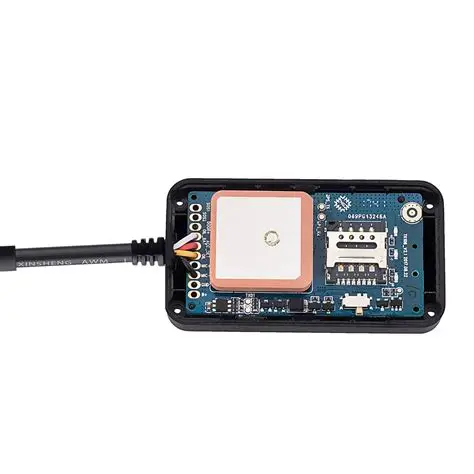
A single dead battery in a fleet of 5,000 container trackers does more than kill one device — it breaks asset visibility and triggers a field service call that often costs more than the tracker itself. For GPS asset trackers deployed on trailers, containers, and remote equipment, the choice between a primary lithium thionyl chloride (Li-SOCl₂) battery and a rechargeable lithium-ion (Li-ion) battery determines service life, maintenance cost, and data reliability for the entire deployment. This guide compares both chemistries on measurable engineering parameters so battery engineers and procurement managers can specify the right power source the first time.
Key Takeaways
– Li-SOCl₂ batteries deliver the highest energy density of any practical primary cell (typically 400–700 Wh/kg) with self-discharge below 1% per year, enabling 10+ years of maintenance-free operation in low-power GPS trackers.
– Li-ion batteries suit high-drain trackers with access to regular recharging, but their 300–1,000 cycle life and 1–3% monthly self-discharge make them a poor fit for unattended multi-year deployments.
– Bobbin Li-SOCl₂ cells cannot supply 4G/GNSS transmit pulses alone. Pair the cell with a hybrid layer capacitor (HLC) or specify a spiral-wound design for pulse currents up to 2 A.
Why Do GPS Asset Trackers Need a Specialized Battery Design?
What Does the Real Power Profile of a GPS Tracker Look Like?
A GPS asset tracker spends more than 99% of its operating life asleep at microamp-level current and wakes only for brief, high-current transmit bursts. This duty cycle is fundamentally different from consumer electronics, and it is the primary reason battery selection for trackers is an engineering decision rather than a purchasing afterthought.
A typical LTE Cat-M1 / NB-IoT asset tracker draws:
- Sleep current: 5–50 µA between reporting intervals
- GNSS acquisition: 25–40 mA for 30–120 seconds per fix
- Cellular transmit bursts: 0.5–2 A peak, depending on network technology and signal conditions (GSM/GPRS trackers sit at the upper end)
- Reporting frequency: from 1 message per day (container tracking) to 1 message per minute (fleet telematics)
The battery must survive years of microamp drain without meaningful self-discharge, then deliver amp-level pulses on demand — often at sub-zero temperatures. Very few chemistries satisfy both conditions.
What Does a Battery Replacement Actually Cost in the Field?
The battery cell is usually the cheapest part of a replacement event. For a tracker mounted on a shipping container, trailer, or remote infrastructure asset, the true replacement cost includes technician labor, travel, asset downtime, and the risk of lost tracking data during the swap.
- A replacement truck roll for a remotely deployed asset typically costs several times the price of the tracker hardware itself.
- Trackers deployed on leased or third-party assets may be physically unreachable for months at a time.
- Every replacement event is also a data-continuity risk: a tracker offline for 48 hours creates a blind spot in the supply chain.
This cost structure is why “maintenance-free for the asset’s service life” is the dominant battery requirement in industrial asset tracking — and it is the requirement Li-SOCl₂ was effectively built to meet.
What Is a Li-SOCl₂ Battery and Why Do GPS Trackers Use It?
What Are the Key Specifications of Li-SOCl₂ Chemistry?
Li-SOCl₂ (lithium thionyl chloride) is a primary, non-rechargeable lithium chemistry that offers a nominal voltage of 3.6 V and the highest energy density of any commercially proven primary cell. Bobbin-type Li-SOCl₂ cells — the standard form for IoT and metering — have powered utility meters and industrial sensors for over three decades, which gives the chemistry an unusually deep field track record.
Typical specifications for bobbin Li-SOCl₂ cells:
- Nominal voltage: 3.6 V (flat discharge profile across most of the cell’s life)
- Energy density: typically 400–700 Wh/kg depending on cell size — for reference, a D-size ER34615 cell (34.2 mm × 61.5 mm / 1.35 in × 2.42 in) delivers around 19 Ah
- Self-discharge: below 1% per year at 20 °C (68 °F), enabling 10–20 year service life
- Operating temperature: typically −55 °C to +85 °C (−67 °F to +185 °F), far wider than Li-ion
- Continuous current: bobbin designs are limited to the milliamp range; an AA-size ER14505 (14.5 mm × 50.5 mm / 0.57 in × 1.99 in) typically supports only tens of milliamps continuously
For a tracker that reports a few times per day and sleeps the rest of the time, these parameters translate directly into a decade of unattended operation.
What Is Passivation, and Why Does It Matter After Storage?
The same mechanism that gives Li-SOCl₂ its exceptional shelf life — a protective passivation layer that forms on the lithium anode — causes a temporary voltage dip when the cell is loaded after long storage. This phenomenon, called voltage delay, is the most common surprise for engineers new to the chemistry.
- After months of storage, initial load voltage can sag for seconds to minutes before recovering to the nominal 3.6 V plateau.
- Voltage delay grows more severe at low temperatures and after long storage periods.
- Standard mitigations include periodic low-current “depassivation” pulses in firmware, or pairing the cell with a hybrid layer capacitor that buffers the load during recovery.
Passivation is a manageable design consideration, not a disqualifier — but the tracker firmware and power architecture must be designed around it from day one.
How Do Li-SOCl₂ and Li-ion Batteries Compare for Asset Tracking?
How Do the Technical Specifications Compare Side by Side?
For unattended, low-power tracking, Li-SOCl₂ outperforms Li-ion on every parameter that matters — energy density, self-discharge, temperature range, and service life — while Li-ion wins only where recharging is available and high continuous current is required.
|
Parameter |
Li-SOCl₂ (Bobbin) |
Li-SOCl₂ + HLC Hybrid |
Li-ion (NMC/LCO) |
LiFePO₄ |
|---|---|---|---|---|
|
Cell type |
Primary |
Primary + capacitor |
Rechargeable |
Rechargeable |
|
Nominal voltage |
3.6 V |
3.6 V |
3.6–3.7 V |
3.2 V |
|
Energy density |
400–700 Wh/kg |
250–400 Wh/kg (pack level) |
150–260 Wh/kg |
90–160 Wh/kg |
|
Self-discharge |
<1% per year |
~1–2% per year |
1–3% per month |
2–3% per month |
|
Cycle life |
N/A (single-use) |
N/A (single-use) |
300–1,000 cycles |
2,000–5,000 cycles |
|
Pulse current |
Milliamp range |
Up to 2 A+ |
High |
High |
|
Operating temperature |
−55 to +85 °C (−67 to +185 °F) |
−40 to +85 °C (−40 to +185 °F) |
−20 to +60 °C (−4 to +140 °F) |
−20 to +60 °C (−4 to +140 °F) |
|
Typical tracker service life |
10–20 years |
10+ years |
2–5 years (cycle-limited) |
5–10 years |
Values represent typical published industry ranges; exact figures vary by cell manufacturer and size.
How Do You Solve the Pulse-Current Problem of Bobbin Li-SOCl₂ Cells?
The standard engineering solution is a Li-SOCl₂ + HLC hybrid pack: the bobbin cell provides energy capacity, and a hybrid layer capacitor connected in parallel delivers the amp-level transmit pulses. The cell recharges the capacitor between transmissions at a low, passivation-friendly current.
- The HLC supplies the 0.5–2 A cellular transmit burst; the Li-SOCl₂ cell never sees the pulse directly.
- Between transmissions, the cell tops up the capacitor at milliamp-level current, which also limits passivation buildup.
- Commercial hybrid packs are widely available and field-proven in smart metering and telematics applications.
- The alternative for moderate pulses is a spiral-wound Li-SOCl₂ cell, which trades some energy density for higher current capability.
This architecture is exactly where a custom battery pack partner adds value: pulse width, reporting frequency, temperature envelope, and enclosure space all affect the cell-and-capacitor sizing. [TEFOO’s engineering team designs custom Li-SOCl₂ and hybrid battery packs for tracking and IoT devices, including cell selection, HLC sizing, and UN 38.3 transport test support — contact us with your load profile for a matched proposal.]
Which Battery Chemistry Should You Choose for Your Tracking Application?
Which Chemistry Fits Each Tracking Scenario?
The decision hinges on two questions: can the tracker be reached for recharging or replacement, and how often does it report? The answers map cleanly onto chemistry choice.
- Choose Li-SOCl₂ (bobbin or hybrid) for container, trailer, and remote-equipment trackers with 5–10+ year service targets, low reporting frequency, and no maintenance access. This is the default for logistics asset tracking.
- Choose Li-ion for vehicle trackers and telematics units wired to vehicle power, where the battery is only a backup and the alternator or an external charger handles replenishment. Also suitable for high-frequency-reporting devices that users recharge weekly or monthly.
- Choose LiFePO₄ for solar-assisted trackers and outdoor stations where thermal stability and long cycle life matter more than energy density.
- Compliance note for all chemistries: lithium cells shipping internationally must pass UN 38.3 transport testing; primary lithium cells are additionally covered by IEC 60086-4 safety requirements, and Li-ion cells by standards such as UL 1642. Verify certification documents from your cell or pack supplier before design freeze.
What Does the 10-Year Total Cost of Ownership Look Like?
Over a 10-year deployment, a primary Li-SOCl₂ pack typically undercuts rechargeable Li-ion on total cost — not because the cell is cheaper, but because it eliminates nearly all replacement labor. The illustrative model below uses stated assumptions for a 1,000-tracker fleet; substitute your own labor and hardware rates for a project-specific figure.
|
Cost Element (10 Years, 1,000 Trackers) |
Li-SOCl₂ Hybrid Pack |
Rechargeable Li-ion Pack |
|---|---|---|
|
Assumed battery service life |
10 years |
3 years |
|
Battery-related field replacements |
0 |
2 (at years 3 and 6) |
|
Pack unit cost (assumption) |
$8 |
$5 |
|
Replacement labor + logistics per unit (assumption) |
— |
$40 |
|
Battery hardware over 10 years |
$8,000 |
$15,000 (3 packs per unit) |
|
Field service cost over 10 years |
$0 |
$80,000 |
|
Estimated 10-year total |
≈ $8,000 |
≈ $95,000 |
Illustrative model with stated assumptions, not measured field data. Real costs vary with labor rates, asset accessibility, and reporting duty cycle.
The conclusion generalizes beyond these specific numbers: in remote asset tracking, replacement logistics — not cell price — drive battery TCO. Any chemistry that removes replacement events wins the economics.
For procurement teams building a specification around these trade-offs, TEFOO supports the full process from chemistry selection through prototype packs and certification testing. [Reach out to TEFOO for a custom battery pack consultation tailored to your tracker’s duty cycle and deployment environment.]
Conclusion
Li-SOCl₂ and Li-ion are not interchangeable answers to the same question. Li-ion serves trackers with reliable access to recharging and high continuous loads; Li-SOCl₂ — especially in bobbin-plus-HLC hybrid form — is the engineering-standard choice for unattended GPS asset trackers that must report reliably for a decade or more on a single battery. Specify the chemistry against the actual duty cycle, temperature envelope, and replacement economics of your deployment, and the battery will stop being the failure point of your tracking system.