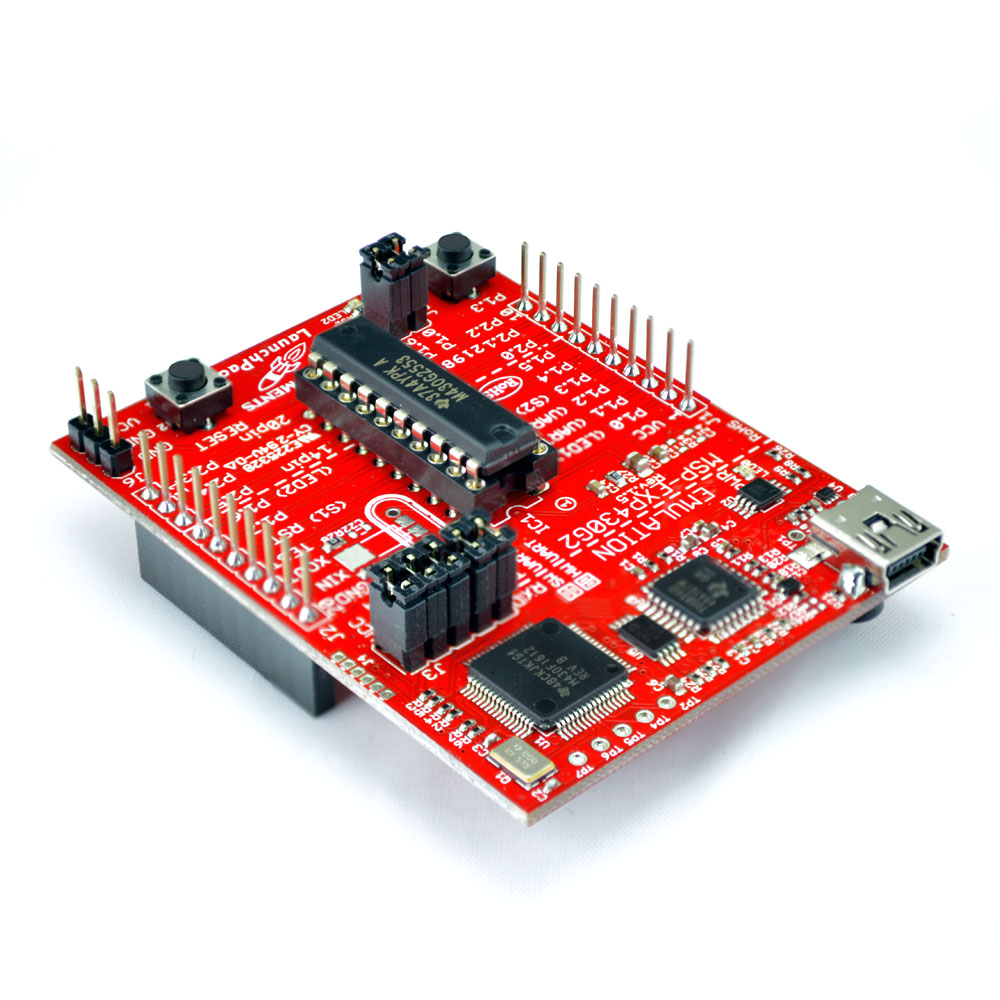
Why MSP430?
In the development of portable medical devices such as blood glucose meters and pulse oximeters, MCU selection is critical to product experience, cost, and market competitiveness. These devices require portability, frequent use, long standby times, and measurement accuracy, placing rigorous demands on microcontroller performance. Practical development experience shows that power consumption and integration are the primary factors in MCU selection; Texas Instruments’ (TI) MSP430 series has become a perennial favorite in this field thanks to its exceptional balance of capabilities. This article analyzes the core logic behind selecting MSP430 devices, considering specific application requirements and model characteristics.
Key Points
1. With its combined advantages of ultra-low power consumption, cost-effectiveness, and high-precision sampling, the MSP430 is the preferred MCU for portable medical devices like blood glucose meters and pulse oximeters, perfectly meeting their essential operational needs.
2. Comprehensive low-power optimization across the architecture and peripherals enables nanoampere- or microampere-level standby power consumption. This supports the operational characteristics of long standby times and rapid wake-up from sleep modes, significantly extending device battery life.
3. A comprehensive product portfolio and highly integrated peripherals allow for precise model selection—avoiding performance redundancy while effectively reducing BOM costs and PCB footprint—to meet demands for device miniaturization and low cost.
4. The entire series features high-precision ADC modules; combined with low-noise hardware design and robust processing power, hardware-software synergy ensures accurate acquisition of weak biological signals, meeting medical device testing standards.
5. The three main series are clearly positioned for specific applications: the Gxx series offers high cost-performance for entry-level devices; the Fxx series balances performance and cost with a mature ecosystem for mid-range devices; and the FRxx series delivers superior read/write performance and ultra-low power consumption for high-end, multifunctional devices.
6. The MSP430 achieves an optimal balance of power consumption, cost, and performance, covering the full spectrum of portable medical device development—from entry-level to high-end—with exceptional application versatility.
Why is ultra-low power consumption a core requirement for portable medical equipment?
Portable medical equipment is generally powered by button batteries and dry batteries, and has the characteristics of “long-term standby, wake-up at any time, and short-term operation”. Power consumption performance directly determines the device’s battery life and user core experience, and is also the primary consideration for MCU selection. The core advantage of MSP430 is the all-round ultra-low power design, which is not a single parameter optimization, but a full-dimensional low-power adaptation from chip architecture to peripheral configuration.
For different portable medical scenarios, the value of its power consumption advantage is highlighted: the blood glucose meter has a limited number of daily measurements, but it needs to be on standby all year round and respond to user operations at any time; the blood oximeter has a slightly longer single measurement process and needs to be started quickly, accurately sampled, and sleep immediately after the measurement is completed to save power to the maximum extent. MSP430 can achieve ultra-low standby current at the nanoampere and microampere levels, and its power consumption under operating conditions is also industry-leading. It can increase the battery life of the device from just dozens of days to half a year or even longer, completely solving the battery life shortcomings of portable devices and greatly optimizing the user experience.
How does MSP430 achieve precise and controllable equipment costs?
Consumer-grade portable medical equipment is extremely cost-sensitive. During the research and development process, it is necessary to minimize the BOM cost and reduce the size of the equipment while meeting performance standards to avoid wasting resources caused by performance redundancy. With its complete product matrix and highly integrated design, the MSP430 series perfectly meets the needs of equipment cost control.
On the one hand, MSP430 has a full coverage model system, covering entry-level minimalist configurations to high-end full-featured configurations. There are basic models equipped with only a few KB Flash and hundreds of bytes of RAM, suitable for simple single-parameter measurement equipment; there are also enhanced models that integrate LCD drivers, USB interfaces, and high-precision ADCs to meet complex functional requirements such as multi-parameter monitoring, data storage, and screen display. R&D personnel can accurately select products based on their functional complexity, eliminate the performance redundancy problem of “big horse-drawn carts”, and achieve an accurate match between hardware resources and product needs.
On the other hand, the high degree of chip integration effectively reduces the cost of peripheral hardware. MSP430 has built-in analog front-ends such as slope ADC and Sigma-Delta ADC, and integrates hardware multipliers, DMA and other digital peripherals. It can complete core functions such as signal acquisition and data calculation without the need for a large number of additional peripheral components. It effectively reduces the number of BOM materials, reduces the PCB board area, and adapts to the development trend of miniaturization and lightweight of portable medical equipment.
How does the MSP430 ensure the core measurement accuracy of medical devices?
Measurement accuracy is the lifeline of medical devices; it directly determines the precision of health data monitoring and serves as the fundamental basis for product compliance and market acceptance. Portable medical devices require the acquisition of faint bio-electric and optical sensor signals, placing extremely high demands on an MCU’s signal sampling and data processing capabilities. The MSP430 provides comprehensive hardware and software support for such high-precision measurements.
At the hardware level, mainstream series like the MSP430FRxx feature high-precision 16-bit Sigma-Delta ADC modules capable of sampling with a very high number of effective bits. Combined with low-noise power supply designs and stable clock architectures, these chips can accurately capture weak raw sensor signals, providing a high-quality hardware foundation for signal digitization. At the software level, the chips possess robust processing power, perfectly supporting high-precision algorithms such as analog circuit calibration, software filtering, and data compensation. Through the synergistic optimization of hardware and software, the stability and accuracy of measurement data are further enhanced, meeting the rigorous testing standards required for medical devices.
Which medical device applications are suited to the mainstream MSP430 series?
| Series | Memory Type | Write/Erase Endurance | Core Peripherals | Typical Model | Cost Positioning | Recommended Medical Scenarios |
|
MSP430Gxx (Value Line)
|
Traditional Flash |
~100k cycles (Requires sector erase) |
Basic GPIO, Timers, 10-bit ADC |
MSP430G2553 |
Very Low (Max cost-efficiency) |
Entry-level blood glucose meters, single-parameter pulse oximeters, auxiliary co-processors |
|
MSP430Fxx (Flash)
|
Traditional Flash |
~100k cycles (Requires sector erase) |
12-bit/16-bit ADC, Integrated Op-Amps, LCD Driver, USB |
MSP430F5529, MSP430FGxx |
Medium (Balanced performance & cost) |
Conventional mid-range portable medical devices |
|
MSP430FRxx (FRAM)
|
FRAM (Ferroelectric RAM) |
Virtually unlimited (10^15 cycles) |
16-bit high-precision ADC, CapTouch, LCD Driver, USB, Hardware Multiplier, DMA |
MSP430FR6989 |
Premium (High-end fully-featured) |
Beat-by-beat SpO2/HR logging, high-frequency data storage, multi-parameter medical devices |
The MSP430 family comprises hundreds of specific models, with significant differences in performance, resources, and cost across series; accurately distinguishing the characteristics of each series is key to efficient selection. To address the application needs of portable medical devices, the lineup is categorized into three core series—FRAM, Value Line, and Flash—each suited to distinct application scenarios.
1. MSP430FRxx (FRAM Series)
The defining feature of this series is the use of Ferroelectric RAM (FRAM) instead of traditional Flash memory. Its core advantages include near-infinite write endurance, byte-level write precision, high write speeds, and ultra-low power consumption. It is ideally suited for medical scenarios requiring frequent data storage, such as recording blood oxygen and heart rate waveforms on a beat-by-beat basis or storing device calibration parameters over the long term. Additionally, it integrates capacitive touch sensing modules and multi-segment LCD drivers, offering a rich set of peripherals. Its main drawback is a relatively higher unit cost. A typical model is the MSP430FR6989, which integrates a full suite of peripherals—including a 320-segment LCD driver, 16-bit ADC, hardware multiplier, DMA, and USB—making it suitable for high-end, multi-parameter portable medical devices with complex functionality.
2. MSP430Gxx (Value Line Series)
Positioned for exceptional cost-effectiveness, this series is the preferred choice for entry-level, lightweight devices. These chips feature essential peripherals such as GPIO, timers, and a 10-bit ADC, meeting basic requirements for simple signal acquisition and data monitoring at a highly competitive price point. However, they are limited by small memory capacity and restricted peripheral resources, making them unsuitable for complex algorithms or the coordinated operation of multiple peripherals. A typical model is the MSP430G2553; it is suitable for entry-level portable medical devices—such as simple blood glucose meters and single-parameter pulse oximeters—and can also serve as an auxiliary co-processor.
3. MSP430Fxx (Flash Series)
As the traditional flagship series of the MSP430 family, this line boasts the largest number of models and the most mature technical ecosystem, striking a balance between cost and performance. The series offers a rich peripheral set—including 12-bit/16-bit ADCs, integrated operational amplifiers, and LCD drivers—catering to a wide range of device requirements from low-end to mid-range. Compared to the FRAM series, its drawbacks include the limited write/erase endurance of traditional Flash memory (approximately 100,000 cycles), the requirement to erase entire sectors before writing, and slightly inferior active power consumption and read/write speeds. Typical models include the MSP430F5529 (featuring an integrated USB interface) and the MSP430FGxx series (equipped with a high-precision 16-bit ADC), which are well-suited for standard mid-range portable medical devices.
Why is the MSP430 the optimal, balanced solution for portable medical devices?
When selecting an MCU for portable medical devices, performance, power consumption, and cost form an “iron triangle” of competing constraints; most chips struggle to satisfy all three core requirements simultaneously. The MSP430 series, however, excels by achieving an exceptional balance among them. While it may not boast the industry’s absolute highest performance specifications, its optimization tailored to portable medical applications gives it an irreplaceable level of suitability.
For entry-level, single-parameter measurement devices, the Gxx series can be selected to minimize hardware costs while ensuring stable basic functionality. For mid-range, standard monitoring devices, the Fxx series—leveraging a mature ecosystem and balanced performance—meets the vast majority of development needs. For high-end medical devices requiring multifunctionality and high-frequency data storage, the FRxx series offers ultra-low power consumption and superior read/write performance, making it a perfect fit for complex scenarios. Whether for simple home-use portable medical products or multifunctional integrated monitoring systems, the MSP430 offers precise selection options, serving as an excellent starting point for device development. Future discussions can provide a comprehensive breakdown of the design and implementation process for the MSP430 chip, using a typical blood oxygen and heart rate monitoring module as a case study.