How Do Embodied AI Systems Transfer Human Skills to Real-World Applications?
Traditional automation performs well in highly structured, repetitive environments, but it struggles as physical variability increases. Scaling Embodied AI requires transferring human skill representations—captured via multimodal data—across entirely different robot bodies and unpredictable task environments. To commercialize foundation models, engineering teams must validate how generalized robotic intelligence adapts to flexible manufacturing, unstructured domestic services, commercial performances, and high-risk polar explorations.
How Does Embodied AI Adapt to Flexible Manufacturing Environments?
Autonomous Sequencing and Adaptive Robotics
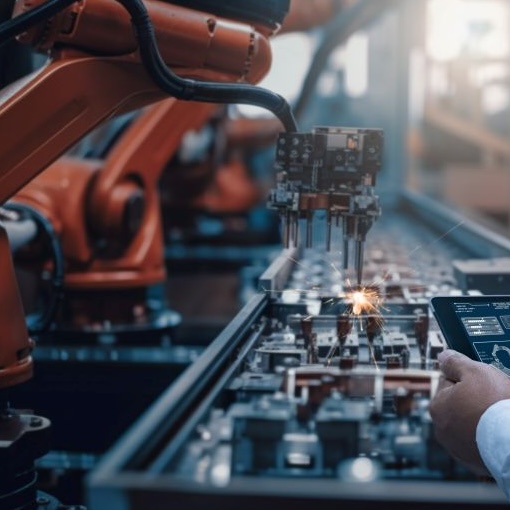
Embodied AI enables industrial robots to autonomously sequence parts and react to unexpected variables in real time rather than following a rigid script. Modern factory floors feature dynamic layouts where components frequently change orientation or position on the assembly line.

-
Adaptive Pick-and-Place: Pick-and-place robots use vision sensors to accommodate variations in object orientation dynamically.
-
Human-Robot Collaboration: Industrial cobots assist human operators directly in industrial environments, adjusting their motion planning based on human proximity.
-
Safety by Design: With automation enabled by embodied AI, safety-by-design increases efficiency and reduces costs by minimizing risks and downtime.
By integrating real-time environmental perception with machine learning capabilities, Embodied AI shifts facilities away from rigid automation toward agile, software-defined production processes.
How Are Fine Manipulation Skills Transferred to Domestic Services?
Unstructured Domestic Task Generalization
Domestic service robots utilize generalized motion planning to execute daily household tasks like meal preparation and tool manipulation in highly unstructured residential layouts. Unlike factory floors, residential homes lack standardized fixturing or predictable lighting conditions.
-
Spatial Variance Navigation: Edge computing modules execute real-time Simultaneous Localization and Mapping (SLAM) to estimate irregular object poses, such as retrieving a dropped utensil from a cluttered countertop.
-
Compliance and Fragility: Tactile sensor arrays map human gripping logic to robotic end-effectors, preventing the mechanical actuators from crushing delicate items like glassware during retrieval.
Transferring fine manipulation skills ensures that Embodied AI systems can safely execute generalized tasks across millions of uniquely configured human-centric environments.
How Do Commercial Performances Utilize Rhythmic Motion Generation?
Expressive Kinematic Output
Commercial performance robots translate human artistic rhythm and emotional expressiveness into transferable kinematic control models for humanoid actuators. This application diverges from industrial precision, focusing entirely on audience interaction and content generation.

-
Fluid Motion Generation: Control algorithms convert human motion capture data into continuous, non-rigid servo commands, eliminating the mechanical stiffness typical of legacy animatronics.
-
Real-Time Audience Interaction: Multi-modal perception frameworks allow the robot to adjust its performance pacing and gesture amplitude based on ambient audio and visual cues from the live audience.
Deploying Embodied AI in commercial entertainment validates that foundation models can successfully generate coherent, natural, and expressive dynamic interactions across varying bipedal robot chassis.
How Do Autonomous Robots Survive High-Risk Polar Explorations?
Extreme Cold Reliability and Custom Energy Modules
Deploying Embodied AI in remote, high-risk polar environments requires zero-latency autonomous decision-making combined with extreme-temperature lithium-ion battery architectures. Polar exploration robots must execute complex terrain navigation and hazard avoidance entirely autonomously, as extreme weather routinely severs cloud connectivity.
-
Zero Embodiment Gap: AI must be trained on the robot’s specific sensors and actuators to process complex, multimodal models locally for real-time manipulation.
-
Low-Temperature Power Distribution: Sub-zero environments cause standard lithium batteries to experience severe voltage drops, disabling edge computers. Tefoo Energy designs custom low-temperature smart battery packs that sustain continuous high-discharge rates for LiDAR sensors and servo motors in extreme extreme polar climates.
A highly reliable, cold-resistant energy foundation is the absolute prerequisite for transferring human operational survival skills into fully autonomous robotic hardware in life-threatening environments.
Frequently Asked Questions (FAQ)
What is Embodied AI in manufacturing?
Embodied AI refers to AI models that control machines using a combination of sensors to perceive, reason, and interact with tasks in real time.
How do robots handle manufacturing variability?
Embodied AI delivers value by enabling robots to adapt, reason, and respond in real time, overcoming the limitations of traditional rigid automation.
Why is the “zero embodiment gap” important for field robots?
AI must be trained on a robot’s specific sensors and actuators because edge computers process complex, multimodal models locally for real-time manipulation.
How do domestic robots handle fragile household items?
Domestic service robots utilize localized tactile feedback sensors to dynamically adjust actuator grip force based on the physical compliance of the object.
Why do polar robots require custom battery packs?
Standard lithium-ion batteries suffer extreme voltage sags in sub-zero temperatures; custom low-temperature chemistries are strictly required to sustain high-current edge computing and motor actuation in polar environments.