How Does Embodied AI Data Shift to Real-World Environments?
The Embodied AI data industry is undergoing a structural transformation, driven by the inherent limitations of controlled laboratory environments. Centralized robot training facilities are restructuring their operational pipelines as hardware engineers recognize that authentic spatial positioning, contact force metrics, and object state dynamics cannot be accurately captured through standardized operations in fixed training arenas. Consequently, the industry is abandoning sterile laboratory data collection, shifting entirely toward distributed, real-world physical environments using scalable wearable hardware architectures.
【Key Takeaways】
-
Real-World Generalization: Lightweight non-embodied capture systems bypass the constraints of fixed laboratories, recording unpredictable physical variables across community and residential environments.
-
Systematic Closed-Loop Engineering: Raw hardware deployment is superseded by comprehensive data pipelines encompassing automatic validation, AI pre-annotation, and human-in-the-loop corrective feedback mechanisms.
-
Hardware Standard Convergence: Strict industry mandates for 60 FPS video, binocular depth, and microsecond spatiotemporal synchronization are forcing the market toward oligopoly concentration and massive 10,000-unit enterprise procurement.
Why Is Data Collection Shifting from Fixed Labs to Real Physical Environments?
How Do Lightweight Wearable Systems Capture Real-World Spatial Dynamics?
Lightweight wearable data collection systems capture genuine spatial positioning and dynamic contact forces by deploying synchronized multi-perspective sensors directly into authentic commercial and residential environments. Embodied AI foundation models require immense volumes of edge-case physical data to achieve generalization. Operating a robot repeatedly within a 1:1 factory mockup fails to expose the neural network to unpredictable variables, such as irregular floor friction, dynamic human obstacles, and variable lighting conditions.
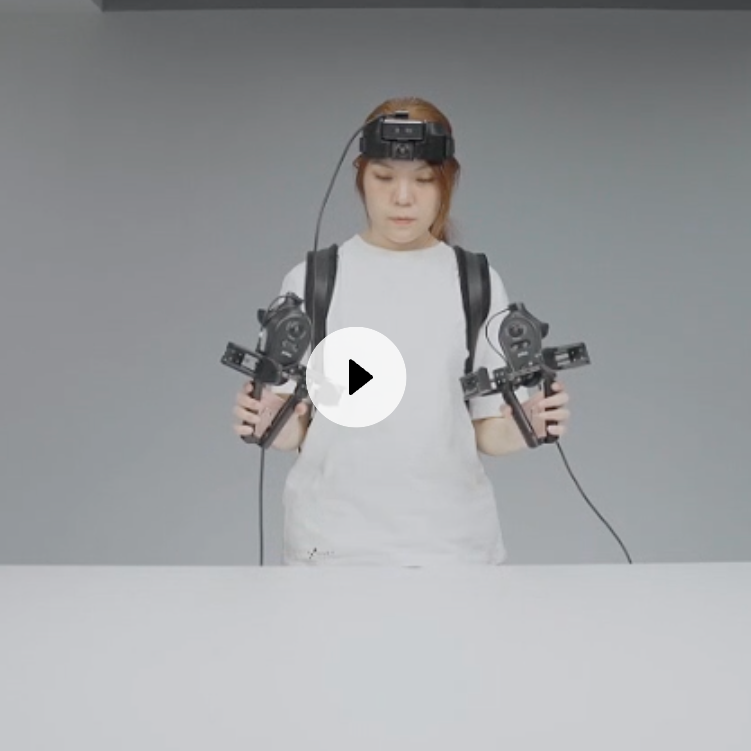
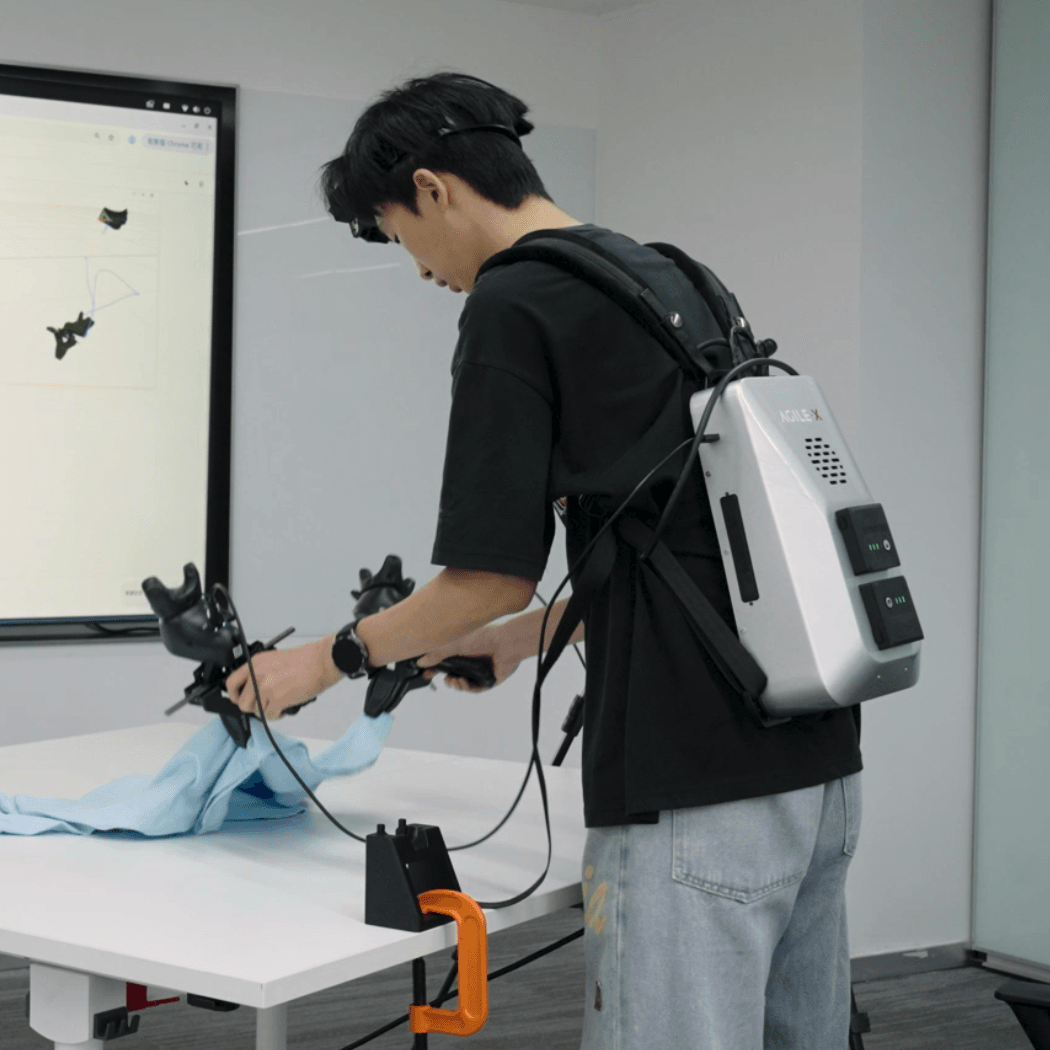
To capture these variables, hardware developers utilize non-embodied wearable rigs—such as head-mounted displays and dual-wrist cameras. These synchronized systems record complex human interactions as operators navigate real physical tasks. Distributed capture networks utilizing this architecture have already deployed across more than 50 metropolitan cities, successfully accumulating over 100,000 hours of authentic real-world spatial data. By moving the sensors onto the human body and out of the lab, AI researchers acquire the exact physical logic required to navigate unstructured environments.
How Does Distributed Crowdsourcing Enable Everyday Life Data Capture?
Distributing lightweight data collection hardware to non-technical demographics extends the Embodied AI data network directly into authentic daily life scenarios. Expanding data acquisition beyond specialized laboratory engineers fundamentally alters the scale of production. Enterprise data platforms have successfully deployed over 20,000 collection units to community retirees, stay-at-home parents, and field professionals.
This crowdsourcing model ensures that the physical interactions recorded—such as folding laundry, organizing irregular objects, or operating household appliances—are entirely natural and devoid of the artificial precision often exhibited by engineers in test facilities. Currently, these distributed networks have produced over 1 million hours of data. Decentralized crowdsourcing ensures the resulting training corpora reflect the true physical randomness that autonomous robots will eventually encounter upon commercial deployment.
How Does the Systematic Engineering Closed-Loop Process Real-World AI Data?
What Is the Standardized Processing Pipeline for Raw Physical Data?
Enterprise data providers execute a standardized system engineering pipeline that automatically routes raw field data through algorithmic checks, AI pre-annotation, semantic filtering, and human QA review. The business model of merely selling capture hardware has become obsolete. Processing unstructured real-world footage into machine-readable spatial data requires a massive backend infrastructure.
When a wearable device uploads raw multi-modal files, the data processing platform immediately initiates an integrity sequence. The system automatically inspects spatial timestamps for frame drops, applies AI pre-annotation to map human hand joints, and executes semantic screening to categorize the physical objects manipulated during the session. Human engineers then audit the edge cases. This rigid engineering pipeline guarantees that variable real-world data is mathematically normalized before it reaches the foundation model training cluster.
How Does the Human-in-the-Loop Feedback Mechanism Optimize Redeployment?
The human-in-the-loop feedback mechanism utilizes human operator takeover during real-world robotic failures to record corrective physical trajectories, funneling this precise error-correction data directly back into the training loop. Validating the foundation model requires deploying the physical robot into the target environment.
When the autonomous robot fails to execute a task—such as misjudging the grip force on a fragile object—a human operator immediately assumes teleoperation control. The system records the exact sensory inputs and the corrective motor commands executed by the human. This highly specific “correction data” flows back to the centralized platform, updating the model weights. The robot is then redeployed with the updated neural network. This continuous feedback loop explicitly links data production with physical model iteration, rapidly resolving the foundation model’s operational deficits.
What Drives Industry Standard Convergence and Concentrated Hardware Procurement?
Why Have Technical Standards Consolidated Around 60FPS and Binocular Depth?
The Embodied AI industry has universally mandated 60 FPS frame rates, native 1080P resolution, hardware binocular depth, and microsecond-level spatiotemporal synchronization, establishing a severe technical barrier to entry. Foundation model developers now outright reject data captured by unsynchronized consumer action cameras or smartphones.
Technical Parameters Summary: Standard Convergence in Data Hardware
| Parameter | Obsolete Trial Hardware | Current Mandatory Industry Standard |
| Visual Resolution | 720P / 1080P Variable | 1080P Native |
| Capture Frame Rate | 30 FPS | 60 FPS (Zero dropped frames permitted) |
| Depth Acquisition | Monocular Estimation | Hardware Binocular Stereo |
| Time Synchronization | Software-based (>15ms jitter) | Microsecond Spatiotemporal Hardware Sync |
Operating multi-perspective head and dual-wrist sensors at 60 FPS with microsecond synchronization demands intense edge computing and generates high-frequency pulse currents from the power module. If the voltage sags, the synchronization clock fails, corrupting the entire dataset.
High-Discharge Custom Power: Securing distributed field operations requires uncompromising voltage stability. Tefoo Energy operates as a custom manufacturer of 18650 lithium-ion battery packs engineered for industrial data collection. We deliver custom power modules featuring ultra-low voltage ripple and high continuous discharge rates, ensuring your wearable EGO hardware maintains perfect 60 FPS spatiotemporal synchronization during demanding real-world capture sessions without brownouts.
How Does Mass Equipment Deployment Drive Oligopoly Concentration?
The extreme capital requirements necessary for hardware mass-production, real-world scene acquisition, and Petabyte-scale (PB) data storage have forced foundation model enterprises to consolidate procurement toward a few elite oligopoly suppliers. To guarantee absolute consistency in data quality, AI developers are actively reducing their vendor counts.
B2B Selection & TCO Comparison: Procurement Strategy Shift
| Procurement Strategy | Hardware Consistency | Operator Training Overhead | Enterprise Risk Profile |
| Fragmented Vendor Sourcing | Low (Varying lens distortion matrices) | High (Multiple software UI platforms) | High (Data alignment failures) |
| Concentrated OEM Procurement (10k+ Units) | High (Identical hardware calibration) | Low (Unified distributed platform) | Low (Guaranteed pipeline integration) |
Executing concentrated enterprise orders exceeding 10,000 wearable units requires immense manufacturing scale and strict supply chain quality control.
Mass Production for Enterprise 集采: Fulfilling 10,000-unit hardware deployments requires absolute cell consistency and paramount operator safety. As a specialized custom manufacturer of 18650 battery packs for medical and instrumentation OEMs, Tefoo Energy executes strict cell balancing protocols across massive production runs. Our smart battery modules are fully certified to IEC 62133-2, UL 2054, and UN 38.3 standards, providing the critical safety and supply chain reliability necessary to support your concentrated enterprise hardware procurement.
Summary & Quick-Reference Guide
The structural shift of the Embodied AI data industry from controlled laboratories to real-world distributed capture resolves the generalization bottlenecks facing physical AI models. Implementing systematic engineering pipelines ensures that unstructured daily tasks crowdsourced from non-technical operators are successfully converted into structured spatial datasets. As technical parameters converge on 60 FPS, binocular depth, and strict hardware synchronization, enterprise procurement is consolidating into massive 10,000-unit orders. Supplying these scale-out deployments demands ruggedized hardware and certified lithium-ion power architectures to maintain safe, uninterrupted edge computing in unpredictable real-world environments.
Quick-Reference Table: Real-World AI Data Pipeline Specifications
| System Requirement | Core Engineering Specification |
| Hardware Standard | 60 FPS, 1080P, Binocular Depth, Spatiotemporal Sync |
| Distributed Scale | >20,000 deployed units across 50+ metropolitan regions |
| Processing Pipeline | Auto-validation, AI pre-annotation, Semantic filtering |
| Optimization Loop | Human-in-the-loop teleoperation takeover and data feedback |
| Battery Certification | IEC 62133-2, UL 2054, UN 38.3 (Required for human wear) |
Frequently Asked Questions (FAQ)
Why is Embodied AI data collection shifting to real-world environments?
Fixed training laboratories fail to provide the unpredictable physical variables—such as irregular friction and dynamic lighting—that Embodied AI models require to generalize effectively in commercial applications.
What is the system engineering closed-loop in data processing?
The closed-loop pipeline automatically subjects raw physical video to algorithmic integrity checks, AI joint pre-annotation, and semantic screening to convert unstructured files into mathematically normalized spatial data.
How does the human-in-the-loop feedback mechanism work?
When an autonomous robot fails a task, a human operator takes over via teleoperation; the system records this corrective physical trajectory and feeds it back into the training cluster to update the model.
What are the mandatory hardware standards for modern Embodied AI data?
Enterprise foundation models strictly require data captured at native 1080P resolution, uncompressed 60 FPS frame rates, hardware binocular depth, and microsecond-level spatiotemporal synchronization.
Why do 10,000-unit hardware deployments require certified 18650 battery packs?
Deploying thousands of wearable devices on crowdsourced public operators mandates the use of 18650 lithium-ion packs certified to IEC 62133-2 and UL 2054 to ensure absolute thermal safety and prevent voltage drops during high-frequency sensor operation.