>>>Contents
What Does Discharge Battery Mean and How Do Engineers Control Li-Ion Battery Discharge Rates?
Industrial hardware developers integrating lithium-ion battery solutions into medical diagnostic monitors or Non-Destructive Testing (NDT) equipment face a critical performance bottleneck: uncontrolled discharge rates triggering thermal degradation. Battery discharging refers to the electrochemical process where a battery releases stored energy to power equipment or systems. Implementing precise Battery Management System (BMS) cutoffs dictates how to discharge a lithium ion battery safely, preventing irreversible internal resistance spikes and electrode fatigue.
Key Takeaways
How Does the Battery Charging and Discharging Cycle Affect Hardware Lifespan?
Managing the exact boundaries of the battery charging and discharging phases determines the overall degradation curve and operational lifecycle of the host hardware.
What Constitutes One Complete Charge and Discharge Cycle for a Rechargeable Battery?
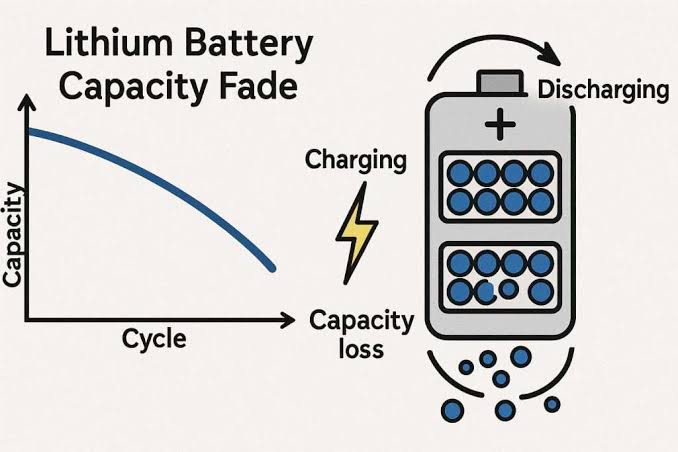
One complete charge and discharge cycle for a rechargeable battery consists precisely of one full discharge event followed by one full recharge event. During this cycle, electrons flow from the negative electrode through the external circuit to the positive electrode, while lithium ions migrate through the electrolyte to convert stored chemical energy into electrical energy.
Experimental research utilizing potentiostats and neutron transmission imaging confirms that ion transport is non-uniform inside thick electrodes, and electron movement relies heavily on the active state of charge. Exceeding an 85% depth of discharge physically degrades the negative electrode at a highly accelerated rate, whereas the positive electrode remains relatively stable. Engineers must respect the end-of-discharge voltage thresholds established by the cell manufacturer to protect fundamental battery health.
How Does Partial Cycling Outperform a Deep Discharge Battery Strategy?
Executing dynamic cycling—utilizing partial discharge intervals and programmed rest periods—extends lithium-ion battery life by up to 38% compared to executing constant full cycles. A 24-month statistical study evaluating 92 commercial cells proved that batteries subjected to dynamic partial cycling maintained a significantly higher State of Health (SOH) and experienced slower physical degradation.
When evaluating what is deep discharge battery management, engineers avoid dropping cell voltage into a deep depletion state. Leaving batteries deeply discharged for extended periods causes permanent chemical fatigue. Recharging lithium battery packs immediately after every use period optimizes electrochemical longevity and minimizes replacement costs.
What Are the Key Engineering Parameters to Monitor When You Discharge Lithium Battery Packs?
Safely executing li ion battery discharge protocols requires active tracking of thermal output, current load limits, and internal impedance fluctuations.
How Does C-Rate Impact Internal Cell Temperature and Capacity?
The discharge rate (C-rate) directly dictates internal thermal generation; pulling excessively high discharge rates causes capacity losses of up to 71.59% and raises internal cell temperatures by over $44\text{ }^\circ\text{C}$ ($111.2\text{ }^\circ\text{F}$).
Low environmental temperatures increase internal electrical resistance and restrict available capacity. Conversely, high ambient temperatures improve initial ion activity but severely degrade core battery materials and erode built-in safety margins. System engineers must tightly control the C-rate via SMBus or CAN bus protocols to prevent localized ohmic heating.
Custom Solutions Engineering: If your industrial OEM application requires high-rate discharge lithium battery configurations in extreme temperatures, B2B procurement teams should specify customized battery packs featuring spot-welded pure nickel tabs ($0.15\text{ mm}$ to $0.20\text{ mm}$ / $0.006\text{ in}$ to $0.008\text{ in}$ thickness), integrated NTC thermistors, and IP67-rated ultrasonically welded enclosures. Ensure the pack architecture complies strictly with IEC 62133-2 and UL 2054 safety standards.
What Does Increased Battery Discharge Mean for Internal Resistance and End-of-Life (EOL)?
What does increased battery discharge mean in a diagnostic context? It indicates climbing internal electrical resistance; specifically, an ohmic value increase of 30% in multi-cell units or 50% in single-cell units identifies critical end-of-life (EOL) failure risks during active discharge.
Internal resistance inherently increases as a byproduct of low environmental temperatures and high discharge rates. This elevated resistance skews the accuracy of State of Health (SOH) and State of Charge (SOC) estimations calculated by the BMS. Continuous monitoring of individual cell voltage, impedance, and temperature utilizing advanced cell-level tracking identifies abnormal trends and prevents catastrophic thermal runaway before failure occurs.
How to Discharge a Battery Safely Using Standardized Industrial Testing Methods?
Engineers validate how to discharge a battery safely and ensure regulatory compliance by subjecting cell prototypes to strict constant resistance, constant current, or constant power evaluations.
Which Discharge Testing Methods Are Standard for B2B Hardware Qualification?
The constant current discharge test is the primary standard utilized for lithium battery packs integrated into industrial, medical, and robotics hardware because it delivers highly consistent, repeatable benchmark data.
Validating how to discharge a lithium battery requires matching the test methodology directly to the host device’s expected operational load:
-
Constant Resistance Test: Applies a fixed physical resistor across the battery terminals, causing current to decrease as voltage naturally drops; ideal for simulating real-world lighting or simple heating elements.
-
Constant Current Test: Draws a strict, steady current from the battery until the cell hits the programmed cutoff voltage; utilized to accurately benchmark capacity, cycle life, and safety thresholds.
-
Constant Power Test: Maintains a fixed power (wattage) output by adjusting the current draw upward as the internal cell voltage drops; mandated for evaluating electric vehicles (EVs) and grid storage infrastructure.
How Do Deep Discharge Battery Protocols Differ Across Industrial Cell Chemistries?
The definition of what is a deep discharge battery and its maximum allowable Depth of Discharge (DOD) varies completely depending on whether the cell utilizes lithium-ion, lead-acid, or nickel-metal hydride chemistry.
What Is a Deep Discharge Battery and Why Does Over Discharging Cause Irreversible Damage?
A deep discharge battery is engineered to routinely release a large portion of its stored capacity to power external loads, but executing continuous discharge beyond an 80% DOD specifically causes irreversible damage across industrial lithium-ion, GEL, and AGM formats.
Understanding deep discharge battery limits dictates B2B procurement strategy. General deep-cycle lead-acid batteries used in renewable energy grids require a shallow DOD below 30% (and no more than 50%) to maintain service life. Conversely, LiFePO4 cells support up to 2000 cycles even at extreme 25C discharge rates, though pushing higher discharge rates will cut that cycle life in half.
B2B Industrial TCO & Chemistry Selection Matrix
| Battery Chemistry | Specific Energy Density (Wh/L) | Peak Discharge Rate | Cycle Life Expectancy | Target Industrial Application & TCO |
| LiFePO4 |
300-350
|
40-50C
|
2000-6000 cycles
|
Industrial, Medical, Grid stabilization; Lowest long-term TCO.
|
| Lithium-Polymer |
250-750
|
10C
|
1000-2000 cycles
|
Consumer electronics; High volumetric density.
|
| NiMH |
140-300
|
10-20C
|
2000 cycles
|
Power tools, Hybrid EVs; Moderate hardware replacement costs.
|
| Lead Acid (VRLA) |
80-90
|
>50C
|
300 cycles
|
Automotive, off-road vehicles; Highest maintenance overhead.
|
Summary & Quick-Reference Guide
Controlling how to discharge a lithium ion battery prevents irreversible structural electrode damage and eliminates severe thermal runaway risks. Implementing dynamic partial cycling strategies instead of full 100% DOD cycling dramatically extends the industrial hardware lifecycle. Engineers must pair the correct electrochemical formulation with sophisticated BMS impedance monitoring to guarantee autonomous field reliability.
Battery Discharge Parameter Quick-Reference Table
| Discharge Metric / Parameter | Engineering Standard Limit |
| Lithium Partial Cycling Lifespan Gain |
Up to 38% increase over full 100% cycling
|
| Negative Electrode Degradation Threshold |
Triggers rapidly upon exceeding 85% DOD
|
| High C-Rate Thermal Output Risk |
Temperature elevation exceeding $44\text{ }^\circ\text{C}$ ($111.2\text{ }^\circ\text{F}$)
|
| Multi-Cell Pack EOL Diagnostic Limit |
30% increase in baseline ohmic value
|
| General Deep-Cycle Lead Acid DOD |
Size systems for <50% DOD (30% preferred)
|
Frequently Asked Questions
What does discharge battery mean in electrical engineering? Battery discharging refers to the electrochemical process where a battery releases its internal stored energy to power external equipment or systems by flowing electrons through a connected circuit.
What constitutes one complete charge and discharge cycle for a rechargeable battery? One complete cycle consists of one full continuous discharge event pulling the cell down to its lowest safe cutoff voltage, immediately followed by one full recharge event returning the cell to maximum capacity.
What is a deep discharge battery? A deep discharge battery is specifically designed to safely deploy the majority of its stored capacity to a load; however, pushing industrial semi-traction, flooded, AGM, or GEL batteries beyond 80% DOD causes irreversible damage.
How does over discharging impact a lithium ion battery? Over discharging—such as exceeding an 85% depth of discharge—accelerates physical aging, drastically reduces total cycle life, and causes the negative electrode to degrade faster than the positive electrode.
What does increased battery discharge mean for internal diagnostics? Increased battery discharge translates to rising internal resistance; modern diagnostic systems flag a 30% increase in ohmic value for multi-cell units (or a 50% increase in single cells) as an imminent end-of-life warning.