What Are the Core Hardware Components of an EGO Backpack?
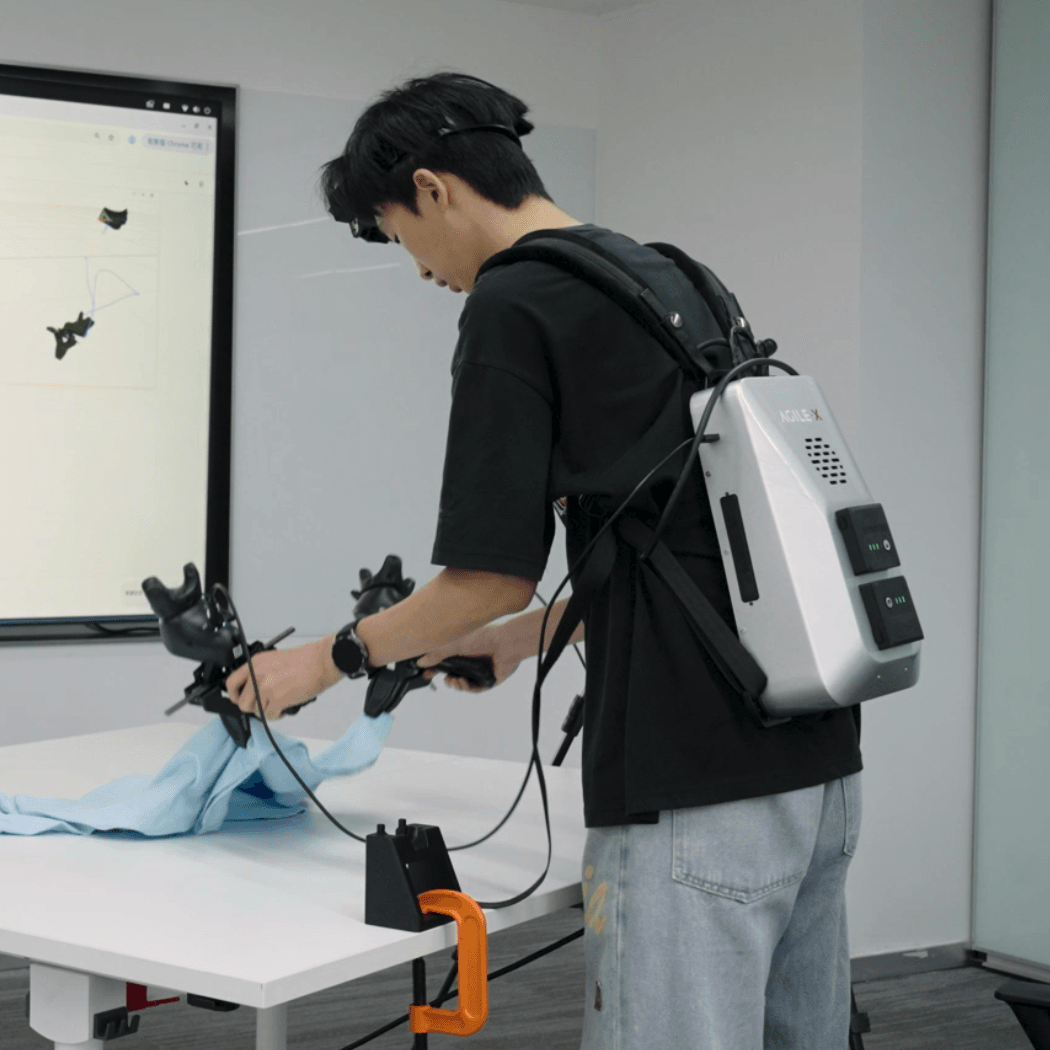
A standard Embodied AI Data Collection Device (EGO) backpack integrates three primary hardware subsystems: the multi-modal perception layer, the edge computing layer, and the power distribution layer. The engineering objective of this wearable hardware stack is to ingest, process, and store gigabytes of multi-dimensional spatial and tactile data while operating entirely untethered in complex physical environments. By tightly coupling sensor arrays with localized computing and industrial-grade power modules, the EGO backpack serves as a self-contained mobile data center designed explicitly for generating behavioral cloning datasets.
【Key Takeaways】
-
Microsecond Sensor Synchronization: Centralized microcontrollers distribute Pulse-Per-Second (PPS) signals to align RGB-D camera exposures and IMU integration frequencies, ensuring zero kinematic distortion in the recorded data.
-
Edge Compute Thermal Limits: High-concurrency processors (like the NVIDIA Jetson series) operate under strict Size, Weight, and Power (SWaP) limitations, requiring precise passive thermal dissipation routing within the enclosed backpack chassis.
-
Hot-Swappable Untethered Power: Continuous data capture relies on smart lithium-ion battery architectures utilizing SMBus communication, enabling zero-downtime battery replacement and protecting sensitive storage from sudden power loss.
How Does the Perception Layer Capture High-Fidelity Physical Data?
What Specific Sensors Are Required for Behavioral Cloning?
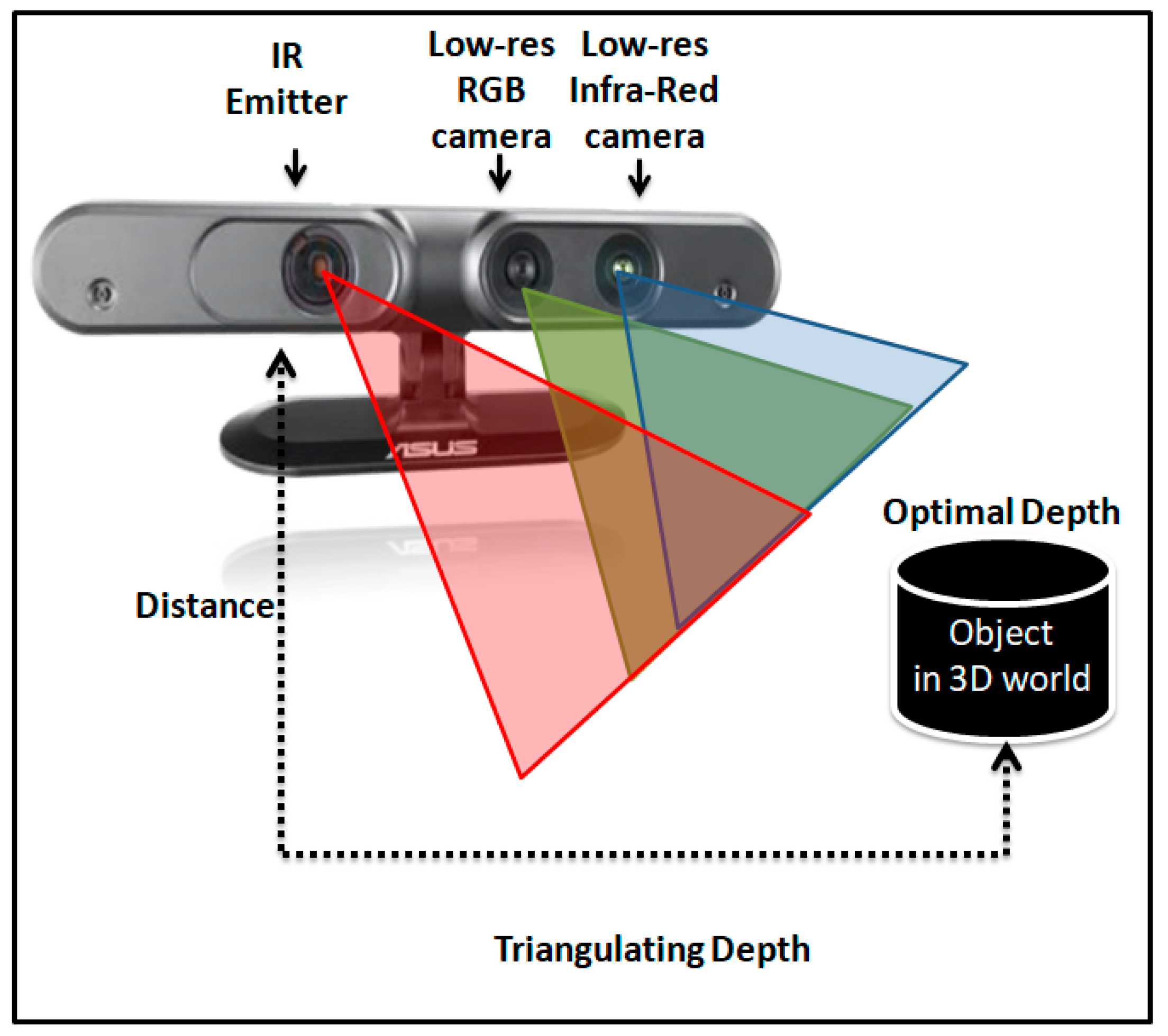
Behavioral cloning requires a deterministic combination of RGB-D depth cameras, high-frequency Inertial Measurement Units (IMUs), and tactile force sensors to digitally reconstruct physical interactions. Standard visual cameras only provide flat optical data; therefore, EGO systems utilize spatial perception hardware to map the 3D environment geometry in real-time.
-
Spatial Vision Modules: RGB-D cameras capture both color data and per-pixel depth information, allowing the AI to understand object volume and distance.
-
Kinematic Tracking: Six-axis IMUs operate at frequencies exceeding 1000 Hz to record the precise angular velocity and linear acceleration of the human operator’s torso and limbs.
-
Haptic/Tactile Gloves: Force-torque sensors integrated into wearable gloves measure the exact micro-newtons of pressure applied by the human hand when grasping objects of varying stiffness.
Together, this specific sensor array ensures that the neural network learns not just what an action looks like, but the exact physical spatial metrics and force thresholds required to execute that action successfully.
Why Is Hardware-Level Time Synchronization Critical?
Hardware-level time synchronization prevents temporal misalignment between disparate sensor streams, ensuring that a visual frame matches the exact physical force recorded at that exact microsecond. If an EGO system relies solely on software-level timestamps, latency jitter will cause the robotic model to learn corrupted action-reaction sequences.
To resolve this, EGO perception layers utilize a central Microcontroller Unit (MCU) operating as a hardware trigger. The MCU broadcasts a synchronized Pulse-Per-Second (PPS) signal across the sensor bus. This electrical pulse forces the global shutters of all RGB-D cameras to expose simultaneously while aligning the data packets from the high-frequency IMU. Consequently, ensuring strict signal integrity across the sensor bus requires an exceptionally clean Direct Current (DC) power supply. Voltage ripple from a subpar power distribution board can introduce electrical crosstalk, delaying the PPS signal and permanently corrupting the synchronization of the behavioral cloning dataset.
How Do Edge Computing Units Process EGO Sensor Data Under SWaP Constraints?
How Does the Edge Computer Handle High-Bandwidth Data Streams?
The edge compute module ingests and compresses up to 5 gigabytes of raw sensory data per minute utilizing parallel processing architectures like the NVIDIA Jetson Orin platform. Transporting raw, uncompressed 4K video feeds and LiDAR point clouds directly to a storage drive would immediately saturate the memory bandwidth and exceed the storage capacity of a mobile backpack.

-
Real-Time SLAM: The edge processor executes Simultaneous Localization and Mapping (SLAM) algorithms locally, calculating the operator’s exact trajectory through the physical space before the data is written to disk.
-
Hardware-Accelerated Encoding: Dedicated GPU cores execute H.265 video compression on multiple camera streams simultaneously, drastically reducing the dataset footprint without loading the central CPU.
-
High-Frequency Storage: The system utilizes NVMe Solid State Drives (SSDs) operating over PCIe lanes to guarantee sustained write speeds exceeding 2000 MB/s, preventing buffer overflows during complex environmental captures.
This localized processing architecture ensures the EGO backpack functions as a complete edge node, eliminating the need for wireless data transmission to external servers during active physical tasks.
What Are the Thermal Management (TDP) Challenges in Wearable Chassis?
Managing a Thermal Design Power (TDP) exceeding 100W within an enclosed wearable chassis requires strict passive cooling designs to prevent processor thermal throttling and subsequent frame drops. EGO backpacks operate in close proximity to the human body, severely limiting the viable surface area for active fan exhausts.
When the edge computing unit processes sudden spikes in data complexity (e.g., entering a highly detailed visual environment), the GPU demands transient peak currents. This computational burst generates rapid, localized heat. Hardware engineers mitigate this by mating the processor die directly to aluminum alloy heat spreaders exposed to the ambient environment. Furthermore, this transient current demand places immense stress on the energy distribution layer. If the power source cannot sustain the sudden amperage spike requested by the GPU, the operating system will execute an emergency voltage drop (brownout), crashing the data collection sequence entirely.
How Do Power Distribution Architectures Sustain Untethered EGO Operations?
Why Are Smart Lithium-Ion Batteries Essential for High-TDP Systems?
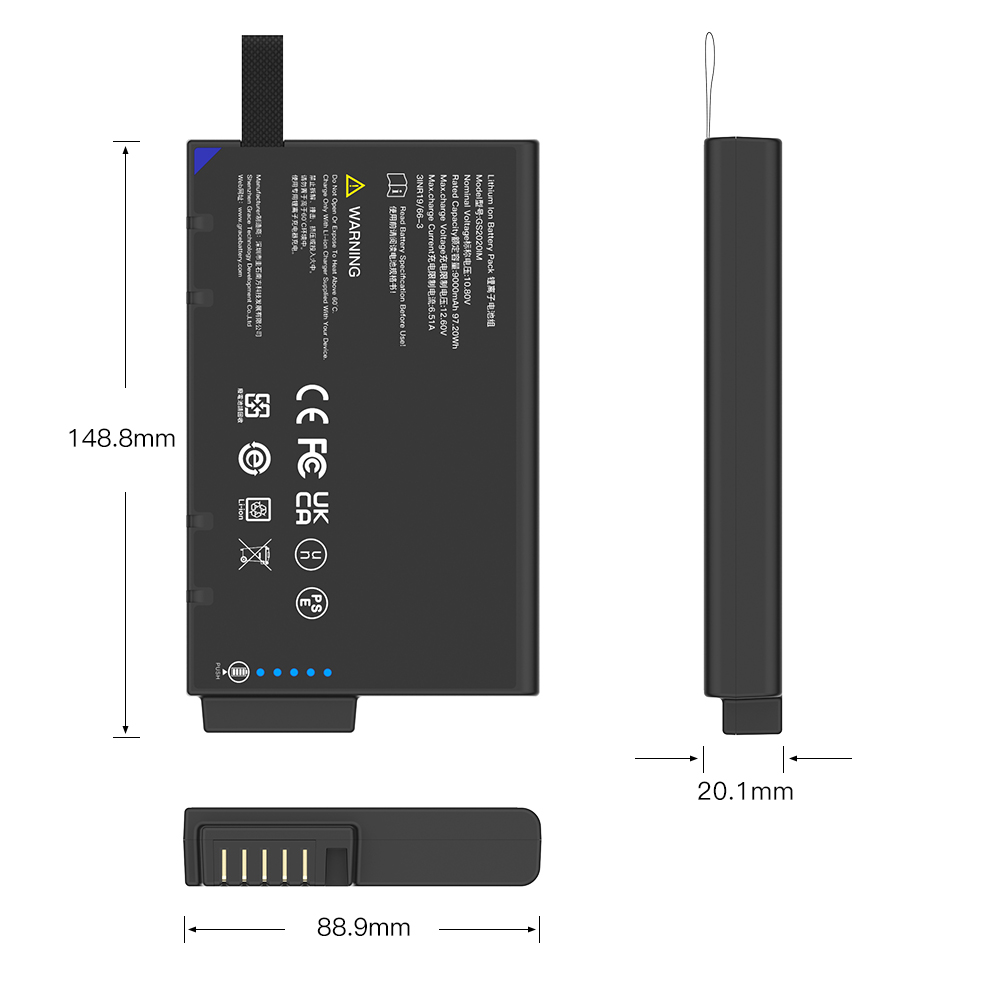
High-energy-density 18650 or 21700 lithium-ion battery packs are strictly required to stabilize the transient voltage drops caused by GPU power surges while conforming to the severe weight limitations of a wearable system. Industrial edge compute modules are highly sensitive to voltage sags; a momentary drop below the minimum input threshold will trigger an immediate system halt. Smart lithium batteries utilize premium cell chemistries to maintain a flat discharge curve, ensuring stable voltage delivery even when the edge compute module pulls maximum peak current.
Technical Parameters Summary: EGO Subsystem Electrical Requirements
| EGO Subsystem Module | Input Voltage Range | Max Ripple Tolerance | Peak Current Demand | Function / Load Characteristic |
| Multi-Modal Sensors | 5.0V / 12.0V DC | < 50 mV (Strict) | 2A – 5A | Constant load; requires pure DC to avoid clock crosstalk. |
| Edge Compute (Jetson) | 12.0V – 19.0V DC | < 100 mV | 10A – 15A (Transient) | Highly variable; spikes during AI inference/video encoding. |
| Smart Battery Module | 14.4V / 28.8V Nominal | N/A (Source) | 15A – 20A (Discharge) | Must sustain system voltage during compute power surges. |
B2B CTA: Designing EGO chassis requires strict adherence to spatial geometry. Tefoo Energy delivers custom power solutions engineered specifically for Embodied AI data collection hardware. Our engineering team provides customized nickel tab welding for irregular battery pack form factors, specialized flexible wire harnesses, and IP67-rated encapsulation to ensure robust performance across diverse field environments.
How Does SMBus Communication Enable Safe Hot-Swappable Architectures?
SMBus and I2C communication protocols allow the Battery Management System (BMS) to report exact State of Charge (SOC) and State of Health (SOH) telemetry directly to the edge computer, forming the technical foundation of a zero-downtime hot-swappable architecture. In professional data collection workflows, powering down the backpack to change batteries forces the operator to recalibrate all spatial sensors, wasting critical operational hours.
To eliminate this downtime, dual-battery power distribution boards route energy from Battery A while Battery B remains on standby. Through the SMBus interface, the Robot Operating System (ROS2) continuously polls the active battery’s remaining capacity. When Battery A nears depletion, the system safely routes power to Battery B in milliseconds, allowing the operator to physically remove and replace Battery A without disrupting the edge compute module. Furthermore, because these battery modules rest directly against the human spine, they must integrate a dual-protection BMS architecture and strictly comply with international safety standards, including IEC 62133-2 and UL 2054, to actively prevent thermal runaway.
B2B CTA: Secure your field operations with standardized, certified power. Tefoo Energy supplies standard smart batteries equipped with advanced SMBus communication and dual-protection BMS architectures. Fully compliant with UL 2054, IEC 62133-2, and UN 38.3 standards, our energy modules provide reliable hot-swappable capabilities for high-concurrency wearable EGO systems.
Summary & Quick-Reference Guide
The hardware architecture of an Embodied AI Data Collection Device (EGO) is a delicate balancing act between high-performance computing, multi-modal perception accuracy, and untethered mobility. Microsecond hardware synchronization ensures the validity of the behavioral cloning dataset, while localized edge processing manages extreme data bandwidth. Ultimately, the operational viability of these wearable systems hinges on their power distribution. By integrating hot-swappable smart lithium-ion batteries featuring precise SMBus telemetry, hardware engineers can satisfy the demanding SWaP limitations and transient power requirements of the system, maximizing continuous data yield in the field.
Quick-Reference Table: EGO System SWaP-C Budget Allocation
| EGO Subsystem | Weight Allocation Target | Power Budget Allocation (Typical) | Critical Interface / Standard |
| Perception (Sensors) | 1.0 kg – 1.5 kg (35.2 oz – 52.9 oz) | 15W – 30W | Hardware PPS Trigger (Microsecond sync) |
| Edge Compute & Storage | 1.5 kg – 2.5 kg (52.9 oz – 88.1 oz) | 60W – 120W (High Transient) | PCIe (NVMe), Gigabit Ethernet, USB 3.2 |
| Power Module (Batteries) | 1.0 kg – 2.0 kg (35.2 oz – 70.5 oz) | Sources 100W – 150W | SMBus v1.1, IEC 62133-2, UN 38.3 |
| Total System Parameters | 3.5 kg – 6.0 kg (7.7 lbs – 13.2 lbs) | Max System Draw: ~150W | Hot-Swappable Dual Battery Architecture |
Frequently Asked Questions (FAQ)
What sensors are used in an EGO data collection backpack?
An EGO backpack utilizes a synchronized array of RGB-D depth cameras for spatial vision, high-frequency IMUs for kinematic tracking, and tactile gloves equipped with force-torque sensors to record physical interaction data.
Why is hardware synchronization necessary for behavioral cloning?
Hardware synchronization uses a central microcontroller to align camera exposures and IMU data down to the microsecond. This prevents kinematic distortion, ensuring the AI model learns accurately aligned visual and tactile responses.
What is the typical TDP of an EGO edge computing unit?
The edge computing unit in an EGO backpack typically operates with a Thermal Design Power (TDP) ranging from 60W to 120W, depending on the complexity of real-time SLAM and video compression algorithms.
Why do EGO backpacks require smart lithium batteries?
Smart lithium batteries utilize the SMBus protocol to transmit exact state-of-charge data to the computer. This allows the operating system to trigger a graceful shutdown to protect NVMe storage before power is completely lost.
What safety certifications are required for EGO wearable batteries?
Because EGO batteries are worn close to the human body, they must strictly comply with IEC 62133-2 and UL 2054 standards to prevent thermal runaway, and UN 38.3 for safe aviation transport.