What Is Battery Ageing and How Do Engineers Mitigate Capacity Fade in Industrial Systems?
Battery ageing refers to the gradual decline in a battery’s performance and capacity over time. This electrochemical degradation process directly impacts the operational reliability of medical equipment, grid-level energy storage systems, and autonomous consumer electronics. Because industrial lithium-ion modules fail primarily due to irreversible capacity fade rather than increased internal resistance or low cold cranking amps (CCA), hardware developers must implement strict lifecycle management protocols at the initial printed circuit board (PCB) design phase.
Key Takeaways
What Are the Core Mechanisms Driving Lithium-Ion Battery Ageing?
Lithium-ion battery ageing occurs due to chemical, physical, and environmental factors that permanently degrade internal cell components, specifically driven by calendar and cyclic fatigue.
How Does Calendar Ageing Differ from Cyclic Ageing?
Calendar ageing dictates capacity loss over time regardless of active usage, whereas cyclic ageing results directly from repeated physical charge and discharge events.
Calendar ageing accelerates exponentially when engineers expose battery packs to high ambient temperatures or maintain prolonged module storage at a 100% full charge state. Conversely, cyclic ageing intensifies when hardware systems execute high continuous charge rates, force deep electrical discharges, or utilize constant fast-charging infrastructure. Distinguishing between calendar and cyclic battery ageing allows hardware procurement teams to correctly specify cell chemistries based on anticipated field duty cycles.
| Ageing Mechanism | Primary Engineering Triggers | Operational Impact on Hardware |
| Calendar Ageing |
Ambient temperature exposure, extended 100% SOC storage.
|
Continuous baseline capacity loss over time, peaking at temperatures >45°C (113°F).
|
| Cyclic Ageing |
Deep discharge depths, high C-rate cycling, fast charging.
|
Immediate mechanical fatigue, requiring distinct modeling approaches to track capacity fade.
|
What Electrochemical Changes Cause Capacity Fade and Internal Resistance?
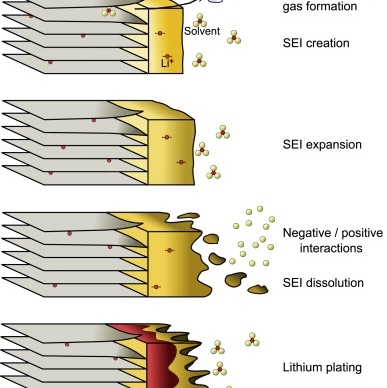
Battery ageing is primarily caused by the breakdown of active electrode materials, continuous electrolyte decomposition, and the thickening of the solid electrolyte interface (SEI) layer.
As the SEI layer grows and lithium plating occurs during standard operation, the internal resistance of the lithium-ion cell increases significantly. This elevated internal electrical resistance reduces charge transfer efficiency and generates excess ohmic heat during operation. Concurrently, electrolyte decomposition reduces the battery’s total ability to store and deliver energy, directly limiting hardware runtime. Data sets analyzing over 3 billion lithium-ion cell points prove that applying dynamic discharge profiles enhances overall battery lifetime by up to 38% compared to executing constant current discharge protocols.
How Do Environmental and Operational Factors Accelerate Battery Ageing?
Extreme operating temperatures, uncontrolled overvoltage states, and deep discharge cycles exponentially accelerate the lithium-ion battery ageing process.
What Is the Impact of Thermal Stress on Battery Longevity?
Operating lithium-ion batteries outside their optimal 20°C to 25°C (68°F to 77°F) window accelerates chemical reactions that rapidly degrade internal cell components.
High ambient temperatures speed up the rate of electrolyte decomposition and damage the protective SEI layer, leading to immediate capacity loss and reduced cell efficiency. Prolonged exposure to extreme heat compromises battery longevity and introduces severe safety risks, including catastrophic thermal runaway. Conversely, storing lithium-ion batteries at a 50% charge state in cool, dry environments actively halts accelerated calendar ageing. Engineering active thermal management systems remains mandatory to prevent heat-induced battery ageing in high-drain industrial applications.
How Do Charge Extremes and Fast Charging Degrade Cells?
Overcharging raises internal cell temperatures and increases swelling risks, while deep discharges physically strain the battery’s active electrode materials causing irreversible damage.
Frequent high charge and discharge cycles, combined with fast-charging infrastructure, generate excessive heat and permanently increase internal electrical resistance. This elevated resistance affects power delivery efficiency, slowing subsequent charging times and generating excess thermal waste. For example, an electric vehicle battery at 100% State of Health (SOH) providing a 150 km (93.2 miles) range will permanently drop to a 120 km (74.5 miles) range when the SOH degrades to 80% due to poor charging habits. Restricting charging parameters to operate strictly between 20% and 80% SOC eliminates the mechanical strain associated with extreme voltage states.
How Do Hardware Engineers Select and Optimize Systems to Slow Battery Ageing?
Engineers mitigate battery ageing by implementing smart Battery Management Systems (BMS), active liquid cooling architectures, and specifying optimal Total Cost of Ownership (TCO) procurement strategies.
How Does BMS Integration and Thermal Management Extend Lifecycle?
Integrating a smart Battery Management System (BMS) improves battery lifetime by up to 30% by continuously monitoring State of Health (SOH) and executing predictive control algorithms.
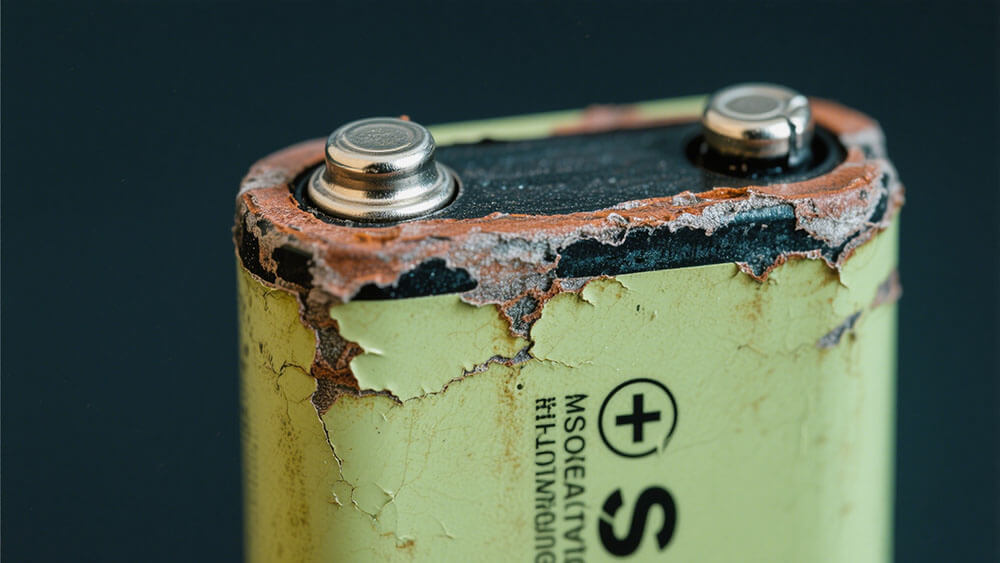
Smart BMS hardware diagnoses battery health using rapid, scalable measurements and anticipates future performance degradation using online diagnostics. To support the BMS, engineers implement targeted thermal management techniques: active liquid cooling systems effectively reduce heat during deep charge and discharge cycles, while passive heat sinks provide thermal stability under moderate continuous loads. Hybrid cooling strategies combine both methods to balance energy efficiency with thermal performance in varying load environments.
How Does Lifecycle Optimization Impact B2B Procurement and TCO?
Selecting optimized battery architectures extends industrial lifespans from 10 to 20 years, drastically reducing the Total Cost of Ownership (TCO) for enterprise fleet deployments.
Industrial applications utilizing advanced storage solutions and tailored ageing mitigation strategies achieve massive financial and environmental dividends. For instance, optimized industrial deployments by Exide Group in Portugal achieved a 20% reduction in overall carbon emissions while successfully extending battery lifetimes from 10 to 20 years under optimal operating conditions. Furthermore, aged lithium-ion batteries whose SOH falls below primary application thresholds are highly valuable for secondary applications, such as powering data centers or stabilizing solar-powered train signals and streetlights.
Custom B2B Hardware Solutions: If your industrial application requires specialized hardware to combat extreme battery ageing, standard off-the-shelf cells will fail. Procure custom lithium-ion battery packs featuring precision spot-welded nickel tabs (0.15 mm / 0.006 in thickness), custom wire harnesses, and IP67-rated ultrasonically welded enclosures to guarantee maximum environmental protection and lifecycle extension.
| B2B TCO Optimization Metric | Implementation Strategy | Engineering & Financial Impact |
| BMS Integration |
Predictive algorithm execution.
|
Extends lithium-ion lifetime by up to 30%.
|
| Thermal Architecture |
Active liquid cooling / Passive heat sinks.
|
Keeps cells within optimal 20°C-25°C (68°F-77°F).
|
| Secondary Repurposing |
Deploying aged EV cells to grid storage.
|
Maximizes ROI of degraded cells in secondary markets.
|
| Storage Protocol |
Storing unused packs strictly at 50% SOC.
|
Halts baseline calendar ageing during warehousing.
|
Summary & Quick-Reference Guide
Battery ageing represents the most significant lifecycle bottleneck in autonomous robotics, grid energy storage, and medical hardware. By strictly managing the 20°C to 25°C (68°F to 77°F) operating window, restricting SOC to the 20%-80% range, and deploying predictive BMS modules, procurement engineers can effectively neutralize rapid cyclic and calendar degradation. Proactive electrochemical management transforms consumable battery packs into resilient, multi-decade industrial assets.
Battery Ageing Parameter Quick-Reference Table
| Parameter / Metric | Engineering Specification & Limit |
| Optimal Operating Temperature |
20°C to 25°C (68°F to 77°F)
|
| Optimal Charge Window (SOC) |
Maintain between 20% and 80%
|
| Optimal Storage SOC |
Store unused at 50% capacity
|
| Standard Lithium-Ion Cycle Life |
500 to 2,000 complete cycles
|
| BMS Lifecycle Improvement |
Up to 30% lifetime extension
|
Frequently Asked Questions
What is battery ageing? Battery ageing is the gradual decline in a battery’s performance, efficiency, and capacity over time caused by the chemical breakdown of active materials and electrolyte decomposition.
How does temperature affect lithium battery ageing? Operating batteries above 25°C (77°F) accelerates chemical reactions that degrade internal components and damage the SEI layer, while optimal temperatures between 20°C and 25°C preserve cell longevity.
What is the difference between calendar and cyclic battery ageing? Calendar ageing is the capacity loss a battery experiences over time regardless of use (driven heavily by temperature and storage SOC), whereas cyclic ageing is the degradation caused by active, repeated charging and discharging cycles.
How can engineers slow down lithium-ion battery ageing? Engineers slow battery ageing by keeping operational temperatures stable, restricting state of charge (SOC) between 20% and 80%, avoiding fast-charging extremes, and integrating a smart Battery Management System (BMS).
Can aged lithium-ion batteries still be used in industrial applications? Yes, aged lithium-ion batteries that no longer meet primary application standards (like EVs) retain sufficient capacity to be repurposed for secondary applications, such as supporting electricity grids or powering data centers.