
How Does a Battery Buffered Architecture Stabilize High-Transient Industrial Power Systems?
Industrial electrical systems operating under intermittent high-demand cycles frequently experience severe voltage sags and inrush currents that exceed primary grid capacities. Implementing a battery buffered power architecture resolves these bottlenecks by actively absorbing energy during low-demand periods and releasing stored electric energy during transient load peaks. In high-draw commercial settings, power buffer systems stabilize the DC bus, prevent brownouts or blackouts, cut annual losses of $26 billion, and fundamentally improve reliability across electric energy storage and electric infrastructure.
【Key Takeaways】
-
Buffer batteries store extra baseline energy when facility demand is low and release the stored capacity during peak operational times, ensuring continuous power delivery and minimizing system outages.
-
Battery buffered architectures utilize advanced cell balancing and internal charge transfer processes to regulate bus voltage, protecting sensitive industrial components and improving overall power quality.
-
Pairing battery buffered storage modules with dynamic load management (DLM) controllers averts critical infrastructure overloads and reduces facility utility expenses by actively limiting peak grid draw.
Why Do Microgrids and EV Chargers Require Battery Buffered Configurations?
Microgrids and electric vehicle (EV) charging networks require battery buffered configurations to supply localized peak currents without exceeding the maximum utility grid feed capacity or triggering substation circuit breakers.
How Do Li-Ion and LFP Cell Chemistries Manage Peak Shaving?
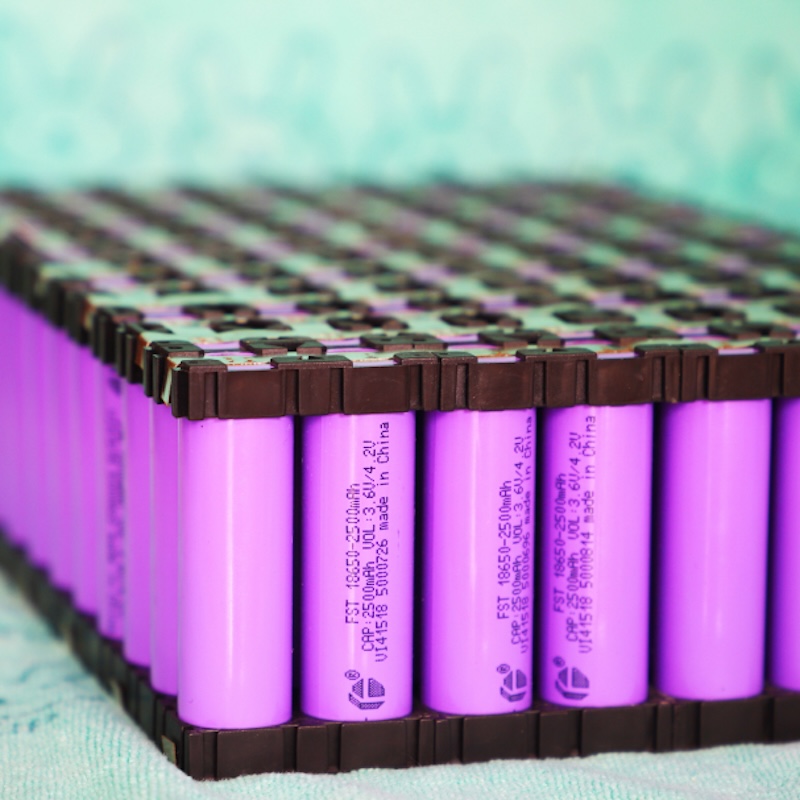
Lithium-ion and Lithium Iron Phosphate (LFP) chemistries manage peak shaving by utilizing grid-scale energy storage capacity to absorb excess electricity generated during periods of high renewable output and dispatching that capacity during intervals of elevated demand. Energy arbitrage remains a primary function of these battery buffered systems: charging cell banks when electricity prices are exceptionally low and discharging the packs when utility prices are high.
-
Battery buffered modeling studies mathematically demonstrate that active storage participation in real-time and day-ahead utility markets severely reduces electricity price volatility and baseline emissions.
-
Ancillary services supplied by the battery pack, such as active frequency regulation and responsive reserve service, immediately address intermittent power fluctuations.
-
Grid-scale energy storage provides critical grid services, including reserve power, frequency response, and flexible ramping, which are strictly essential for maintaining overarching grid stability.
Proper implementation of peak shaving utilizing these buffer batteries ultimately reduces total electricity costs by 20% to 30%.
What Are the Voltage Stabilization Metrics for Industrial Hardware Components?
Battery buffered systems stabilize DC bus voltages to within sub-millivolt tolerance margins, effectively shielding sensitive programmable logic controllers (PLCs) from electrical surges and sags. Buffer batteries absorb excess kinetic energy during input surges and release localized energy during utility drops. Advanced internal monitoring ICs govern this exact process.
-
The ADBMS6815 battery management system utilizes two 16-bit sigma-delta ADCs with programmable oversampling ratios (26 Hz to 27 kHz) to enable precise cell voltage measurement.
-
The industry-leading 1.5 mV Lifetime Total Measurement Error (LTME) present in the ADBMS6815 improves State of Charge (SOC) estimation accuracy, enabling stricter voltage regulation.
-
Coreless current sensing via Anisotropic Magnetoresistive (AMR) sensors delivers high-bandwidth current measurements without a magnetic core, directly supporting better inverter control and load regulation.
Integrating advanced buffer batteries with these cell balancing ICs yields high-resolution monitoring to achieve precise voltage regulation and heavily extend absolute battery life.
How Do You Specify Battery Buffered Storage for IEC 62133 Industrial Applications?
Specifying battery buffered hardware requires precise alignment of cycle life, volumetric energy density, and thermal operational limits with the designated industrial application profile.
What Are the Operational Tolerances for Stationary Energy Storage?
Stationary battery buffered systems mandate cell-level operational thermal tolerances of -20°C to 60°C (-4°F to 140°F) for baseline lithium-ion chemistries to reliably mitigate internal impedance spikes. Comparative studies dictate that while alternative supercapacitors feature cycle lives of up to 1,000,000 cycles, traditional batteries yield far higher baseline energy density, making batteries the primary choice for applications requiring sustained energy delivery.
【Technical Parameters Summary Comparison Table】
| Parameter | Battery Buffered Systems | Supercapacitors (Ultracapacitors) |
| Cycle Life Limit |
~500 hours
|
Up to 1,000,000 cycles
|
| Charging Time Window |
10 – 60 minutes
|
1 – 10 seconds
|
| Operating Temperature |
-20°C to 60°C (-4°F to 140°F)
|
-40°C to 100°C (-40°F to 212°F)
|
| Energy Density |
High
|
Moderate to low
|
| Power Density |
Low
|
Very high
|
| Primary Advantage |
Stable voltage output, reduced overall cost
|
Very long cycle life, high power density
|
If the target installation environment exceeds standard mechanical or thermal specifications, utilizing Custom Solutions (such as spot-welded pure nickel tabs, minimum 8 AWG / 8.36 mm² custom wire harnesses, and IP67-rated potting enclosures) prevents premature hardware failure caused by particulate ingress and severe vibration.
How Does Dynamic Load Management (DLM) Prevent Substation Overloads?
Dynamic Load Management (DLM) software explicitly averts power network overloads by executing real-time power allocation calculations to ensure total instantaneous consumption stays safely within defined hardware limits. DLM dynamically distributes available electrical capacity among multiple connected electric vehicle chargers to prevent phase imbalances.
-
Integration modules operating alongside Building Energy Management Systems (BEMS) strictly ensure that active EV charging sequences do not actively interfere with other critical facility electrical loads.
-
The DLM architecture actively prioritizes charging operational needs, strictly allowing critical vehicles to receive charge first while explicitly delaying lower-priority units.
-
Pairing DLM networks directly with battery buffered modules allows for storing excess external power and rapidly utilizing that power during peak operational hours, severely reducing overall grid dependency.
Implementing intelligent power distribution frameworks avoids the necessity for inherently costly electrical infrastructure upgrades.
What Is the Operational Efficiency of Battery Buffered Hardware Deployments?
The operational efficiency of battery buffered hardware hinges directly on the minimization of active conversion losses and the implementation of automated load-balancing algorithms.
How Do Conversion Efficiencies Impact System Topologies?
Modern isolated converter designs, such as the LT8316 flyback converter, achieve tight output load and line regulation without an optocoupler, logging up to 91% peak efficiency during standard operations. High-efficiency conversion prevents excessive thermal buildup within the battery enclosure, mitigating the necessity for active liquid cooling loops. Furthermore, incorporating 300 mA (0.3 A) internal cell balancing frameworks entirely eliminates the hardware requirement for external discharge switches, drastically improving voltage uniformity across isolated cells.
For enterprise-level deployments, maximizing this transmission efficiency directly cuts required physical footprint. In these environments, deploying Custom Solutions (such as specifically engineered interconnects and modular racking rated for >500 kg / 1102 lbs per tier) actively accelerates maintenance access and further reduces site deployment labor.
How Do You Maximize Buffer Battery Lifespan?
Engineers maximize the absolute lifecycle of buffer batteries by actively monitoring net state-of-charge parameters, heavily avoiding deep discharge cycles, and continuously selecting exact battery types based strictly on the required daily cycling load. For example, deep-cycle batteries are heavily mandated for operational applications demanding highly frequent cycling, including renewable solar storage and hybrid heavy-vehicle powertrains. Advanced algorithmic control methods, specifically extremum seeking control routines, actively optimize internal energy storage efficiency by adjusting output discharge rates continuously in real time. Utilizing Siemens’ Siestorage lithium-ion platforms as an operational benchmark, such systems buffer short-term input fluctuations and strictly enable tightly controlled microgrid restarts immediately following utility blackouts.
Summary & Quick-Reference Table
A battery buffered architecture acts as the critical load-leveling foundation for modern industrial infrastructure, mitigating the severe impact of brief supply interruptions that routinely compromise systems such as cellular repeater towers. By deploying battery buffered topologies, engineers eliminate 10 ms to 20 ms phase drops, dynamically stabilize DC bus parameters, and optimize aggregate facility energy consumption.
【Quick-Reference Operational Parameters】
| Specification Parameter | Value / Technical Requirement |
| LTME Capability (ADBMS6815) |
1.5 mV error tolerance maximum
|
| Typical Buffer Charge Time |
10 to 60 minutes via standard C-rates
|
| Cell Balancing Current |
300 mA (0.3 A) internal routing
|
| Peak Converter Efficiency |
91% (LT8316 architecture baseline)
|
| Primary Interruption Target |
Mitigates 10 ms to 20 ms transient voltage drops
|
FAQ
What is a battery buffered system? A battery buffered system is a localized energy storage architecture that absorbs utility power during low-demand periods and discharges energy during peak loads to stabilize system voltage and prevent operational outages.
How do you choose the right battery type for buffer applications? Engineers must select deep-cycle batteries for systems requiring frequent daily cycling, whereas standard stationary or starter batteries are strictly specified for backup-only configurations.
Can buffer batteries reduce overall commercial energy costs? Yes, battery buffered setups explicitly lower electricity bills by storing baseline energy during low-cost off-peak hours and autonomously discharging that stored capacity during expensive utility peak times.
Do buffer batteries require manual maintenance? Automated power buffer management frameworks directly reduce the strict need for routine manual battery maintenance, yielding substantial reductions in ongoing facility labor costs.
How does a battery buffered system protect against brief power outages? Buffer batteries directly supply sustained power to the designated load during brief utility outages or when the main supply cannot meet peak transient demand, effectively maintaining operational voltage parameters.