What Is an Embodied AI Data Collection Device (EGO)?
An Embodied AI Data Collection Device (EGO) is a wearable, hardware-software integrated system engineered to record timestamped, multi-modal physical interaction data within real-world environments. The singular engineering objective of an EGO system is to capture human first-person visual streams, spatial depth metrics, six-axis motion trajectories, and micro-force feedback during physical tasks. This captured data directly serves as high-fidelity “behavioral cloning” training corpora for humanoid robots and physical foundation models, bridging the critical data gap between virtual simulation and physical reality.
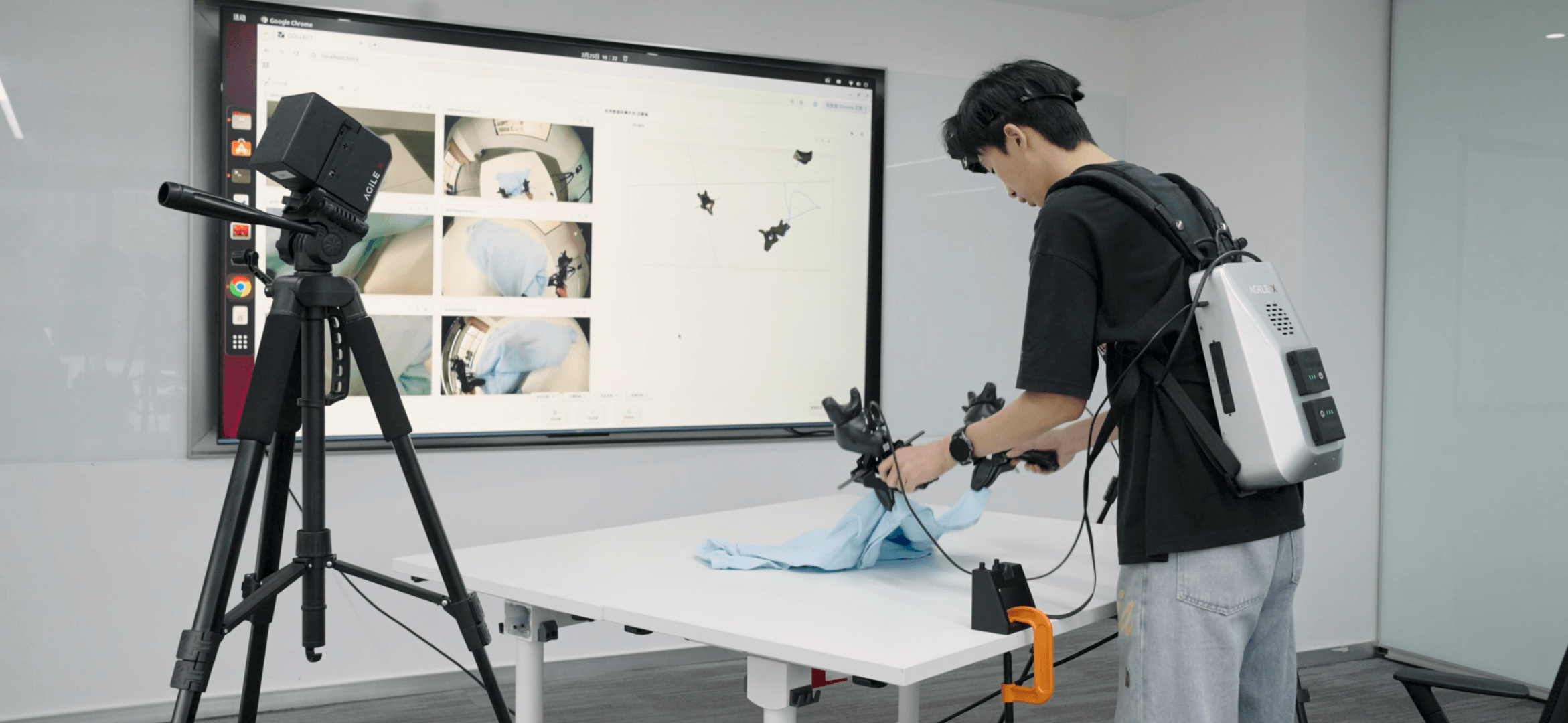
【Key Takeaways】
-
Multi-Modal Synchronization: EGO systems utilize hardware-level Precision Time Protocol (PTP) to synchronize RGB-D cameras, LiDAR, and tactile sensors down to the microsecond, eliminating kinematic distortion.
-
Untethered Mobility: True behavioral cloning requires operator freedom; high-density industrial smart lithium-ion batteries provide the untethered power necessary for high-TDP edge computing units like NVIDIA Jetson without cables.
-
Sim-to-Real Resolution: By operating in physical environments, EGO systems capture non-linear variables (e.g., dynamic friction, flexible material deformation) that virtual simulation engines fail to accurately render.
Why Do Robotics Require Real-World EGO Systems Over Synthetic Data?
How Does EGO Hardware Overcome the Sim-to-Real Gap in Physical Interactions?
EGO hardware eliminates the calculation drift inherent in virtual simulation engines by recording the exact physical laws and human intuition applied during complex physical operations. Historically, robotic gait and manipulation training relied heavily on synthetic data generated by software physics engines. However, virtual environments cannot accurately compute edge cases involving non-linear variables, such as the dynamic friction changes on irregular surfaces or the erratic deformation of flexible materials like cables and fabrics.

-
Data Fidelity: EGO systems record the exact applied force-torque metrics when a human operator grasps a yielding object.
-
Visual Noise Processing: Wearable EGO systems capture real-time optical interference, dynamic shadows, and occlusion, teaching the AI to filter physical-world visual noise.
-
Tactile Feedback Loop: Force sensors mounted on EGO gloves record the micro-adjustments human operators make when material slippage occurs.
Ultimately, capturing human physical operations in real environments allows AI foundation models to bypass simulation guesswork and iterate neural network weights based on strict physical reality.
What Are the Multi-Modal Sensor Synchronization Architectures in EGO Systems?
High-fidelity behavioral cloning requires microsecond-level clock synchronization across all perception sensors to ensure the spatial-temporal alignment of the training dataset. An asynchronous data stream will cause the AI model to learn mismatched visual and tactile responses. To prevent this, EGO hardware architectures utilize centralized microcontroller units (MCUs) to distribute Pulse-Per-Second (PPS) signals to the entire sensor payload.
-
Global Shutter Triggering: The MCU dictates the exact exposure timing for multiple RGB-D cameras to prevent rolling shutter artifacts during rapid operator movement.
-
IMU Integration Frequency: Inertial Measurement Units (IMUs) operate at high frequencies (e.g., 1000 Hz) and must be mathematically interpolated with 30 FPS camera feeds using precise timestamps.
-
Power Ripple Rejection: Precision sensor arrays demand exceptionally clean DC power. High-quality smart batteries reduce voltage ripple, preventing electrical crosstalk from corrupting sensitive clock signals.
Therefore, robust hardware synchronization, backed by stable and isolated power delivery, guarantees that the resulting ROSbag datasets remain temporally coherent and directly usable for neural network training.
How Do Hardware Components Architecture Enable EGO Mobility?
How Are Edge Computing and Thermal Management Constraints Handled?
Wearable EGO systems process multi-gigabyte sensory streams locally using edge computing units (such as the NVIDIA Jetson Orin series), requiring strict adherence to Size, Weight, and Power (SWaP) limitations and passive thermal management. A standard data collection backpack must ingest, compress, and write high-bandwidth data to NVMe storage continuously. This high-concurrency processing generates significant thermal output, often exceeding 100W Thermal Design Power (TDP).

-
Thermal Routing: Backpack chassis designs utilize aluminum alloy heat sinks and directed passive airflow channels to dissipate heat away from the human operator’s back.
-
Compute Throttling Prevention: If edge processors exceed safe operating temperatures (typically 80°C / 176°F), the system will throttle compute performance, resulting in dropped frames and corrupted datasets.
-
Load Distribution: EGO software architectures offload specific computational tasks (like H.265 video encoding) to dedicated hardware accelerators to minimize CPU thermal loading.
By isolating the thermal zones of the edge compute module from the power delivery module, hardware engineers prevent localized overheating and maintain continuous processing speeds during extended field operations.
How Do Smart Lithium Batteries Secure Untethered Data Collection?
Absolute untethered mobility depends on industrial-grade smart lithium-ion batteries that deliver stable transient power peaks without restricting the operator’s natural movement. If an operator drags a power tether, their physical movements will unnaturally deform to avoid the cable, contaminating the behavioral cloning dataset. Consequently, the energy distribution layer is the most critical infrastructure of an EGO system. Modern backpacks utilize high-energy-density cells (such as 18650 or 21700 formats) managed by intelligent Battery Management Systems (BMS).
Technical Parameters Summary: EGO Edge Compute vs. Power Requirements
| Component / Sub-System | Electrical Requirement | Thermal Tolerance | Physical Constraint |
| Edge Compute (Jetson Orin) | 12V – 20V DC (High Transient) | -25°C to 85°C (-13°F to 185°F) | Strict EMI shielding required |
| Multi-Modal Sensor Array | 5V / 12V DC (Low Ripple <50mV) | -10°C to 60°C (14°F to 140°F) | Sensitive to voltage drops |
| Smart Lithium Battery Pack | 14.4V Nominal (SMBus enabled) | -20°C to 60°C (-4°F to 140°F) | Max weight allowance: 1.5 kg (3.3 lbs) |
| System Storage (NVMe SSD) | 3.3V DC (Continuous Write) | 0°C to 70°C (32°F to 158°F) | Requires Graceful Shutdown |
To prevent data corruption during unexpected power depletion, the EGO edge computer communicates continuously with the smart battery via the SMBus protocol. By reading precise State of Charge (SOC) and State of Health (SOH) data, the Robot Operating System 2 (ROS2) can trigger a graceful shutdown sequence, flushing volatile memory to the SSD before the battery physically cuts power.
B2B CTA: When designing high-density EGO wearable backpacks, mechanical engineers frequently encounter strict spatial constraints. Tefoo Energy provides custom solutions for Embodied AI hardware developers, including customized nickel tab welding for irregular battery pack shapes, specialized flexible wire harnesses, and IP67-rated enclosures to protect power systems from operator sweat and outdoor environmental exposure.
How to Evaluate the Total Cost of Ownership (TCO) for EGO Hardware Deployments?
How Do Dual-Battery Architectures Reduce Data Collection Downtime?
EGO hardware Total Cost of Ownership (TCO) is dictated by continuous operational uptime and human operator fatigue limits, rather than initial component acquisition costs. In large-scale real-world data collection projects, shutting down the EGO backpack to swap a depleted battery forces the operating system to reboot. More critically, it requires the operator to execute the complex spatial calibration protocol for LiDAR and cameras all over again—wasting expensive labor hours and reducing effective data yield.
B2B Selection & TCO Comparison: EGO Power Architectures
| Architecture Type | Initial Hardware Cost | Downtime per Battery Swap | Operator Mobility | 12-Month TCO Impact |
| Tethered Power (AC Cord) | Low | N/A (Continuous) | Poor (Cable restricted) | High (Contaminated / unusable data) |
| Standard Single Battery | Medium | 10 – 15 minutes (Reboot + Calibration) | Excellent | Medium (High labor cost during downtime) |
| Hot-Swappable Dual Battery | High | 0 minutes (Millisecond failover) | Excellent | Low (Maximum data yield, zero calibration reset) |
By implementing a hot-swappable dual-battery architecture, the EGO system draws from Battery A while Battery B remains on standby. When Battery A depletes, the power management IC seamlessly switches to Battery B within milliseconds, causing zero interruption to the Jetson compute module. The operator simply replaces Battery A while the system remains live.
B2B CTA: Maximizing field uptime requires durable, certified energy modules. Tefoo Energy designs smart hot-swappable battery packs tailored for continuous industrial data collection. Equipped with dual-protection BMS architectures and compliant with UL 2054 and IEC 62133-2 standards, these custom solutions ensure safe, uninterrupted power delivery directly to your operator’s wearable EGO hardware.
Summary & Quick-Reference Guide
Standardized Embodied AI Data Collection Devices (EGO) are rapidly lowering the engineering barriers for robotics companies to acquire massive, high-quality physical interaction datasets. By integrating precisely synchronized multi-modal sensors, robust edge computing, and untethered smart lithium power architectures, EGO systems allow artificial intelligence to learn directly from human physical intuition. Choosing the right hardware components—especially concerning SWaP optimization and hot-swappable power management—directly dictates the financial efficiency and data validity of the entire behavioral cloning project.
Quick-Reference Table: Core EGO Hardware Specifications
| Specification Category | Typical Parameter Range |
| Total System Target Weight | 3.5 kg – 6.5 kg (7.7 lbs – 14.3 lbs) |
| Edge Compute TDP | 60W – 120W (Depending on compression workload) |
| Battery Pack Operating Voltage | 14.4V or 28.8V Nominal (SMBus / I2C output) |
| Continuous Operating Temp (Operator) | 5°C to 35°C (41°F to 95°F) |
| Required Battery Certifications | UN 38.3 (Transport), IEC 62133-2 (Safety) |
Frequently Asked Questions (FAQ)
What is an Embodied AI Data Collection Device?
An Embodied AI Data Collection Device (EGO) is a wearable hardware system that captures timestamped visual, spatial, and tactile data from human operators to train robotic AI models. It allows artificial intelligence to learn real-world physical interactions directly through behavioral cloning.
Why do EGO systems use hot-swappable batteries?
Hot-swappable batteries allow an EGO system to maintain continuous power during battery replacement, preventing the edge computer from shutting down. This eliminates the need for 10-to-15-minute reboot and sensor recalibration delays, maximizing data collection efficiency.
How does SMBus communication prevent data loss in ROS2?
The SMBus protocol allows the battery’s BMS to transmit highly accurate State of Charge (SOC) data to the edge computer. When power drops to a critical threshold, the ROS2 software triggers a graceful shutdown, safely saving all data buffers to the SSD before total power loss occurs.
Is an EGO battery pack compliant with aviation safety standards?
Yes, industrial-grade smart lithium batteries utilized in EGO systems must pass UN 38.3 testing to guarantee safe air transport. Additionally, they typically hold IEC 62133-2 and UL 2054 certifications to ensure operator safety against thermal runaway.
What is the typical payload weight of a wearable EGO system?
A fully integrated wearable EGO backpack typically weighs between 3.5 kg and 6.5 kg (7.7 lbs to 14.3 lbs). Strict weight management is critical to prevent operator fatigue, which is why lightweight, high-energy-density lithium cells are exclusively used for power delivery.