What Are C Batteries Used For in Medical Devices? 4 Cell and C4 vs C8 Selection Guide
Medical equipment design engineers and procurement teams developing portable clinical instruments must carefully balance volumetric energy density, discharge rate capability, and system runtime. Selecting between standard C-size cylindrical batteries, custom 4 cell battery configurations, and multi-cell arrays directly impacts enclosure size, device weight, and continuous operational safety in life-critical environments. Unplanned electrical shutoffs in field-deployed infusion pumps, emergency defibrillators, or patient monitors risk patient safety and create regulatory compliance liabilities. Evaluating what C batteries are used for, how a 4 cell series or parallel topology operates, and the performance differences in c4 vs c8 batteries enables engineering teams to establish reliable power architectures for next-generation medical instrumentation.
What Are C Batteries Used For in Medical Equipment and Precision Instruments?
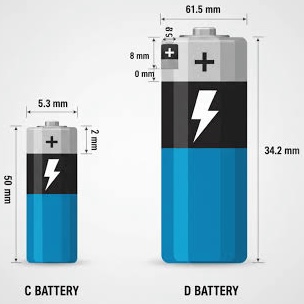
C batteries (ANSI 14A/14D / IEC R14) are used for medium-to-high drain portable medical devices, including infusion pumps, automated external defibrillators (AEDs), diagnostic patient monitors, and handheld field calibration meters. These cylindrical batteries provide a nominal voltage of 1.5V for primary alkaline chemistries or 3.6V to 3.7V for secondary lithium-ion formulations, yielding higher milliampere-hour (mAh) capacities than AA cells without the weight penalty of D-sized cells. Medical OEMs rely on C-size cells when portable equipment requires extended runtime under continuous current loads ranging from 200mA to 2000mA.
What Uses C Batteries Across Clinical Diagnostic and Field Testing Devices
Clinical diagnostic devices use C batteries because they deliver continuous current stability for motor drives, optical sensors, and internal telemetry circuits. Portable blood gas analyzers, syringe drivers, hospital crash cart suction units, and industrial spectrum calibration meters frequently integrate C-cell battery compartments or internal C-size lithium modules.
-
Portable Infusion and Syringe Pumps: Require continuous C-cell current output to drive peristaltic motors over 12-to-24-hour medication delivery cycles.
-
Automated External Defibrillators (AEDs): Utilize primary lithium C-size cell packs (such as $Li-SOCl_2$ or $Li-MnO_2$) to maintain a 5-year standby shelf life while delivering rapid capacitor charge pulses.
-
Diagnostic Patient Monitors: Rely on multi-cell C battery arrays to power ECG displays, pulse oximetry ($SpO_2$) sensors, and wireless data transmitters during intra-hospital patient transport.
-
Field Calibration and Test Instruments: Integrate rechargeable C-sized lithium-ion cells to sustain high signal-to-noise ratios in precision oscilloscopes and signal generators.
Battery Chemistry Selection for C-Size Cells in Life-Support and Backup Power Systems
Medical equipment OEMs select between primary Lithium-Manganese Dioxide ($Li-MnO_2$), Lithium-Thionyl Chloride ($Li-SOCl_2$), and secondary Lithium-ion (NMC) C-sized cells based on shelf-life and duty cycle requirements. Primary lithium chemistries offer passivated solid-state storage stability with low self-discharge rates (<1% per year), making primary lithium cells ideal for emergency backup power in surgical equipment. Secondary lithium-ion C-size cells offer 500 to 1,000 recharge cycles for daily clinical equipment usage, lowering recurring operating costs for hospital facilities.
Understanding 4 Cell Pack Architecture for Medical Device Power Systems
A 4 cell battery pack configures four individual battery cells in series (4S) or parallel (4P) topologies to deliver optimal nominal voltage platforms and current reserves for medical equipment. Power system engineers specify 4 cell assemblies to match specific DC-DC converter input ranges in portable ventilators, surgical light heads, and mobile diagnostic carts.
Electrical Characteristics and Voltage Thresholds of 4 Cell Series (4S) Configurations
Connecting four lithium-ion cells in a 4 cell series (4S) topology yields a 14.4V nominal platform (16.8V peak) that efficiently powers internal high-voltage motor drivers in medical devices. A 4S configuration minimizes resistive copper losses ($I^2R$) across internal wiring harnesses by stepping up system operating voltage, allowing the power system to draw lower current for a given power requirement.
| Parameter |
4 Cell Series (4S Configuration) |
4 Cell Parallel (4P Configuration) |
| Nominal System Voltage |
14.4 V (using 3.6V/3.7V Li-ion cells) |
3.6 V / 3.7 V |
| Peak Charging Voltage |
16.8 V |
4.2 V |
| Total Capacity (Ah) |
Equal to single cell capacity (e.g., 3.5 Ah) |
4x single cell capacity (e.g., 14.0 Ah) |
| Primary OEM Benefit |
High voltage efficiency for motor drives |
High continuous energy storage at low voltage |
| Common Medical Target |
Portable ventilators, surgical power tools |
Low-voltage handheld diagnostic sensors |
BMS Protection and Active Balancing Requirements for 4 Cell Lithium Assemblies
Integrating a dedicated 4 cell Battery Management System (BMS) prevents individual cell voltage imbalance, thermal runaway, and premature pack degradation across all four cell channels. In a 4S lithium assembly, slight variations in cell internal resistance cause individual cells to exceed the 4.25V overcharge limit or drop below the 2.50V deep discharge cutoff. Smart BMS circuit boards monitor individual cell voltages via SMBus or I2C communication channels, ensuring active voltage balancing during constant-voltage charge cycles.
C4 vs C8 Batteries Comparison in Medical OEM Power System Design
Evaluating c4 vs c8 batteries requires comparing 4-cell versus 8-cell C-size array designs (or 4C vs 8C high-rate discharge configurations) to balance continuous equipment runtime against physical pack dimensions and weight. In OEM engineering terminology, a C4 battery arrangement uses four C-sized cells (or a 4-cell C-type array), whereas a C8 system uses eight C-sized cells to double total available energy capacity.
Energy Capacity and Runtime Differences Between C4 and C8 Battery Assemblies
A C8 battery system delivers twice the total Watt-hour ($Wh$) energy capacity of a C4 battery arrangement, enabling continuous 24-hour hospital operation without requiring battery changeouts. When operating under an identical 10W load, a 12V C4 alkaline array provides approximately 6 to 8 hours of runtime, whereas a C8 array configured in an 8S or 4S2P arrangement delivers 12 to 16 hours of continuous operation.
| Metric / Specification |
C4 Battery System (4-Cell Array) |
C8 Battery System (8-Cell Array) |
| Cell Count |
4 C-Size Cells |
8 C-Size Cells |
| Nominal Voltage (Alkaline) |
6.0 V (Series) |
12.0 V (Series) / 6.0V (Series-Parallel) |
| Nominal Energy (Li-ion 3.5Ah) |
~50.4 Wh (4S1P) |
~100.8 Wh (4S2P / 8S1P) |
| Approximate Pack Weight |
~280 grams – 320 grams |
~560 grams – 640 grams |
| Ideal Application |
Handheld diagnostic meters, short-transport monitors |
Long-duty infusion pumps, mobile clinical carts |
Spatial Enclosure Constraints and Weight Optimization for Portable Instruments
Selecting a C4 battery array over a C8 assembly reduces overall power subsystem weight by 50%, preserving handheld device ergonomics for clinical staff. Medical equipment designers must weigh payload constraints against battery runtime. Incorporating tailored custom medical battery solutions allows engineering teams to optimize volumetric layout while retaining high energy density for portable diagnostic monitors.
International Compliance Standards and Safe Integration for C-Size and 4 Cell Assemblies
Compliance with IEC 62133-2, ISO 13485, and UN 38.3 standards ensures 4 cell and C-size battery assemblies satisfy global safety and transport mandates for medical devices. Regulatory approvals prevent equipment recall risks and ensure seamless international market access.
IEC 62133 and UN 38.3 Certification Protocols for OEM Battery Packs
The IEC 62133 standard mandates strict mechanical testing, electrical overcharge evaluation, and thermal abuse safety checks for portable medical lithium battery assemblies. OEM battery packs undergoing certification are subjected to continuous vibration, 130°C thermal shock, and external short-circuit testing. Passing these safety checks guarantees that 4 cell lithium-ion battery modules inside life-support equipment remain safe under extreme transportation and clinical handling conditions.
ISO 13485 Quality Management in Custom Battery Manufacturing
Manufacturing 4 cell and C-size battery assemblies under ISO 13485 quality management systems guarantees lot-to-lot cell consistency, traceability, and strict component quality control. ISO 13485 quality systems enforce incoming cell inspection, automated spot-welding validation, and complete burn-in testing protocols for every medical battery assembly. Full component traceability ensures every individual cell inside a multi-cell battery pack meets medical device manufacturing standards.
Frequently Asked Questions (FAQ)
What are C batteries used for in medical equipment?
C batteries (ANSI 14A/14D, IEC R14) are used in medium-to-high drain medical devices, including portable infusion pumps, automated external defibrillators (AEDs), patient transport monitors, and handheld diagnostic meters. They deliver higher energy capacity than AA cells while maintaining a compact footprint.
What uses C batteries instead of AA or D cells in clinical devices?
Medical instruments choose C batteries over AA or D cells when current requirements (200mA to 2000mA) exceed AA capacity limits but the physical enclosure cannot accommodate heavy D-cell dimensions. C-size cells offer an optimal balance between volumetric energy density and device ergonomics.
What is a 4 cell battery configuration in OEM design?
A 4 cell battery configuration connects four individual battery cells in series (4S) to increase system operating voltage or in parallel (4P) to increase total amp-hour capacity. A 4S lithium-ion pack provides a 14.4V nominal platform widely used to power internal DC-DC converters in portable medical devices.
What is the main difference in c4 vs c8 batteries for medical device selection?
The main difference in c4 vs c8 batteries is that a C8 battery system uses eight C-sized cells to deliver double the total energy storage and runtime of a 4-cell C4 system. However, a C8 system doubles power subsystem weight and volume compared to a C4 layout.
Are 4 cell lithium-ion battery packs compliant with international medical safety standards?
Yes, 4 cell lithium-ion battery packs comply with international medical regulations when designed with integrated BMS protection and certified under IEC 62133-2, UN 38.3, and ISO 13485 manufacturing standards.