>>>Contents
A custom 7S2P lithium battery pack for portable oxygen concentrators provides a nominal 25.2V system bus, high-precision SMBus v1.1 telemetry, and redundant hardware protection. Certified to IEC 62133-2, UL 2054, UL 1642, and UN 38.3 standards, it guarantees over 500 cycles at 80% DOD across operating temperatures from -20°C to 60°C.
Why Do Off-the-Shelf Battery Packs Fail in Portable Oxygen Concentrators?
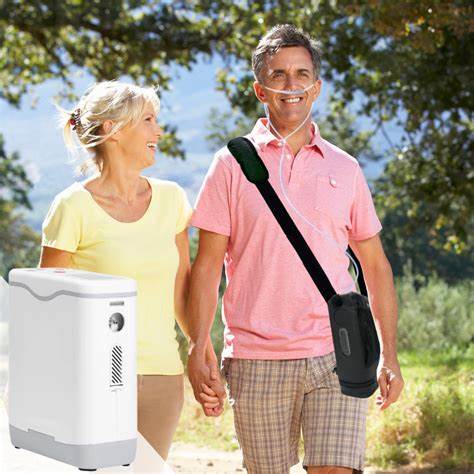
Portable oxygen concentrators (POCs) represent one of the most demanding application environments for custom lithium-ion battery assemblies. Unlike steady-state consumer electronics, a POC relies on a micro-compressor operating on periodic Pressure Swing Adsorption (PSA) cycles. This mechanical architecture subjects the internal battery to continuous, high-current discharge pulses—often peaking at $8\text{ A}$ to $12\text{ A}$ every few seconds—while requiring steady voltage delivery to protect sensitive flow sensors and control electronics.
Commercial off-the-shelf battery assemblies consistently fail in this environment due to three primary engineering shortcomings:
-
Cell Imbalance and Accelerated Thermal Degradation: Standard commercial packs utilize loose cell-sorting tolerances ($\Delta\text{ACIR} > 5.0\text{ m}\Omega$, $\Delta\text{V} > 20\text{ mV}$). Under continuous motor pulse loads, cells with higher internal resistance experience elevated $I^2 R$ Joule heating. This creates thermal gradients across the pack matrix that accelerate electrolyte breakdown, causing individual series blocks to hit lower voltage limits prematurely and triggering unexpected Undervoltage Lockout (UVLO) cutoffs.
-
Capacity Drift and Inaccurate Runtime Telemetry: Generic protection boards rely on basic voltage-lookup algorithms to estimate remaining capacity. Because compressor current spikes cause transient voltage drops, simple voltage-lookup meters miscalculate the State of Charge (SOC), resulting in erratic battery meters and sudden device power-offs during patient operation.
-
Vibration Fatigue and Mechanical Failure: Portable oxygen concentrators are carried on shoulder straps or wheeled carts, exposing the battery assembly to constant motion, environmental drops, and motor vibration. Unreinforced shrink-wrapped packs without internal cell framing suffer weld-nub fractures along rigid nickel interconnects, leading to intermittent open circuits or internal short circuits.
Solving these systemic issues requires a dedicated 7S2P battery pack architecture engineered with precision-matched cells, intelligent telemetry, redundant circuit protection, and robust structural containment.
How Does Smart BMS Telemetry with SMBus v1.1 and SHA-1 Ensure Uninterrupted Oxygen Delivery?
The Battery Management System (BMS) serves as the primary intelligence and protection hub of a medical-grade 7S2P battery assembly. Rather than operating as a passive safety switch, a smart BMS actively integrates with the oxygen concentrator’s host processor via standardized digital communication protocols.
+-------------------------------------------------------------------------+
|                  HOST MEDICAL DEVICE CONTROLLER (POC)                   |
+-------------------------------------------------------------------------+
       ^                                 ^                         ^
  SMBus v1.1 / I2C                 Hardware Interlock        SHA-1 Handshake
       v                                 v                         v
+-------------------------------------------------------------------------+
|                        SMART BMS CONTROLLER BOARD                       |
|  +-----------------------+  +------------------+  +------------------+  |
|  | Gas Gauge (Coulomb)   |  | Dual-FET Switching|  | SHA-1 Crypto IC  |  |
|  +-----------------------+  +------------------+  +------------------+  |
|  +-----------------------+  +------------------+  +------------------+  |
|  | Triple NTC Sensing    |  | Secondary Fuse   |  | Active Balancer  |  |
|  +-----------------------+  +------------------+  +------------------+  |
+-------------------------------------------------------------------------+
                                     |
                [ Matched 7S2P 18650 / 21700 Cell Array ]
Smart Battery Telemetry (SMBus v1.1 and $\text{I}^2\text{C}$)
Implementing the Smart Battery Data (SBD) protocol over an SMBus v1.1 interface enables the host medical device to query high-precision operating parameters in real time:
-
Compensated State of Charge (SOC): Gas gauge ICs combine real-time coulomb counting with dynamic impedance tracking algorithms to maintain SOC calculation accuracy within $\pm 1\%$ over a cycle life exceeding $> 500\text{ cycles}$ at $80\%$ Depth of Discharge (DOD). The gauge automatically compensates for transient compressor pulse drops and cell aging.
-
State of Health (SOH) and Predictive Diagnostics: Continuously tracks internal DC resistance ($\text{DCIR}$) growth, cumulative cycle counts, and maximum historic thermal exposure, allowing host firmware to prompt users for preventive battery replacement before critical field failure occurs.
-
Early-Warning Broadcast Alarms: Automatically sends alarm interrupts to the host system prior to triggering hard cutoffs for undervoltage or overtemperature conditions, allowing the medical device to alert the patient and safely save system logs.
Multi-Tier Hardware Safety Architecture
Medical electrical equipment safety standards (such as IEC 60601-1) require power systems to remain single-fault tolerant:
-
Primary Charge/Discharge Control: Precision Analog Front-End (AFE) supervisory ICs manage dual N-channel power MOSFET switches. Overcharge protection isolates charging at $4.25\text{V} \pm 0.025\text{V}$ per cell, while overdischarge protection disconnects the load at $2.50\text{V} \pm 0.05\text{V}$ per cell.
-
Secondary Hardware Lockout: An independent secondary protection IC operates as a backup monitor. If primary protection MOSFETs fail during an overcharge event, the secondary monitor permanently opens a self-clearing chemical fuse at $4.30\text{V} \pm 0.015\text{V}$.
-
Triple NTC Thermal Monitoring: Independent Negative Temperature Coefficient (NTC) thermistors monitor the cell matrix core, power MOSFET switches, and ambient internal housing. Charging is permitted only between $0^\circ\text{C}\text{ and }45^\circ\text{C}$, while discharging is supported from $-20^\circ\text{C}\text{ to }60^\circ\text{C}$.
-
Ultra-Low Quiescent Current: When discharged to the undervoltage threshold, the BMS enters a deep ship state with quiescent current $I_q < 1\ \mu\text{A}$, preventing permanent copper dissolution during extended device storage.
SHA-1 / HMAC-SHA-256 Cryptographic Authentication
Uncertified aftermarket replacement batteries pose severe fire and reliability hazards to medical equipment. Integrating a hardware-based SHA-1 or HMAC-SHA-256 challenge-response authentication IC ensures host devices operate exclusively with authorized, factory-certified battery packs. Unauthenticated packs trigger firmware safety locks or restrict device operation to low-power emergency modes.
What Are the Core Engineering Specifications for 7S2P Medical Battery Architectures?
A 7S2P configuration utilizing nominal $3.6\text{V}$ cylindrical cells yields a $25.2\text{V}$ nominal bus ($29.4\text{V}$ maximum charge voltage, $17.5\text{V}$ discharge cutoff). This native voltage range aligns with $24\text{V}$ DC brushless motor compressors used in portable oxygen concentrators, eliminating the efficiency losses and thermal overhead associated with intermediate DC-DC boost converters.
| Specification Parameter | Standard Industrial 7S2P Pack | Custom Medical 7S2P 18650 Pack (POC Optimized) | Custom High-Capacity 7S2P 21700 Pack |
| Nominal System Bus Voltage | $25.2\text{V}$ ($3.6\text{V}$ nominal/cell) | $25.2\text{V}$ ($3.6\text{V}$ nominal/cell) | $25.2\text{V}$ ($3.6\text{V}$ nominal/cell) |
| Max Charge / Cutoff Voltage | $29.4\text{V} / 17.5\text{V}$ | $29.4\text{V} / 17.5\text{V}$ | $29.4\text{V} / 17.5\text{V}$ |
| Total Pack Rated Capacity | $4.4\text{Ah} – 5.2\text{Ah}$ | $6.7\text{Ah} – 7.0\text{Ah}$ | $9.6\text{Ah} – 10.0\text{Ah}$ |
| Cell Internal Resistance ($\Delta\text{ACIR}$) | $\le \pm 5.0\text{ m}\Omega$ | $\le \pm 1.5\text{ m}\Omega$ | $\le \pm 1.2\text{ m}\Omega$ |
| Cell Open-Circuit Voltage ($\Delta\text{V}_{\text{OC}}$) | $\le 20\text{ mV}$ | $\le 5\text{ mV}$ | $\le 3\text{ mV}$ |
| Cycle Life ($80\%\text{ Retention @ 0.5C}$) | $300\text{ cycles}$ | $> 500\text{ cycles}$ | $> 800\text{ cycles}$ |
| Operating Temperature Range | $-10^\circ\text{C}\text{ to }50^\circ\text{C}$ | $-20^\circ\text{C}\text{ to }60^\circ\text{C}$ | $-20^\circ\text{C}\text{ to }60^\circ\text{C}$ |
| Smart BMS Interface | None / Analog Voltage | SMBus v1.1 / $\text{I}^2\text{C}$ / HDQ | SMBus v1.1 / CANbus / $\text{I}^2\text{C}$ |
| Regulatory Safety Compliance | UN 38.3 | IEC 62133-2, UL 2054, UL 1642, UN 38.3 | IEC 62133-2, UL 2054, UL 1642, UN 38.3 |
How to Navigate Safety Certifications: IEC 62133-2, UL 2054, UL 1642, and UN 38.3 Compliance Workflows?
Global commercial distribution of portable medical devices mandates compliance with stringent electrical, mechanical, and environmental safety standards. Incorporating certification requirements into the initial design phase prevents costly mechanical tooling modifications during final lab testing.
[ Custom 7S2P Battery Pack Architecture ]
                    |
                    +---> UL 1642 (Lithium Cell Level Safety Certification)
                    |       |- Mechanical Impact, Crushing, & Thermal Exposure
                    |
                    +---> UN 38.3 (Mandatory Dangerous Goods Transport Testing)
                    |       |- T.1 to T.5: Altitude, Thermal (-40°C to 72°C), Vibration, Shock
                    |       |- T.6 to T.8: Impact, Overcharge, Forced Discharge
                    |
                    +---> IEC 62133-2 (Global Baseline for Portable Medical Lithium Packs)
                    |       |- Molded Case Stress at 70°C
                    |       |- External Short Circuit at 55°C
                    |       |- Mechanical Drop & Thermal Abuse Testing
                    |
                    +---> UL 2054 (North American Commercial & Medical Battery Standard)
                            |- Single-Fault Component Failure Testing
                            |- Abusive Overcharge & Forced Discharge
                            |- Enclosure Material Flammability (UL 94 V-0)
UL 1642 Cell-Level Component Certification
UL 1642 serves as the foundational safety standard for individual lithium-ion cells. Component cells must undergo rigorous testing—including mechanical crushing, projectile impact, thermal heating to $130^\circ\text{C}$, and electrical forced discharge—to verify that the cell construction resists internal short-circuit hazards before integration into a 7S2P pack.
IEC 62133-2 (Second Edition) Compliance
IEC 62133-2 represents the primary safety standard for secondary lithium batteries used in medical equipment globally. Key test protocols include:
-
Molded Case Stress Test: The complete battery enclosure is exposed to $70^\circ\text{C} \pm 2^\circ\text{C}$ for 7 hours to confirm that internal mechanical stresses do not cause plastic distortion or expose internal active circuits.
-
External Short Circuit at $55^\circ\text{C}$: The pack is short-circuited at elevated ambient temperatures with a total external loop resistance $< 80\text{ m}\Omega$. The BMS must interrupt short-circuit current without flame, explosion, or temperature spikes exceeding safety thresholds.
-
Drop Testing: Fully assembled packs are dropped from a height of $1.0\text{ meter}$ onto concrete surfaces in multiple orientations to confirm structural and electrical integrity.
UL 2054 Commercial and Medical Pack Safety
UL 2054 governs battery pack safety in North America. Its defining requirement is single-fault tolerance testing:
-
Test engineers intentionally short-circuit or bypass individual BMS components (such as a primary switching MOSFET or a current-sense resistor) to confirm that secondary hardware protection mechanisms (such as a secondary chemical fuse or thermal switch) prevent fire or enclosure explosion.
-
UL 2054 requires all plastic enclosure materials and internal structural components to carry a verified UL 94 V-0 flame-retardant rating.
UN 38.3 Transport Safety Protocols
UN 38.3 is a mandatory prerequisite for commercial shipping of lithium batteries via air, ocean, or ground freight. The testing regime comprises eight sequential evaluations (T.1 to T.8):
-
Altitude Simulation (T.1): Low-pressure storage at $11.6\text{ kPa}$ for $> 6\text{ hours}$.
-
Thermal Shock (T.2): Rapid temperature cycling between $72^\circ\text{C} \pm 2^\circ\text{C}$ and $-40^\circ\text{C} \pm 2^\circ\text{C}$.
-
Vibration (T.3): Logarithmic sinusoidal sweeps from $7\text{ Hz}$ to $200\text{ Hz}$ across 3 orthogonal axes over 3 hours per axis.
-
Mechanical Shock (T.4): Half-sine shock pulses ($150\text{ g}_n$ peak acceleration) applied to each axis.
-
External Short Circuit (T.5): Applied short circuit at $57^\circ\text{C} \pm 4^\circ\text{C}$.
-
Impact / Crush (T.6): Cell-level mechanical integrity testing.
-
Overcharge (T.7): Charge current applied at twice maximum rated input for 24 hours.
-
Forced Discharge (T.8): Forced discharge at maximum rated current.
What DFM Engineering and 3D CAD Support Is Required for Custom POC Battery Enclosures?
Integrating a 7S2P battery pack into the compact chassis of a portable oxygen concentrator requires close mechanical co-design between battery development teams and OEM device engineers.
       [ Host Medical Device Enclosure Envelope ]
                           |
                           v
     [ 2D Cross-Sectional / 3D STEP CAD Interchange ]
                           |
                           v
     [ DFM Analysis: Structural, Thermal, & Electrical ]
     * Injection-Molded PC/ABS (UL 94 V-0 Flame Rating)
     * Interlocking Cell Matrix Holders with Rubber Isolation
     * Flexible Printed Circuit (FPC) Cell-Tapping Harness
     * Continuous Silicone Gasket (IP67 Ingress Protection)
                           |
                           v
[ Rapid Prototyping & Pre-Compliance Pre-Certification Testing ]
Housing Materials and Ingress Protection (IP67)
Portable oxygen concentrators require lightweight yet durable enclosures capable of withstanding outdoor field environments:
-
Enclosure Materials: Injection-molded Polycarbonate/ABS (PC/ABS) blends provide an ideal combination of high impact strength, dimensional stability, and intrinsic UL 94 V-0 flame retardancy.
-
IP67 Environmental Sealing: Perimeter tongue-and-groove joint profiles equipped with continuous molded silicone gaskets or liquid-dispensed polyurethane seals prevent dust egress and protect against water immersion down to $1\text{ meter}$ for 30 minutes.
-
Vibration and Shock Isolation: Cells are held within modular, flame-retardant structural retainers and cushioned by closed-cell EVA foam or silicone dampening pads to absorb drop impact energy and attenuate motor compressor vibration.
Flexible Printed Circuits (FPC) vs. Wiring Harnesses
Replacing traditional discrete copper wire harnesses with custom multi-layer Flexible Printed Circuits (FPC) for cell voltage sampling and NTC routing offers key engineering advantages:
-
Eliminates manual wiring assembly errors on the production line.
-
Reduces internal wiring volume by up to $70\%$, leaving more physical space for cell active material.
-
Prevents wire-rub fatigue and insulation chafing caused by continuous compressor vibration.
Design for Manufacturability (DFM) Workflow
To streamline host device integration, custom battery manufacturers provide full 2D production drawings and 3D native CAD files (STEP / IGES) during early mechanical layout phases. This enables OEM engineers to perform virtual fit checks, run clearance stress analyses, and optimize airflow channels prior to cutting hard tooling. Functional engineering prototypes are typically delivered within 2 to 4 weeks for internal validation and pre-certification testing.
Frequently Asked Questions (FAQ)
What is the lead time for custom 7S2P prototype development and certification?
Engineering design, BMS firmware configuration, and 3D CAD modeling typically require 2 to 4 weeks. Full formal regulatory safety certification (IEC 62133-2, UL 2054, UN 38.3) requires an additional 4 to 8 weeks depending on laboratory scheduling.
Why is a 7S2P configuration specifically chosen for portable oxygen concentrators?
A 7S2P setup provides a $25.2\text{V}$ nominal bus that efficiently matches the operating range of $24\text{V}$ brushless motor compressors. Parallel cell pairing doubles discharge capacity, extending device runtime while maintaining a compact physical footprint.
Can the BMS communication protocol be customized for proprietary host equipment?
Yes. BMS firmware can be tailored with custom SMBus/$\text{I}^2\text{C}$ register maps, modified broadcast frequencies, or non-standard command sets to integrate seamlessly with proprietary host microcontrollers and diagnostic software.
What safety documentation is provided to support our device’s FDA or CE registration?
Custom battery manufacturers provide comprehensive regulatory submission packages, including UN 38.3 test summaries, IEC 62133-2/UL 2054 CB test certificates, UL 94 V-0 material traceability reports, schematics, and cell-level UL 1642 documentation.
Accelerate Your Portable Oxygen Concentrator Development
Designing a safe, high-performance 7S2P lithium battery pack for portable oxygen concentrators requires specialized engineering expertise spanning cell matching, BMS firmware design, regulatory compliance, and mechanical housing integration.
Ready to advance your custom medical battery project?
-
Request 3D STEP CAD Files: Submit your spatial enclosure constraints for immediate 3D CAD integration.
-
Custom BMS Telemetry Alignment: Consult with our senior power engineers to map SMBus/$\text{I}^2\text{C}$ registers to your host system architecture.
-
Access Regulatory Test Data: Review complete IEC 62133-2, UL 2054, and UN 38.3 qualification test packages.
Contact our engineering team today to review your specification sheet or schedule a technical consultation.