A standard AA cylindrical battery is a primary or secondary electrochemical cell designed to supply reliable 1.2V to 1.5V DC power for compact commercial devices and industrial hardware. It is widely specified in smart utility meters, medical diagnostic devices, remote IoT telemetry nodes, and field instruments due to its optimal balance of volumetric energy density, standardized form factor, and low self-discharge characteristics.
Key Takeaways
-
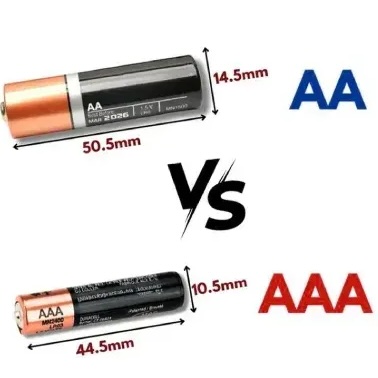
Physical Dimensions: A standard AA battery features an overall physical length of 49.2 mm to 50.5 mm (1.94 in to 1.99 in) and an outer diameter of 13.5 mm to 14.5 mm (0.53 in to 0.57 in), categorized under IEC designations LR6 (Alkaline), FR6 (Primary Lithium), or HR6 (NiMH).
-
Mass Profiles: A AA battery weighs between 14.5 g and 31.0 g (0.51 oz to 1.09 oz) depending on active materials: Primary Lithium (FR6) weighs ~15g, standard Alkaline (LR6) weighs ~23g–24g, and Nickel-Metal Hydride (HR6) weighs ~26g–31g.
-
Operational Extremes: Primary Lithium (FR6) cells operate across extreme temperature ranges from -40°C to +60°C with a shelf life of up to 20 years (<1% annual self-discharge) and comply with UN 38.3, UL 1642, and IEC 60086 international standards.
Part 1: Technical Specifications & Physical/Chemical Properties
1.1 Mechanical Dimensions, Tolerances & Mass Profiles
Precision enclosure design and PCB battery holder layout require strict adherence to international standard tolerances (IEC 60086-2 and ANSI C18.1). Minor dimensional or weight variances between chemistries directly influence contact spring pressure, impact tolerance, and total payload budgets.
-
How long is a aa battery?A standard AA battery is 49.2 mm to 50.5 mm (1.94 inches to 1.99 inches) long, measured from the flat negative terminal to the top of the positive protrusion button pip. The positive pip must have a minimum height of 1.0 mm and a maximum diameter of 5.5 mm. The main cylindrical body length excluding the terminal pip ranges from 48.2 mm to 49.0 mm.
-
What is the diameter of a aa battery?The standardized outer diameter of a AA battery is 13.5 mm to 14.5 mm (0.53 inches to 0.57 inches). For plastic injection tooling and PCB battery holder design, mechanical engineers should specify a nominal clearance cavity diameter of 14.7 mm (+0.1/-0.0 mm tolerance) to account for thermal expansion under high discharge rates and PVC shrink-sleeve label thickness.
-
How much does aa battery weigh?A AA battery weighs between 14.5 grams and 31.0 grams (0.51 oz to 1.09 oz) based on its internal anode/cathode chemistry and active mass density. Primary Lithium ($\text{Li-FeS}_2$) cells weigh 14.5 g to 15.5 g (0.51–0.55 oz); standard primary Alkaline ($\text{Zn/MnO}_2$) cells weigh 23.0 g to 24.0 g (0.81–0.85 oz); rechargeable Nickel-Metal Hydride (NiMH) cells weigh 26.0 g to 31.0 g (0.92–1.09 oz) due to dense hydrogen-absorbing alloy anodes.
1.2 Technical Specification Comparison Matrix
| Technical Specification | Alkaline (Zn/MnO2) | Primary Lithium (Li-FeS2) | NiMH (Rechargeable) | Zinc-Carbon (R6) |
| IEC Designation | LR6 | FR6 | HR6 | R6 |
| ANSI / NEDA Code | 15A | 15LF | 1.2H2 | 15D |
| Overall Length (mm) | 49.2 – 50.5 mm (1.94–1.99 in) | 49.2 – 50.5 mm (1.94–1.99 in) | 49.2 – 50.5 mm (1.94–1.99 in) | 49.2 – 50.5 mm (1.94–1.99 in) |
| Outer Diameter (mm) | 13.5 – 14.5 mm (0.53–0.57 in) | 13.5 – 14.5 mm (0.53–0.57 in) | 13.5 – 14.5 mm (0.53–0.57 in) | 13.5 – 14.5 mm (0.53–0.57 in) |
| Cell Weight (Grams) | 23.0 – 24.0 g (0.81–0.85 oz) | 14.5 – 15.5 g (0.51–0.55 oz) | 26.0 – 31.0 g (0.92–1.09 oz) | 18.0 – 19.0 g (0.63–0.67 oz) |
| Nominal Voltage (V) | 1.50 V | 1.50 V (1.80 V OCV) | 1.20 V | 1.50 V |
| Nominal Capacity (mAh) | 2,000 – 3,000 mAh | 2,900 – 3,500 mAh | 1,900 – 2,700 mAh | 600 – 1,100 mAh |
| Operating Temp Range | -18°C to +55°C | -40°C to +60°C | -10°C to +50°C | 0°C to +45°C |
| Shelf Life / Self-Discharge | 7–10 years (2-3%/yr) | 15–20 years (<1%/yr) | 5–10 years (low LSD) | 2–3 years (high) |
1.3 Chemical Classifications & Regulatory Compliance
Industrial deployment mandates compliance with international safety, transport, and environmental regulations:
-
IEC 60086-1 / IEC 60086-2: Defines physical dimensions, discharge testing conditions, and terminal specifications for primary cells.
-
UN 38.3 Transport Testing: Mandatory for Primary Lithium (FR6) cells, certifying cell safety under altitude simulation, thermal shock, vibration, impact, external short-circuit, and forced discharge.
-
UL 1642 / UL 2054: Establishes electrical safety standards for lithium and commercial batteries, verifying explosion-proof pressure relief vents under extreme short-circuit fault conditions.
-
EU Battery Regulation (2023/1542): Enforces zero added mercury/cadmium limits, supply-chain traceability, carbon footprint documentation, and end-of-life recycling compliance.
Part 2: Applications and Industrial Benefits
2.1 Target Devices & Industry Use Cases
The AA form factor balances high energy density with compact ergonomics across various professional hardware sectors:
-
Smart Utility Meters (AMR/AMI): Water, gas, and heat meters utilize Primary Lithium FR6 AA cells to guarantee maintenance-free operational life spanning 15 to 20 years.
-
Medical Diagnostic Equipment: Portable pulse oximeters, digital infusion pumps, and wireless diagnostic instruments rely on leak-proof construction and stable discharge voltage.
-
Industrial IoT & Telemetry Nodes: Environmental monitoring sensors deployed in pipeline infrastructure or agriculture utilize low-self-discharge lithium AA batteries for continuous field operation.
-
Non-Destructive Testing (NDT) Instruments: Portable ultrasonic thickness gauges and thermal imagers benefit from high-rate pulse discharge capability and reduced payload mass.
2.2 Extreme Thermal Performance & Discharge Flatness
Standard Alkaline batteries experience rapid internal resistance escalation and up to 80% capacity loss at sub-zero temperatures ($0^\circ\text{C}$ to $-20^\circ\text{C}$). Conversely, Primary Lithium (FR6) AA cells retain over 80% nominal capacity at $-40^\circ\text{C}$. Furthermore, FR6 cells deliver a flat voltage discharge plateau (~1.3V–1.4V under load for 90% of discharge duration), preventing premature system shutdown in sensitive digital circuits.
Part 3: Selection, Procurement & Engineering Integration Guide
3.1 Structural Design & Enclosure Integration Rules
Mechanical engineers designing AA battery compartments must adhere to three core design rules:
-
Spring Compression Force: Design leaf contacts or coiled conical springs to accommodate the full physical length tolerance range of 49.2 mm to 50.5 mm. Excessive spring force (>15 N) can compress the positive pip seal, risking electrolyte leakage.
-
Compartment Cavity Width: Maintain a minimum internal cavity diameter of 14.7 mm to account for the 14.5 mm max outer cell diameter, manufacturing tolerances of outer sleeves, and thermal expansion during pulse discharge.
-
Contact Plating Selection: Specify gold-plated or nickel-plated beryllium copper contacts to minimize contact resistance and prevent galvanic corrosion in high-humidity industrial environments.
3.2 B2B Procurement Selection & TCO Matrix
| Evaluation Criteria | Alkaline (LR6) | Primary Lithium (FR6) | NiMH Industrial (HR6) |
| Initial Unit Cost | Low ($0.25 – $0.45) | Moderate ($1.20 – $2.10) | Higher ($1.80 – $3.50) |
| Energy Density (Wh/kg) | ~140 Wh/kg | ~280 Wh/kg | ~80 Wh/kg |
| Mass Impact (4-Cell Pack) | 96.0 g (3.38 oz) | 60.0 g (2.11 oz) — 37.5% lighter | 116.0 g (4.09 oz) |
| Total Cost of Ownership (TCO) | Medium (frequent replacements) | Lowest (zero maintenance over 10+ yrs) | Low (if recharge infrastructure exists) |
| Electrolyte Leak Resistance | Moderate (aqueous KOH) | Highest (hermetic seal / solid organic) | High (resealable safety vent) |
Custom Battery Pack & Engineering Integration Solutions
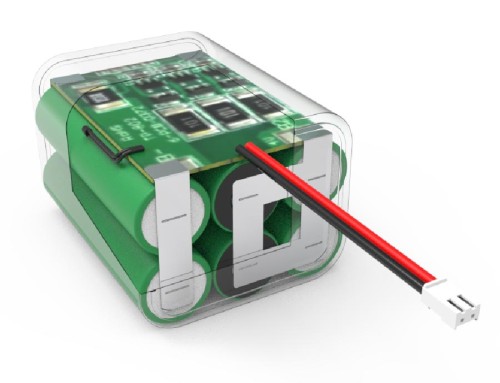
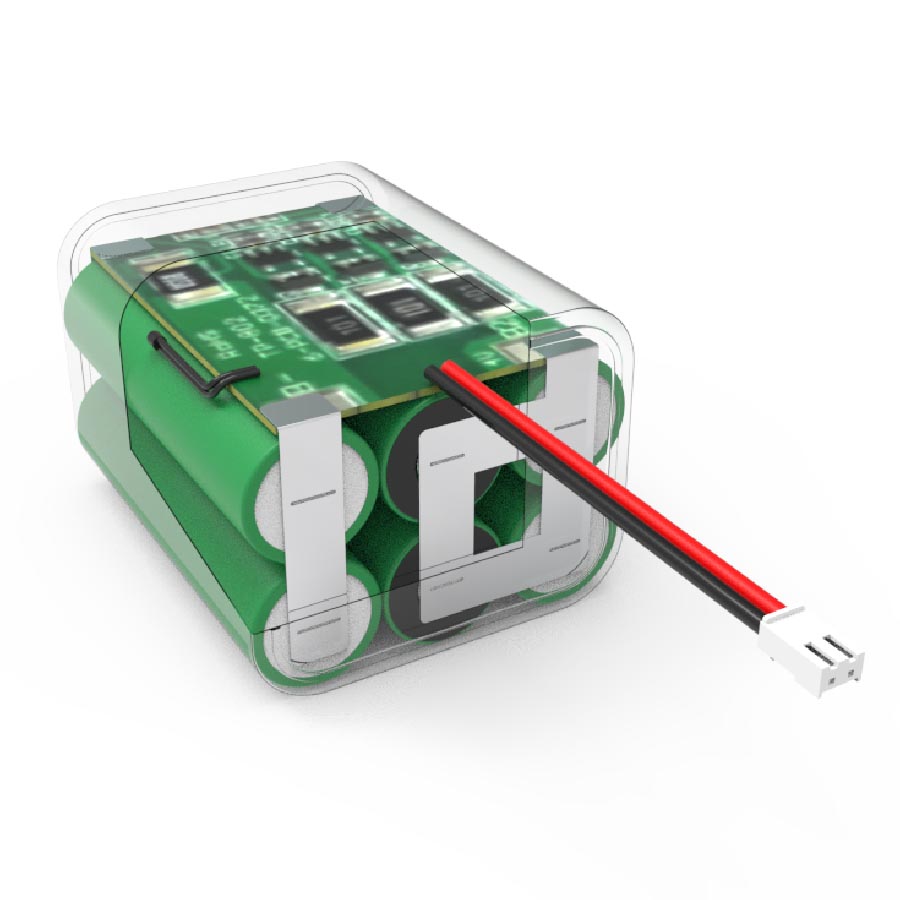
For industrial OEM hardware requiring non-standard layouts, custom AA battery packs (such as 2S2P or 4S1P configurations with custom wire harnesses, Molex/JST connectors, or IP67 potted enclosures) provide enhanced shock resistance and reliable electrical connection. Engineering-led battery suppliers offer custom PCM/BMS design, cell matching, and full UN 38.3 certification support for original equipment manufacturers.
Summary & Technical FAQ
A standard AA battery combines standardized physical dimensions—a maximum physical length of 50.5 mm and an outer diameter of 13.5 mm to 14.5 mm—with versatile electrical characteristics. Cell mass varies from 14.5 g (Primary Lithium) to 31.0 g (NiMH). Selecting the appropriate chemistry requires balancing initial unit cost, thermal limits, mass budgets, and maintenance schedules.
Summary Parameter Quick-Reference Table
| Parameter Key | Standard Metric Value | Imperial Equivalent | Engineering Note |
| Overall Length / Height | 49.2 mm – 50.5 mm | 1.94 in – 1.99 in | Includes positive button pip height ($\ge$1.0 mm) |
| Outer Diameter | 13.5 mm – 14.5 mm | 0.53 in – 0.57 in | CAD tooling cavity recommendation: 14.7 mm |
| Weight (Alkaline LR6) | 23.0 g – 24.0 g | 0.81 oz – 0.85 oz | Industry baseline primary density |
| Weight (Primary Li FR6) | 14.5 g – 15.5 g | 0.51 oz – 0.55 oz | 33% weight reduction vs Alkaline; ideal for IoT/aerospace |
| Nominal Voltage | 1.50 V (1.20 V NiMH) | 1.50 V DC | FR6 lithium open-circuit voltage is ~1.75V–1.80V |
Technical FAQ
Q1: How long is a aa battery in physical length and operational lifespan?
A: A standard AA battery is 49.2 mm to 50.5 mm (1.94 to 1.99 inches) long. In terms of service life, primary Alkaline cells deliver 7 to 10 years of shelf life and 20 to 100 hours of continuous runtime under typical loads (50–100 mA), whereas Industrial Primary Lithium (FR6) cells offer up to 20 years of shelf life and over 10 to 15 years of low-drain operation in smart utility meters and remote IoT sensors.
Q2: How much does aa battery weigh across different chemistries?
A: A AA battery weighs between 14.5 grams and 31.0 grams (0.51 oz to 1.09 oz) depending on active chemistry. Ultra-lightweight Primary Lithium (FR6) cells weigh 14.5g to 15.5g, standard Alkaline (LR6) cells weigh 23.0g to 24.0g, and high-capacity rechargeable NiMH (HR6) cells weigh 26.0g to 31.0g.
Q3: What is the exact diameter of aa battery and the recommended CAD tooling clearance?
A: The outer diameter of a standard AA battery is 13.5 mm to 14.5 mm (0.53 to 0.57 inches) per IEC 60086-2 standards. For injection molding tooling and PCB holder design, mechanical engineers should specify a internal cavity diameter of 14.7 mm (+0.1 mm) to accommodate outer shrink-sleeve label thickness and cell expansion during thermal cycling.
Q4: Are primary lithium (FR6) AA cells drop-in compatible with standard alkaline devices?
A: Primary lithium FR6 AA batteries are 100% mechanically and electrically drop-in compatible with standard LR6 alkaline battery slots. They provide the same nominal 1.5V rating and identical external dimensions (50.5 mm length, 14.5 mm diameter) while offering 33% lower mass, superior low-temperature performance down to $-40^\circ\text{C}$, a flatter discharge curve, and complete leakage protection.