>>>Contents
What Is a AAAA Battery Size and What Are Its Primary Industrial Uses?
Compact electronic device enclosures requiring high volumetric energy density frequently face spatial bottlenecks that standard AA or AAA cylindrical cells cannot resolve. The AAAA battery (IEC designation LR61 for alkaline or FR61 for primary lithium) addresses this design constraint by delivering a reliable 1.5V nominal power output within an ultra-slim 8.3 mm outer diameter envelope. In OEM applications spanning active digital styluses, point-of-care medical diagnostic equipment, and low-power IoT telemetry sensors, specifying the precise AAAA battery size and cell chemistry ensures uncompromised mechanical fit and stable long-term electrical performance.
Key Takeaways
What Is the Physical AAAA Battery Size and Electrical Specification Matrix?
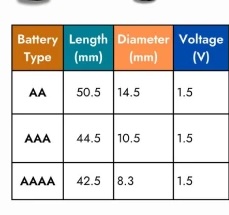
An AAAA battery features standardized physical dimensions of 42.5 mm in height, 8.3 mm in diameter, and a mass of 6.5 grams under IEC and ANSI manufacturing specifications.
Mechanical Dimensions and Tolerances of AAAA Cylindrical Batteries
An AAAA battery measures precisely 42.5 mm (1.67 in) in overall height and 8.3 mm (0.33 in) in outer diameter, with a total cell mass of 6.5 grams (0.23 oz). Standardized dimensional tolerances for AAAA cylindrical batteries guarantee mechanical interchangeability across precision device enclosures and PCB battery holders. The ANSI 25A and IEC LR61 standards strictly define the geometrical envelope of the cell to prevent fitment issues in slim hardware.
-
Overall Height/Length: 42.5 mm (1.67 inches) maximum, measured from the flat negative terminal base to the top of the positive contact button pip.
-
Outer Diameter: 8.3 mm (0.33 inches) maximum outer diameter, including the insulating shrink-sleeve outer jacket.
-
Cell Mass: 6.5 grams (0.23 ounces) nominal weight for primary alkaline cell formulations; primary lithium variants weigh approximately 4.8 grams (0.17 ounces).
-
Terminal Geometry: Raised positive contact button (pip) with a minimum height of 1.0 mm and a maximum diameter of 3.8 mm, pairing with a flat negative terminal plate.
Adhering to these strict 8.3 mm by 42.5 mm physical dimensions allows hardware design engineers to minimize printed circuit board (PCB) footprint requirements while maintaining reliable terminal contact pressure.
Electrochemical Chemistry Comparison for AAAA Size Batteries
Primary Alkaline ($\text{Zn/MnO}_2$) chemistry supplies a nominal 1.5V output with 500 mAh to 600 mAh capacity, serving as the standard electrochemical baseline for AAAA batteries. Primary Lithium ($\text{Li/FeS}_2$) variants provide an elevated 1.5V nominal output (1.8V open-circuit voltage) with up to 750 mAh capacity and superior cold-weather resilience. Selecting the optimal cell chemistry depends on the continuous current drain profile, operating ambient temperature, and required shelf life of the target hardware.
| Specification Parameter | Primary Alkaline AAAA (Zn/MnO2) | Primary Lithium AAAA (Li/FeS2) | Nickel-Metal Hydride AAAA (NiMH) |
| IEC Designation | LR61 / LR8D425 | FR61 / FR8D425 | HR61 / HR8D425 |
| ANSI / NEDA Code | 25A | 25LF | 1.2H1 |
| Nominal Voltage | 1.50 V | 1.50 V (1.80 V Open Circuit) | 1.20 V |
| Nominal Capacity | 500 mAh – 600 mAh | 600 mAh – 750 mAh | 300 mAh – 400 mAh |
| Cell Mass | 6.5 g (0.23 oz) | 4.8 g (0.17 oz) | 7.2 g (0.25 oz) |
| Operating Temp Range | $-18^\circ\text{C}$ to $+55^\circ\text{C}$ | $-40^\circ\text{C}$ to $+60^\circ\text{C}$ | $-10^\circ\text{C}$ to $+50^\circ\text{C}$ |
| Storage Shelf Life | 5 – 7 Years | 10 – 15 Years | 3 – 5 Years |
Alkaline AAAA cells represent the most cost-effective power solution for commercial indoor electronics, whereas primary Lithium AAAA cells excel in ruggedized industrial telemetry and outdoor medical hardware requiring high low-temperature capacity retention.
What Uses AAAA Batteries Across Medical, Electronics, and Industrial Sectors?
Devices that use AAAA batteries primarily include slim active digital styluses, portable medical diagnostic instruments, laser indicators, and wireless industrial telemetry sensors requiring a narrow cylindrical form factor.
Active Digital Styluses and Human-Machine Interface Equipment
Active digital styluses represent the single largest consumer and enterprise electronics use case for AAAA batteries due to the cell’s slim 8.3 mm diameter. Active digital styluses utilize AAAA batteries to supply constant electrical power to internal digitizer integrated circuits (ICs) and Bluetooth radio transmitters while preserving a slim, pen-like ergonomic profile. Compact computer input pens require sustained voltage output without introducing unnecessary chassis thickness or excessive hand-held mass.
-
Digital Pen Digitizers: Microsoft Surface Stylus, Dell Active Pen, and HP Active Pen systems rely on a single AAAA primary cell to power internal pressure-sensing electronics.
-
Operational Runtime: Operating at minimal quiescent current (<1 mA), a single 500 mAh AAAA battery yields 12 to 18 months of active stylus usage.
-
Ergonomic Mass Distribution: The lightweight 6.5-gram mass of the AAAA cell ensures balanced weight distribution during extended digital drafting and handwriting sessions.
The AAAA battery size remains the primary choice for active digital stylus manufacturers seeking to eliminate bulky onboard lithium-ion recharging circuits.
Compact Medical Diagnostic Equipment and Glucose Meters
Handheld blood glucose monitors and clinical penlights rely on AAAA batteries to deliver stable 1.5V power in ultra-compact healthcare enclosures. Handheld medical diagnostic tools incorporate AAAA batteries to deliver stable voltage output for sensitive optical sensors, digital display processing, and wireless data transmission. Point-of-care medical devices demand zero electrolyte leakage and uncompromising electrical reliability.
-
Blood Glucose Monitors: Portable diabetes testing meters leverage 1.5V AAAA batteries for consistent voltage regulation during optical strip analysis.
-
Diagnostic Penlights & Otoscopes: Clinical diagnostic optical instruments utilize AAAA cells to sustain constant LED illumination intensity.
-
Compliance Standards: Industrial medical AAAA cells comply with IEC 62133-2 and UL 2054 safety standards to prevent internal short circuits or cell swelling in healthcare environments.
Integrating primary AAAA alkaline cells into handheld diagnostic instruments provides clinical end-users with dependable operational readiness and straightforward battery replacement.
Industrial IoT Telemetry Nodes and Field Inspection Instruments
Wireless environmental sensors and non-destructive testing (NDT) instruments utilize AAAA batteries to maintain narrow enclosure profiles in space-constrained industrial installations. Remote telemetry hardware deployed in manufacturing plants or pipeline infrastructure relies on the low self-discharge rate of AAAA chemistry to maintain multi-year maintenance-free operation.
-
Pipeline Leak & Vibration Sensors: Compact wireless IoT nodes leverage AAAA primary batteries to fit inside narrow pipe brackets and structural cavities.
-
Ultrasonic Thickness Gauges: Handheld NDT field inspection tools utilize dual-AAAA cell configurations to achieve high volumetric energy density in ergonomic housings.
-
Thermal Endurance: Primary lithium AAAA cells ensure uninterrupted data transmission in unconditioned industrial environments reaching temperatures as low as $-40^\circ\text{C}$.
Deploying AAAA batteries in industrial IoT nodes enables hardware engineers to shrink device dimensions while ensuring long-term field operational stability.
How to Select and Procurement-Evaluate AAAA Battery Suppliers?
B2B purchasing managers must evaluate AAAA battery suppliers based on discharge plateau stability, batch capacity uniformity, shelf-life self-discharge rates, and international safety certifications.
Technical Selection Parameters for B2B Purchasing Managers
Evaluating AAAA battery performance requires analyzing cutoff discharge voltage, shelf-life capacity degradation, and structural cell construction. Purchasing decisions for volume OEM device production should prioritize total cost of ownership (TCO) and cell quality over initial unit cost.
| Evaluation Criterion | Technical Standard / Requirement | B2B Procurement Impact |
| Discharge Plateau Stability |
Minimum 1.2V under 50 mA continuous load
|
Prevents unexpected digital device shutdown
|
| Self-Discharge Rate | <2% capacity loss per year at $20^\circ\text{C}$ | Guarantees multi-year warehouse shelf readiness |
| Leak Resistance Rating | Hermetic steel casing seal | Protects sensitive device electronics from KOH leakage |
| Regulatory Compliance |
UN 38.3, RoHS, REACH, IEC 60086-2
|
Ensures hassle-free global shipping and environmental compliance |
Rigorous qualification of AAAA battery mechanical construction prevents field failures and minimizes warranty claims for equipment manufacturers.
Custom Battery Pack & Engineering Integration Solutions
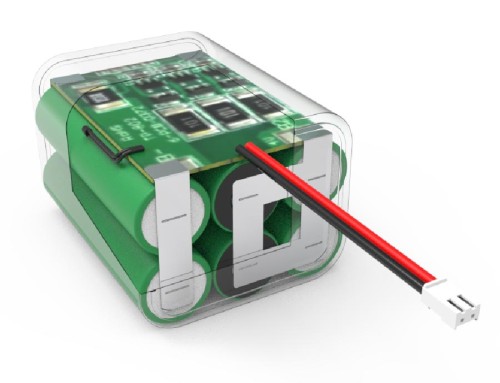
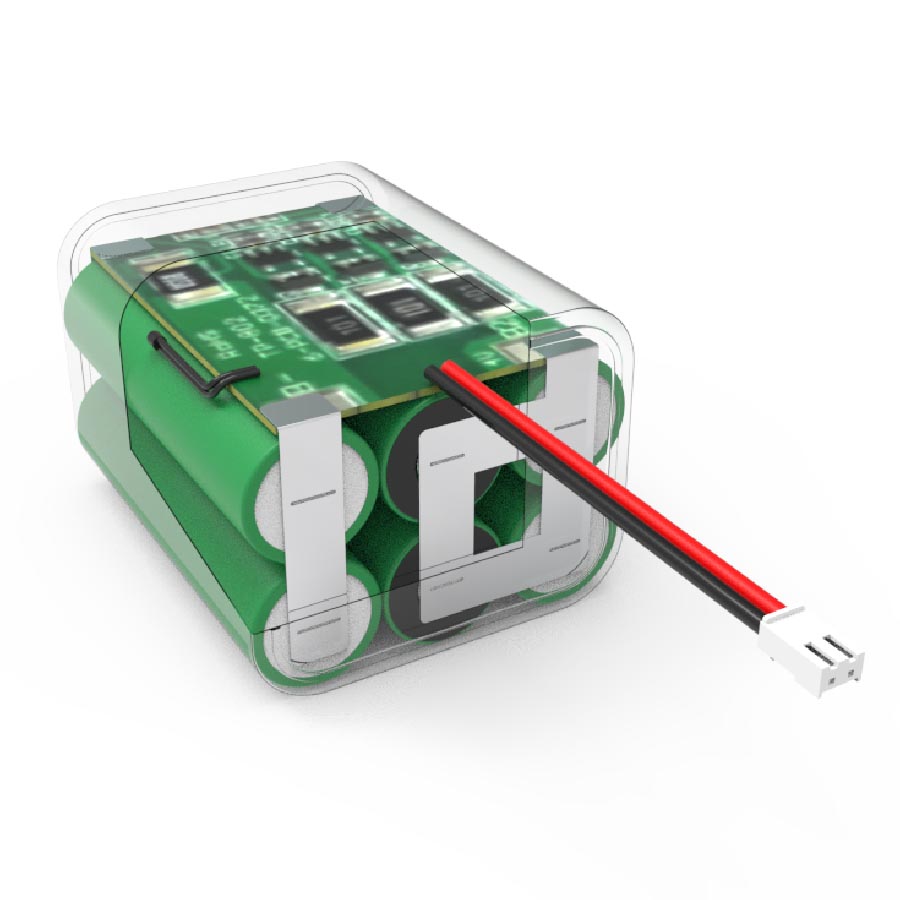
Specialized industrial applications requiring custom AAAA cell configurations (such as 2S or 3S series packs with spot-welded nickel tabs, custom wire harnesses, Molex/JST connectors, or IP67 potted enclosures) require dedicated OEM engineering support. Custom AAAA battery packs overcome physical space constraints in specialized telemetry nodes and field diagnostic tools. Contact our application engineering team today for technical datasheets, cell matching, and custom prototype sample builds.
What Are the Operating Guidelines and Terminal Tolerances for AAAA Battery Enclosures?
Designing battery compartments for AAAA batteries requires a minimum internal cavity diameter of 8.5 mm and contact spring deflection forces engineered between 5 N and 10 N. Correct installation alignment and thermal monitoring prevent reverse polarity damage and premature cell capacity degradation in AAAA battery-powered hardware.
Mechanical Enclosure Design and Contact Tolerances
Enclosure cavities for AAAA batteries must maintain an internal diameter of 8.5 mm (+0.1/-0.0 mm) to accommodate cell outer sleeve tolerances and thermal expansion during high-current discharge. Contact springs must be engineered to provide reliable electrical contact without exerting destructive axial mechanical force.
-
Spring Deflection Clearance: Design leaf contacts or coiled conical springs to accommodate the full length tolerance range of 41.5 mm to 42.5 mm. Excessive spring force (>10 N) can crush positive button pip seals, leading to electrolyte venting.
-
Cavity Diameter Allowance: Maintain a minimum internal cavity diameter of 8.5 mm to account for the 8.3 mm cell diameter, outer insulating shrink-sleeve tolerance, and thermal swelling.
-
Contact Terminal Plating: Utilize gold-plated or nickel-plated beryllium copper contacts to minimize contact resistance and prevent galvanic corrosion in high-humidity operating environments.
Thermal Thresholds and Discharge Cutoff Voltage Limits
Operating temperature boundaries for AAAA alkaline batteries span $-18^\circ\text{C}$ to $+55^\circ\text{C}$, with a functional discharge cutoff threshold set at 0.9V to 1.2V per cell depending on device circuit sensitivity.
-
Polarity Alignment: Ensure the positive (+) button pip and negative (-) flat base terminals align precisely with device compartment markings to prevent reverse-current short circuits.
-
Thermal Boundaries: Standard alkaline AAAA cells operate reliably between $-18^\circ\text{C}$ and $+55^\circ\text{C}$, whereas primary lithium AAAA variants extend operational capability from $-40^\circ\text{C}$ to $+60^\circ\text{C}$.
-
Discharge Cutoff Voltage: Set circuit low-voltage cutoff thresholds at 1.0V for digital electronics to extract over 90% of available electrochemical capacity without causing deep-discharge cell instability.
Adhering to standard mechanical design rules and thermal operating boundaries protects internal device circuitry and maximizes usable battery operational life.
Summary & Technical Quick-Reference Guide
The standard AAAA cylindrical battery (IEC LR61/FR61) combines an ultra-slim physical profile—specifically a maximum height of 42.5 mm and an outer diameter of 8.3 mm—with reliable 1.5V power output. Unit mass ranges from 4.8 grams (Primary Lithium) to 6.5 grams (Alkaline). For critical medical diagnostic tools, active digitizer styluses, and industrial IoT nodes, selecting the proper AAAA cell chemistry requires balancing volumetric energy density, thermal limits, and long-term shelf-life requirements.
| Parameter Key | Standard Metric Value | Imperial Equivalent | Engineering Note |
| Overall Height / Length | 41.5 mm – 42.5 mm | 1.63 in – 1.67 in | Measured from negative base to top of positive button pip |
| Outer Diameter | 7.8 mm – 8.3 mm | 0.31 in – 0.33 in | Enclosure cavity tooling recommendation: 8.5 mm minimum |
| Cell Mass (Alkaline LR61) | 6.5 grams | 0.23 oz | Standard baseline commercial density |
| Cell Mass (Primary Li FR61) | 4.8 grams | 0.17 oz | 26% lighter mass; ideal for active digital styluses |
| Nominal Voltage |
1.50 V (1.20 V NiMH)
|
1.50 V DC
|
Primary lithium open circuit voltage is ~1.75V–1.80V
|
| Typical Capacity |
500 mAh – 600 mAh
|
0.50 Ah – 0.60 Ah | Rated under low-drain continuous discharge to 0.9V cutoff |
Frequently Asked Questions (FAQ)
Q1: What is a AAAA battery size in millimeters and inches?
A: An AAAA battery measures 42.5 mm (1.67 inches) in total length and 8.3 mm (0.33 inches) in outer diameter.
Q2: What uses AAAA batteries in everyday and industrial electronic devices?
A: AAAA batteries power slim electronic hardware including active digital styluses (such as the Microsoft Surface Pen), handheld blood glucose meters, clinical penlights, laser indicators, and wireless industrial telemetry sensors.
Q3: Are AAAA batteries interchangeable with AAA batteries?
A: No, AAAA batteries are significantly narrower (8.3 mm vs 10.5 mm diameter) and shorter (42.5 mm vs 44.5 mm length) than AAA batteries, making them non-interchangeable in device battery compartments.
Q4: What is the typical shelf life and operational lifespan of an AAAA alkaline battery?
A: An AAAA alkaline battery offers a storage shelf life of 5 to 7 years at $20^\circ\text{C}$ and provides 12 to 18 months of operational lifespan in low-drain devices like active digital styluses.
Q5: Can AAAA batteries be customized into multi-cell OEM battery packs?
A: Yes, primary AAAA batteries can be assembled into series or parallel multi-cell configurations featuring spot-welded nickel tabs, insulated shrink sleeving, and custom wire connectors for specialized industrial and medical OEM equipment.