CR123 vs 123A Battery Specification: Is There a Difference for Medical OEM Designs?
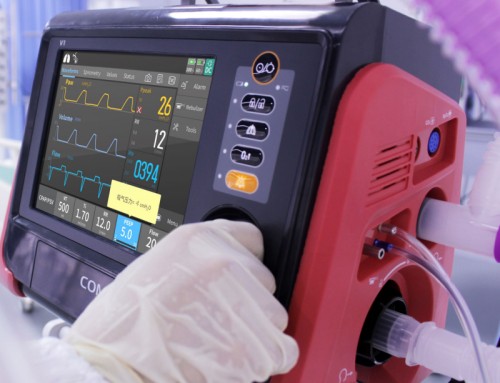
Specifying primary lithium power sources for critical medical electrical equipment—such as automated external defibrillators (AEDs), portable infusion pumps, surgical headlamps, and telemetry instruments—requires absolute clarity regarding battery nomenclature and electrical tolerances. Design engineers and procurement managers frequently encounter multiple model designations for compact 3V cylindrical cells, including 123, 123A, CR123, CR123A, DL123A, and EL123AP. Determining whether a physical or electrical difference exists between CR123 and CR123A batteries is essential to prevent supply chain bottlenecks, ensure mechanical fit in IP67-sealed battery compartments, and guarantee single-fault electrical safety under IEC 60601-1 mandates.
What Is the Technical Difference Between CR123 and CR123A Batteries?
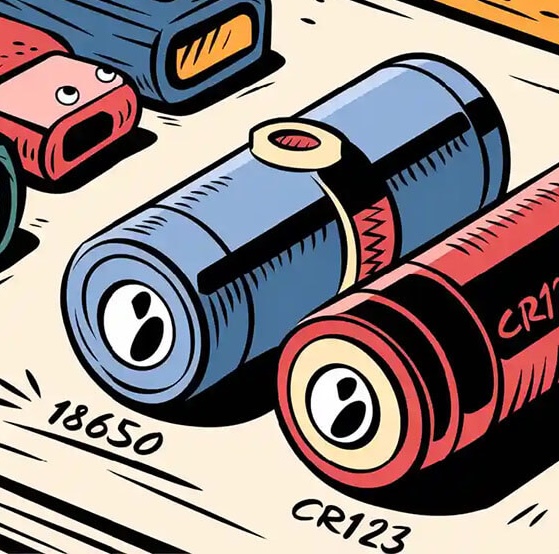
CR123, CR123A, 123, and 123A designate the exact same primary 3.0V Lithium Manganese Dioxide ($\text{Li/MnO}_2$) cell format under different manufacturer naming conventions.
Nomenclature Standards: IEC 60086-4 (CR17345) vs. Commercial Manufacturer Designations
The official International Electrotechnical Commission (IEC) standard designation for all CR123 and CR123A primary lithium batteries is CR17345, defining a cylindrical Lithium Manganese Dioxide cell. Commercial battery manufacturers assign proprietary alphanumeric prefixes and suffixes to the standard 17345 size format for brand identification. The letter “C” in the IEC nomenclature denotes Lithium Manganese Dioxide electrochemistry, “R” indicates a round cylindrical shape, “17” defines a 17 mm outer diameter, and “345” indicates a 34.5 mm overall height.
Physical Dimensions and Mechanical Tolerances of 123 and 123A Cells
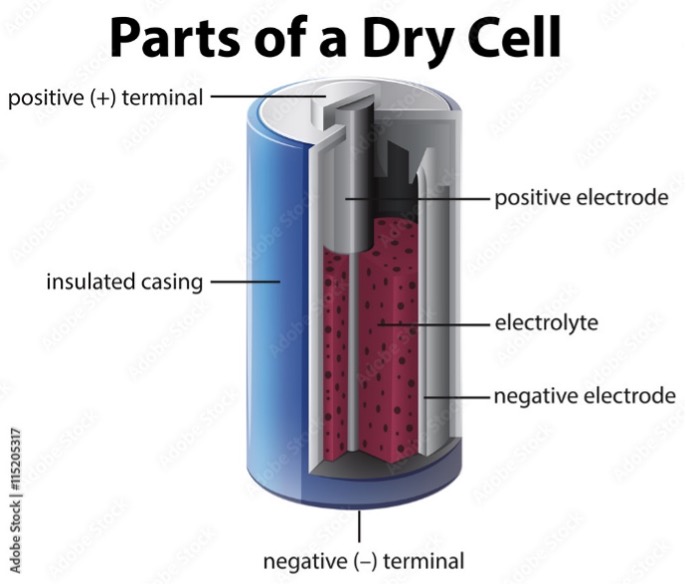
Primary 123 and 123A cells adhere to standardized outer physical measurements of $17.0\text{ mm}$ diameter and $34.5\text{ mm}$ total height. The physical dimensions of a standard CR123/CR123A cell remain uniform regardless of whether a manufacturer prints “123”, “123A”, “CR123”, or “CR123A” on the outer polyimide sleeve. Minor dimensional variances of $\pm 0.3\text{ mm}$ exist between button-top terminal heights across different brands, but all primary 123 and 123A cells fit standard molded battery bays and spring contact contacts.
(Image Prompt: A clean, professional technical engineering schematic illustration showing a 3D isometric view of a CR123A primary lithium battery. Include dimension callouts highlighting the 17.0 mm outer diameter, 34.5 mm overall height, button-top positive terminal, and flat negative terminal base. Color scheme: slate blue, dark gray, and metallic silver, suitable for a B2B engineering whitepaper.)
What Are the Electrochemical Specifications of Primary 123A Lithium Batteries in Medical Devices?
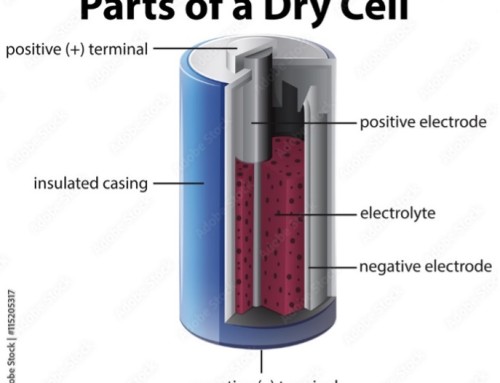
Primary CR123 and CR123A batteries utilize Lithium Manganese Dioxide ($\text{Li/MnO}_2$) electrochemistry to deliver a stable $3.0\text{V}$ nominal output, an energy capacity of $1,400\text{mAh}$ to $1,500\text{mAh}$, and a 10-year shelf life.
Voltage Stability, Energy Density, and Pulse Current Discharge Profiles
Primary $\text{Li/MnO}_2$ 123A cells maintain a continuous flat discharge voltage plateau near 3.0V, making them ideal for sensitive medical sensor front-ends. The open-circuit voltage (OCV) of a fresh CR123A cell measures approximately $3.2\text{V}$ to $3.3\text{V}$. During continuous light loads (e.g., $10\text{mA}$ sensing circuits), the operating voltage stabilizes at $3.0\text{V}$ until approximately 90% of total capacity is depleted. For high-drain pulse applications—such as AED capacitor charging or wireless telemetry bursts up to $1,500\text{mA}$—internal spiral wound electrode construction minimizes DC internal resistance ($R_{\text{DC}} \le 0.3\,\Omega$), preventing transient voltage sag.
Wide Operating Temperature Range and Low Self-Discharge for Emergency Medical Instruments
Primary CR123A lithium cells exhibit a low self-discharge rate of less than 1% per year at room temperature, maintaining operational readiness over a 10-year storage lifecycle. Emergency medical equipment stored in unconditioned field environments requires power sources that withstand temperature extremes. Primary $\text{Li/MnO}_2$ 123A batteries operate across a wide thermal window spanning $-40^\circ\text{C}$ to $+70^\circ\text{C}$, retaining over 80% usable capacity at sub-zero temperatures.
For high-drain rechargeable applications requiring multi-cell secondary battery packs, explore our technical guide on [18650 vs 21700 for portable medical devices] to evaluate volumetric energy density and thermal envelope trade-offs.
CR123A vs. RCR123A / 16340: Why Voltage Differences Risk Medical Electronics Damage?
Substituting a primary 3.0V CR123A battery with a rechargeable 3.7V RCR123A or 16340 Lithium-Ion cell risks severe overvoltage damage to 3.0V-rated medical instrument power rails.
3.0V Primary $\text{Li/MnO}_2$ vs. 3.7V Secondary Li-Ion Voltage Cut-off Hazards
While primary CR123A cells output a nominal 3.0V (peak 3.3V), rechargeable RCR123A (16340) cells utilize Lithium Cobalt Oxide (LCO) or NMC chemistry delivering a nominal 3.7V and a peak charging voltage of 4.2V. Inserting two series-connected 3.7V RCR123A cells into a medical device designed for two primary 3.0V CR123A cells supplies a peak input voltage of $8.4\text{V}$ instead of the expected $6.0\text{V} – 6.6\text{V}$ maximum window. This 27% overvoltage condition can overheat voltage regulators, destroy sensitive operational amplifiers, and invalidate medical device electrical safety compliance.
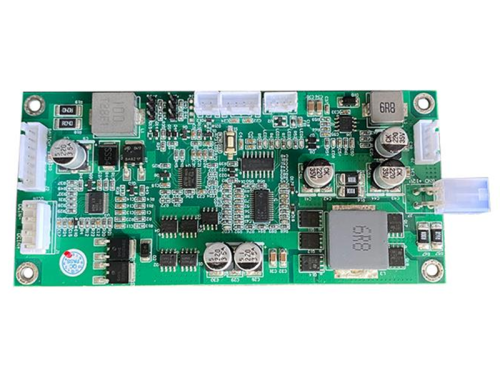
(Image Prompt: A high-contrast engineering comparison graphic illustrating the voltage differences between a 3.0V Primary CR123A cell and a 3.7V Rechargeable RCR123A cell. Show a digital multimeter readout indicating 3.2V for primary CR123A and 4.2V for fully charged RCR123A, with a red warning symbol on the 4.2V reading over a sensitive PCB circuit board.)
Internal PTC Fuses and Pressure Relief Vent Safety Mechanisms
Industrial-grade primary CR123A cells integrate internal Positive Temperature Coefficient (PTC) thermal switches and safety vents to meet single-fault safety requirements under ANSI C18.3M Primary Lithium Standards. If an external short circuit occurs in a handheld surgical instrument, the internal PTC resistance increases exponentially due to Joule heating ($I^2R$), throttling short-circuit current to safe levels ($<1\text{A}$). Additionally, a glass-to-metal hermetic seal combined with a mechanical safety vent prevents pressure buildup inside the steel container during extreme physical abuse.
How Do Medical Device Engineers Select 123 and 123A Batteries for FDA and CE MDR Compliance?
Medical device OEMs specify CR123A primary batteries by verifying UN 38.3 transport safety, UL 1642 safety component listing, and ISO 13485 supply chain quality traceability.
Single-Fault Safety and Hermetic Seal Verification in Hospital Environments
Compliance with IEC 60601-1 Clause 15.4.3 mandates that primary batteries integrated into medical equipment must not leak electrolyte or explode under single-fault conditions. Industrial-grade CR123A cells utilize non-corrosive organic electrolytes (typically lithium perchlorate dissolved in propylene carbonate and dimethoxyethane) encased in crimped or laser-welded steel cans. OEM quality engineers must verify that cell vendors supply certified test reports proving zero leakage after continuous storage at $+70^\circ\text{C}$ and $95\%$ relative humidity.
Supply Chain Traceability and ISO 13485 Manufacturing Compliance
Exporting medical devices under U.S. FDA 510(k) or EU Medical Device Regulation (MDR 2017/745) requirements requires full component traceability for all internal power sources. Medical equipment manufacturers partner with ISO 13485-certified battery pack assemblers who enforce strict incoming quality control (IQC) lot testing, trace raw cell batch numbers, and provide certified REACH/RoHS material declarations proving zero heavy-metal contamination.
Frequently Asked Questions
Q1: Is there any difference between a CR123 and a CR123A battery?
There is no functional, dimensional, or electrical difference between a CR123 and a CR123A battery.
-
Equivalent Standards: Both designations describe the exact same 3.0V primary Lithium Manganese Dioxide cell format.
-
Dimensions: Both feature a 17.0 mm diameter and 34.5 mm height.
-
Interchangeability: They can be used interchangeably in all medical and industrial devices.
Q2: Are 123 and 123A batteries interchangeable in medical devices?
Yes, 123, 123A, CR123, and CR123A primary lithium batteries are 100% physically and electrically interchangeable.
-
Voltage Alignment: All deliver a nominal 3.0V output plateau.
-
Capacity Match: Both offer approximately 1,400 mAh to 1,500 mAh usable capacity.
-
Cross-References: DL123A, EL123AP, and CR17345 represent identical cell equivalents.
Q3: Can a rechargeable 16340 or RCR123A replace a primary CR123A battery?
A rechargeable 16340 or RCR123A should not replace a primary CR123A unless the medical device explicitly supports 4.2V peak inputs.
-
Voltage Hazard: Rechargeable cells output up to 4.2V peak, compared to 3.3V peak for primary cells.
-
Overvoltage Risk: Higher voltage can burn out sensitive 3.0V-rated medical instrument logic circuits.
-
Capacity Reduction: RCR123A cells provide less than half the capacity (~700 mAh) of primary CR123A cells (~1,500 mAh).
Q4: What is the shelf life of a primary CR123A battery in standby equipment?
Primary CR123A lithium batteries feature an operational shelf life of up to 10 years when stored at room temperature.
-
Low Self-Discharge: Retains over 90% capacity after 5 years of standby storage.
-
Chemistry Advantage: Solid-state $\text{Li/MnO}_2$ electrochemistry prevents electrolyte degradation.
-
Application Fit: Ideal for automated external defibrillators (AEDs) and emergency backup monitors.
Q5: What IEC standard governs CR123 and CR123A primary lithium batteries?
The IEC standard governing primary CR123 and CR123A cells is IEC 60086-4 (Standard Designation: CR17345).
-
Safety Testing: Mandates altitude simulation, thermal cycling, shock, vibration, and internal short-circuit evaluation.
-
Medical Readiness: Verifies single-fault safety for integration into IEC 60601-1 certified medical devices.
-
Global Alignment: Ensures cross-border regulatory compliance for OEM exports.
Optimize Your Medical Power Architecture with Tefoo Energy
Specifying primary lithium cells or designing custom secondary battery assemblies for global medical electrical equipment requires strict alignment between mechanical, electrical, and regulatory requirements. Tefoo Energy provides ISO 13485-certified custom 18650, 21700, and primary/secondary lithium battery pack solutions engineered specifically for medical device OEMs.