Industrial robotics and portable medical devices face severe thermal management bottlenecks when housed in compact IP67-rated enclosures. High ambient temperatures combined with high-discharge cycles frequently trigger thermal runaway, internal short circuits, and localized overheating events in industrial lithium-ion packs. To mitigate these operational hazards, engineers must design battery packs that comply with the UL 62133 standard, which serves as the North American harmonized equivalent to the international IEC 62133 safety protocol. The UL 62133 standard defines the exact safety requirements for portable sealed secondary lithium cells and batteries deployed within electronic devices. By enforcing rigorous testing parameters, this regulatory framework ensures that energy storage systems do not cause fires, explosions, or toxic chemical leaks during extreme field operations.
[Key Takeaways]
-
Regulatory Harmonization: The UL 62133 standard harmonizes seamlessly with international frameworks like IEC 62133, EN 62133, and UN 38.3, facilitating global market access and streamlining regulatory approvals for international shipments.
-
Comprehensive Stress Validation: Achieving UL 62133 certification requires battery packs to successfully pass electrical, mechanical, and thermal overstress tests designed specifically to identify internal design flaws and manufacturing process defects.
-
Optimized Pack Configurations: Implementing the 4S2P (four series, two parallel) configuration directly supports UL 62133 compliance by balancing voltage distribution and enabling the integration of advanced Battery Management System (BMS) protection features.
What Are The Core Testing Requirements Under the UL 62133 Standard?
Mechanical Abuse and Thermal Extremes Tolerances
Mechanical abuse and thermal testing under the UL 62133 standard dictate that secondary lithium cells must withstand severe structural deformation and high-temperature environments without venting, leaking, or igniting. Engineers must validate enclosure rigidity and internal cell spacing against specific mechanical stress vectors. This validation process includes conducting vibration and shock tests to comprehensively assess hardware durability under physical stress. Furthermore, safety testing protocols require technicians to perform crush tests, impact tests, vibration tests, and thermal abuse tests to ensure the lithium-ion batteries can withstand real-world operational conditions.
[Technical Parameter Summary Comparison Table]
| Safety Test Type | Core Mechanism Evaluated | Target Vulnerability Addressed | Standard Operating Limits / Metrics |
| Internal Short Circuit Test |
Assessment of internal design to prevent short circuits.
|
Separator puncture, dendrite growth
|
Resistance threshold verification (Ambient: 20°C / 68°F) |
| Mechanical Abuse Tests |
Includes vibration and shock tests to assess durability under stress.
|
Tab weld fractures, enclosure breach
|
Impact masses and shock frequencies (e.g., 9.1 kg / 20.06 lb drop masses) |
| Thermal Abuse Test |
Cell stability under abrupt ambient temperature elevation.
|
Thermal runaway initiation
|
Chamber exposure (typically 130°C / 266°F) |
Electrical Overstress and Short Circuit Vulnerability
Electrical overstress tests under UL 62133 establish exact voltage and current cutoff thresholds to prevent catastrophic battery degradation and fires. The standard explicitly requires manufacturers to execute the overcharge test, which evaluates the battery’s physical and chemical response to excessive charging conditions. Concurrently, technicians must administer the overdischarge test to evaluate the battery’s performance and stability under excessive discharge conditions. Common failures during these rigorous electrical safety tests occur when battery chargers fail basic insulation checks or overheat while operating under a continuous electrical load.
How Does Cell Chemistry and Configuration Impact UL 62133 Certification?
Lithium Iron Phosphate (LiFePO4) vs. NMC Material Stability
Lithium Iron Phosphate (LiFePO4) provides superior thermal stability and cycle life for industrial battery packs compared to Nickel Manganese Cobalt (NMC) and Lithium Cobalt Oxide (LCO) chemistries. The fundamental choice of cathode material directly dictates the temperature threshold at which thermal runaway initiates. Utilizing certified LiFePO4 lithium battery solutions reduces operational frictions and supports a stronger commercial investment story. This strategic material selection indicates to stakeholders that certification processes can proactively alleviate insurance questions and downstream legal concerns. Procurement teams and battery engineers consistently select the LiFePO4 chemistry to guarantee long cycle life and stable performance in heavy-duty industrial battery packs.
-
LiFePO4 Specifications: Platform Voltage: 3.2V; Energy Density: $120~Wh/kg$ (54.4 Wh/lb); Cycle Life: 2000+ cycles.
-
NMC Specifications: Platform Voltage: 3.7V; Energy Density: $180~Wh/kg$ (81.6 Wh/lb); Cycle Life: 1000-1500 cycles.
-
LCO Specifications: Platform Voltage: 3.6V; Energy Density: $150~Wh/kg$ (68.0 Wh/lb); Cycle Life: 500-800 cycles.
4S2P Battery Pack Architecture and Protection Integration
Implementing a 4S2P configuration (four cells arranged in series, two cells arranged in parallel) intrinsically balances voltage and capacity while enabling the comprehensive protection circuit integration required by the UL 62133 standard. The 4S2P configuration directly supports mandatory compliance with overlapping safety regulations, including UN38.3, IEC62133-2, UL1642, and UL2054. This specific parallel-series topology allows hardware engineers to effectively embed sophisticated Battery Management Systems (BMS) that track precise operational limits.
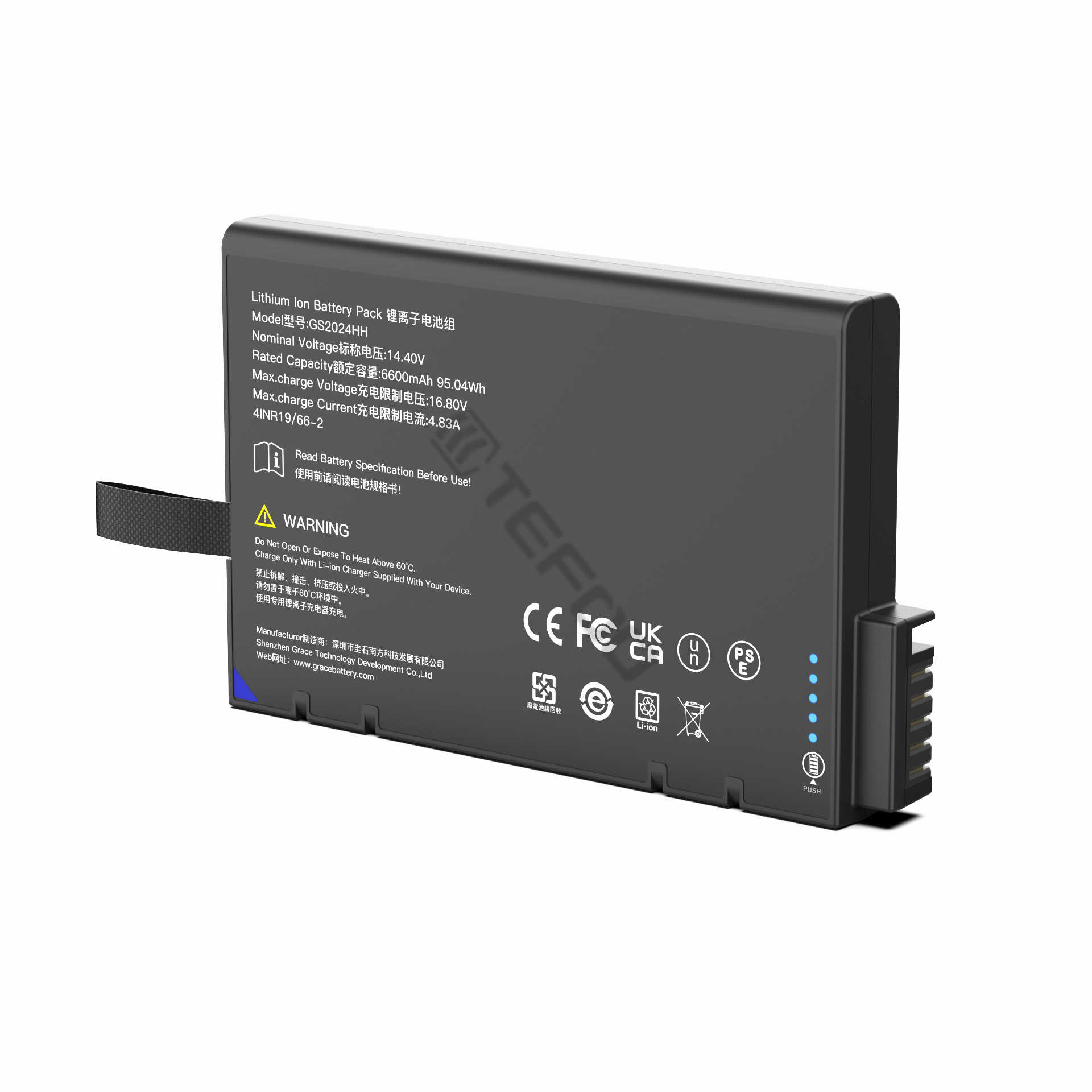
Engineers rely on the 4S2P configuration to implement the following critical technical features:
-
Over-charge protection calibrated to approximately $4.25~V/cell$.
-
Over-discharge protection calibrated between $2.5-3.0~V/cell$.
-
Passive or active cell balancing mechanisms to maintain uniform voltage.
-
Overcurrent and short-circuit protection relays.
-
Temperature sensing nodes integrated with thermal cutoff switches.
-
Optional communication interfaces utilizing SMBus, CAN, UART, or Bluetooth protocols.
How Do Procurement Managers Evaluate Total Cost of Ownership (TCO) for UL 62133 Battery Packs?
Certification Costs Versus Downstream Recall Risks
Upfront capital investments in UL 62133 certification are vastly offset by the immediate mitigation of legal risks, product recalls, and severe physical damage claims in industrial B2B deployments. Ignoring established safety standards introduces massive risks of personal injury and property damage due to inadequate safety measures. The real-world consequences of poor battery design are severe; for example, lithium-ion battery fires caused 13 deaths in New York City between January and May 2024, and overheating mobility devices triggered property damage in London during 2023. Non-compliance with standardized testing limits frequently leads to catastrophic field failures in critical performance areas such as vibration, shock, and thermal performance.
[B2B Selection/TCO Comparison Table]
| TCO Dimension | UL 62133 Certified Battery Packs | Non-Certified / Legacy Battery Packs |
| Operational Safety |
Compliance leads to safer lithium battery packs.
|
High risk of sparking, fires, or explosions in medical and industrial applications.
|
| Legal Risk Mitigation |
Meeting standards protects against potential lawsuits.
|
Severe financial losses from negative publicity and legal repercussions.
|
| Brand Reputation |
Compliance enhances the market image of manufacturers.
|
Major reputational damage from urgent safety investigations (e.g., ATSB flight investigations).
|
| Sustainability Goals |
Supports environmental initiatives and goals.
|
Increases hazardous electronic waste due to premature battery degradation.
|
Vendor Qualification and Custom Battery Engineering
Sourcing fully compliant UL 62133 battery packs requires procurement managers to qualify manufacturing partners capable of executing stringent electrical, mechanical, and thermal overstress tests alongside precise structural engineering. Reliable manufacturers establish comprehensive quality control processes and generate detailed documentation to achieve and maintain compliance. Following initial certification, manufacturers must conduct periodic post-market inspections to ensure ongoing production compliance with the original design specifications. When evaluating suppliers, engineers must ensure the vendor implements fundamental safety design rules, such as utilizing active thermal management and enforcing proper cell spacing.
Integrating certified lithium-ion cells into complex medical devices, autonomous robotics, or critical security infrastructure demands exacting technical precision. Engaging directly with a specialized engineering team significantly accelerates the regulatory compliance timeline and eliminates design bottlenecks. Contact our battery experts for customized battery pack solutions B2B conversion guidance, ensuring your next industrial energy storage project meets all critical UL 62133 safety mandates while delivering maximum operational reliability.