How Long Do 18650 Batteries Last in Medical and Precision Instrumentation?
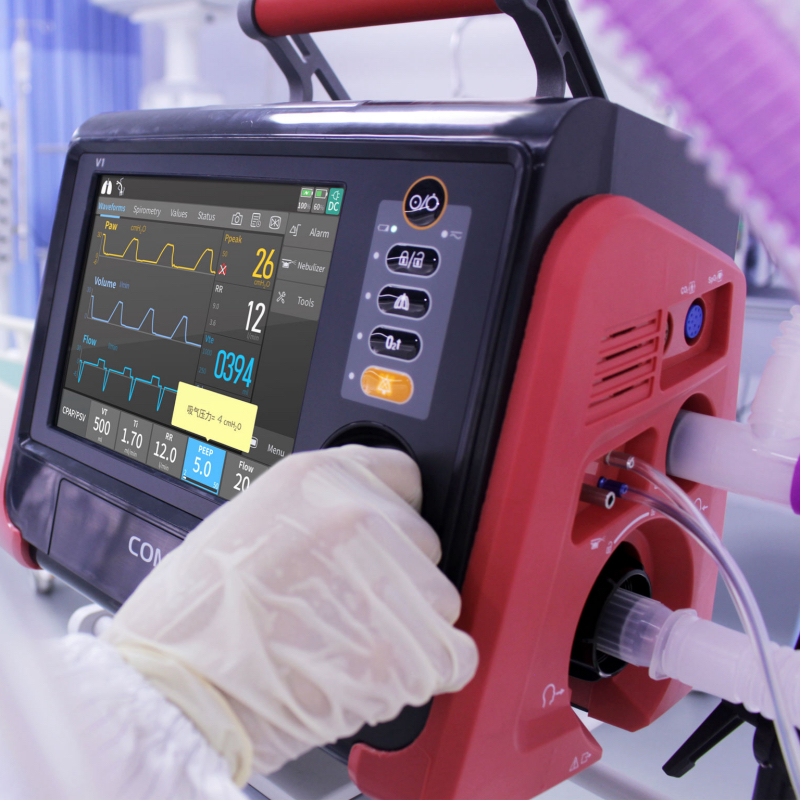
Medical device original equipment manufacturers (OEMs) and instrumentation R&D engineers face stringent runtime and reliability requirements when designing power systems for portable medical ventilators, patient monitors, spectrum analyzers, and digital oscilloscopes. Unplanned battery failure in field-deployed clinical instruments compromises patient safety, increases total cost of ownership, and triggers costly recall risks. Determining how long a lithium battery will last requires analyzing cell degradation mechanisms, charge cycle parameters, thermal dissipation profiles, and integrated battery management system (BMS) architectures across mission-critical application environments.
Expected Lifespan and Cycle Metrics for Medical-Grade 18650 Lithium-Ion Packs
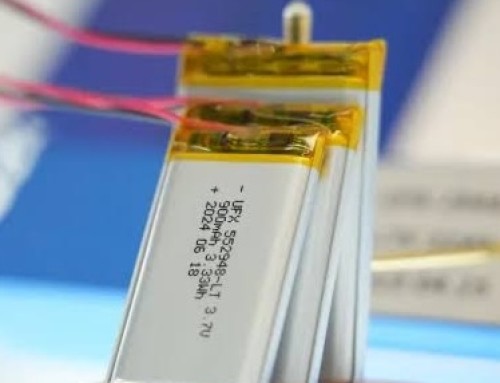
Medical-grade 18650 lithium-ion battery packs typically deliver 500 to 1,200 full charge-discharge cycles or 3 to 5 years of operational service life before original capacity degrades to 80% State of Health (SOH). Industrial-grade Lithium Nickel Manganese Cobalt Oxide (NMC) 18650 cells maintain predictable capacity retention curves under nominal laboratory testing conditions (25°C, 0.2C charge/discharge rate). However, field performance in portable diagnostic equipment varies significantly based on environmental stress, charging voltage thresholds, and duty cycle intensity.
Defining Cell Cycle Life Versus Calendar Life in Medical Instrumentation
Cycle life measures the total number of complete charge and discharge iterations a cell can sustain before nominal capacity drops to 80%, whereas calendar life reflects passive capacity loss over time due to ambient storage temperature and parasitic chemical reactions. A standard 3.7V 18650 lithium-ion cell subjected to a 100% Depth of Discharge (DoD) cycle daily will reach its end-of-life threshold in approximately 500 cycles (around 1.5 to 2 years). Conversely, in standby emergency medical devices where the battery pack remains connected to AC mains power under trickle charge, calendar life aging dominated by electrolyte oxidation determines operational longevity, typically capping pack service life at 3 to 5 years regardless of cycle count.
IEC 62133 and ISO 13485 Lifespan Testing Standards for Medical Ventilators and Monitors
International medical safety and quality standards, such as IEC 62133-2 and ISO 13485, mandate rigorous thermal cycling, mechanical shock, vibration, and continuous charge tolerance testing to ensure 18650 battery packs retain structural integrity and reliable power delivery throughout their certified lifespan. How long the lithium battery lasts under compliance protocols is evaluated by subjecting test samples to continuous 45°C environmental exposure, high-current pulses, and simulated overcharge conditions. Meeting these engineering metrics guarantees that backup battery assemblies inside critical life-support devices, such as portable ventilators, maintain sufficient run-time capacity during emergency hospital transport.
Key Engineering Factors Influencing How Long a Lithium Battery Lasts
Operational longevity in 18650 lithium-ion packs is primarily dictated by depth of discharge (DoD), charging voltage thresholds, continuous current draw, and thermal dissipation inside sealed equipment enclosures. Engineering decisions made during initial hardware power path selection directly dictate whether an 18650 pack achieves 300 cycles or exceeds 1,200 cycles in practical field deployments.
Impact of Depth of Discharge (DoD) and Max Charging Voltage on Cell Degradation
Restricting depth of discharge to 80% DoD and derating maximum charge voltage from 4.20V to 4.10V per cell can double total charge cycle longevity from 500 cycles to over 1,200 cycles. Lithium-ion cell anodes experience mechanical stress and lattice expansion during full lithium intercalation at 4.20V. Lowering upper charging cutoffs by 100mV reduces chemical stress on cathode materials, preventing accelerated solid electrolyte interphase (SEI) film growth at the expense of roughly 10% initial operational capacity.
| Electrical & Operational Parameter |
Standard Operation (100% DoD / 4.20V) |
Optimized OEM Operation (80% DoD / 4.10V) |
Impact on Cell Degradation |
| Upper Charge Cutoff Voltage |
4.20 V / cell |
4.10 V / cell |
Reduces electrolyte oxidation and cathode lattice strain |
| Lower Discharge Cutoff Voltage |
2.75 V / cell |
3.00 V / cell |
Prevents copper dissolution on current collectors |
| Depth of Discharge (DoD) |
100% DoD |
80% DoD |
Minimizes volume expansion stress on graphite anodes |
| Expected Cycle Life (to 80% SOH) |
300 – 500 cycles |
1,000 – 1,500 cycles |
Extends pack functional lifespan by 2x to 3x |
| Usable Capacity Per Cycle |
100% Rated Ah |
~85-90% Rated Ah |
Requires minor initial capacity oversizing |
Thermal Management and C-Rate Load Stress in Portable Spectrum Analyzers and Oscilloscopes
Sustained ambient operating temperatures above 30°C or high continuous discharge rates exceeding 1C accelerate Solid Electrolyte Interphase (SEI) layer growth, causing permanent capacity fade and internal resistance escalation. Precision test equipment, such as portable spectrum analyzers and digital oscilloscopes, often feature compact, fanless enclosures where heat generated by graphics processors and internal power converters builds up around internal power source bays. When lithium-ion cells operate continuously at 45°C, capacity loss rates double compared to operation at 20°C. OEM engineers must incorporate heat-sink pathways, phase-change thermal materials, or active thermal throttling to prevent localized hot spots from degrading individual 18650 cells.
BMS Integration and Active Balancing Strategies to Extend 18650 Battery Pack Longevity
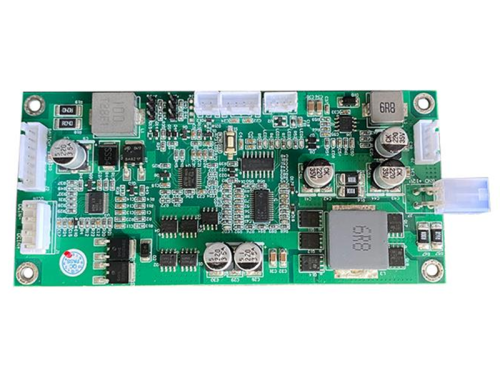
Integrating a Smart Battery Management System (BMS) with SMBus communication protocols and active cell balancing extends battery pack functional lifespan by maintaining voltage uniformities across multi-cell 18650 series strings. Incorporating tailored electronics ensures safe power delivery while optimizing cycle life for high-reliability medical instrumentation through engineered custom medical battery solutions.
Dual-Protection BMS Architecture and SMBus Fuel Gauge Accuracy
Dual-layer overvoltage, undervoltage, and overcurrent protection circuits prevent localized electrical stress, while System Management Bus (SMBus 1.1) fuel gauge ICs enable real-time SOH tracking to prevent unexpected power loss. In multi-cell battery packs configured in 3S or 4S series arrangements, individual cell manufacturing tolerances cause slight impedance variations over time. A smart BMS continuously monitors individual cell voltages, preventing weak cells from dropping below critical 2.5V discharge cutoffs or exceeding 4.25V overcharge limits, thereby shielding the entire pack from premature cascading cell failure.
Cell Balancing Mechanisms for 18650 Lithium-Ion Battery Assemblies
Active and passive cell balancing prevents individual cell voltage drift during charging cycles, preserving overall pack usable capacity and preventing premature system lockout. Passive balancing bleed resistors dissipate excess charge from higher-voltage cells during the constant voltage (CV) charge phase, ensuring all series banks achieve equal state-of-charge (SoC). Active balancing transfers charge between cells via capacitive or inductive circuits, minimizing thermal generation and maximizing energy efficiency in high-density medical equipment power systems.
Diagnostic Indicators for Replacing 18650 Lithium-Ion Packs in Mission-Critical Equipment
Medical equipment OEMs and service engineers should schedule battery pack replacement when State of Health (SOH) drops below 80% of rated nominal capacity, internal resistance increases by over 50%, or runtime falls short of mandatory duty-cycle thresholds. Adhering to strict replacement criteria ensures continuous compliance with international safety benchmarks, including the IEC 62133 safety standard.
Quantitative SOH Degradation Metrics and DC Internal Resistance (DCIR) Escalation
Monitoring DC internal resistance spikes and voltage droop under load provides direct quantitative data for identifying degraded 18650 cells prior to total power delivery failure. As lithium-ion cells age, internal resistance increases due to SEI layer thickening, electrolyte breakdown, and active material loss. In high-current applications, such as portable suction pumps or motorized medical carts, elevated internal resistance causes severe voltage droop under load, triggering early low-voltage system cutoffs even when the battery gauge reports remaining charge.
Safe Storage Guidelines and UN 38.3 Compliant Transportation Practices for Medical Packs
Storing medical battery packs at 40% to 50% State of Charge (SoC) within a 15°C to 25°C temperature envelope preserves active lithium inventory during prolonged shelf storage. Storing lithium-ion cells at 100% SoC accelerates parasitic chemical reactions and grid corrosion, resulting in permanent unrecoverable capacity loss. For transportation safety, compliance with UN 38.3 transport testing standards requires shipping lithium battery assemblies at an SoC not exceeding 30%, protecting logistics personnel while maintaining cell chemistry stability during transit.
Frequently Asked Questions (FAQ)
How long do 18650 batteries last in portable medical devices?
18650 lithium-ion batteries in medical devices typically last 300 to 1,000 full charge cycles or 2 to 4 years of operational service before capacity drops below 80% State of Health. Actual longevity depends on depth of discharge, ambient operating temperatures, and BMS protection features.
How long does the lithium battery last when stored in standby equipment?
A lithium battery kept in standby medical equipment under optimal storage conditions (15°C to 25°C at 50% State of Charge) maintains functional shelf life for 3 to 5 years. Periodic maintenance charges every 6 months are required to prevent self-discharge below critical voltage cutoffs.
How does charging voltage affect how long a lithium battery will last?
Lowering the maximum charge voltage from 4.20V to 4.10V per cell significantly reduces chemical stress on cell electrodes, effectively doubling battery cycle life from 500 cycles to over 1,200 cycles.
Why does internal resistance increase as a lithium-ion battery ages?
Internal resistance increases as lithium-ion batteries age due to solid electrolyte interphase (SEI) layer growth, electrolyte decomposition, and electrode material degradation. Elevated resistance causes higher heat generation and noticeable voltage droop during high-current operation.
What is the ideal State of Charge for storing medical lithium-ion packs?
The optimal storage State of Charge (SoC) for medical lithium-ion battery packs is between 40% and 50% at ambient temperatures below 25°C. Storing cells within this range minimizes chemical degradation while preventing over-discharge during long storage periods.