What Is an 18650 Battery? 18650 Size, Voltage Range, and Lithium Cell Capacity Guide for Medical OEMs
Integrating cylindrical lithium-ion power systems into portable medical equipment—such as patient monitors, infusion pumps, diagnostic ultrasound scanners, and handheld analyzers—requires precise engineering alignment between mechanical chassis dimensions and electrochemical capabilities. Selecting the right cell model begins with evaluating physical 18650 battery measurements, the operational 18650 voltage range, and usable lithium cell capacity under specific medical discharge loads. For medical device original equipment manufacturers (OEMs) and design engineers operating under strict safety regulations, understanding cell dimensions, chemistry variations, and pack integration trade-offs is essential to achieve predictable device runtime and ensure compliance with global regulatory standards.
What Is an 18650 Battery and How Do 18650 Battery Measurements Define Chassis Dimensions?
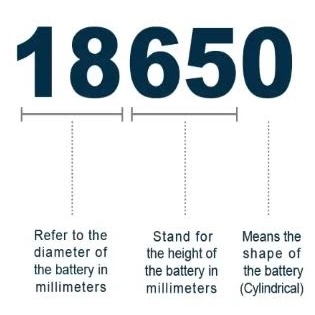
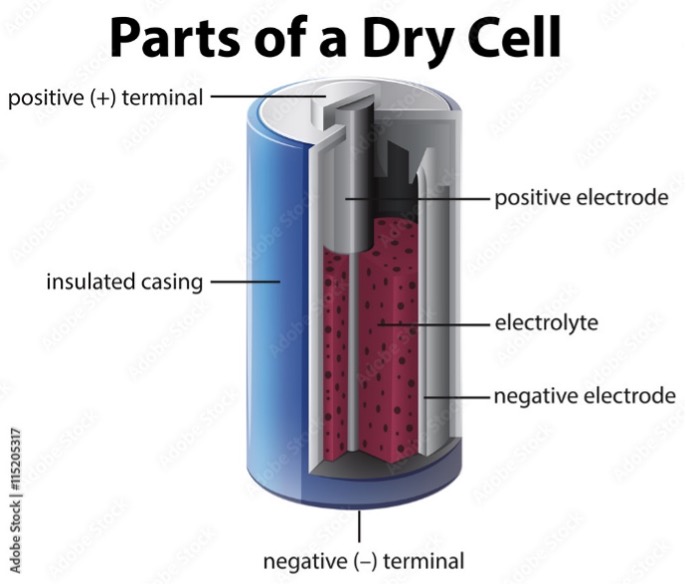
An 18650 battery is a standardized cylindrical lithium-ion rechargeable cell measuring 18 mm in diameter and 65 mm in length, where the trailing “0” designates its cylindrical form factor.
Physical 18650 Size Dimensions and Standardized Cylindrical Form Factor
The 18650 size establishes a global dimensional standard across the battery manufacturing industry. The standard battery 18650 size specifies an outer diameter of $18.0\text{ mm} \pm 0.2\text{ mm}$ and a total length of $65.0\text{ mm} \pm 0.3\text{ mm}$ for bare (unprotected) flat-top cells. The standardized cylindrical construction balances structural rigidity, internal volumetric energy density, and automated manufacturing efficiency, making the 18650 size the most widely adopted lithium-ion cell format across industrial, medical, and commercial electronic applications.
Dimensional Tolerances and Mechanical Integration in IP67 Medical Housings
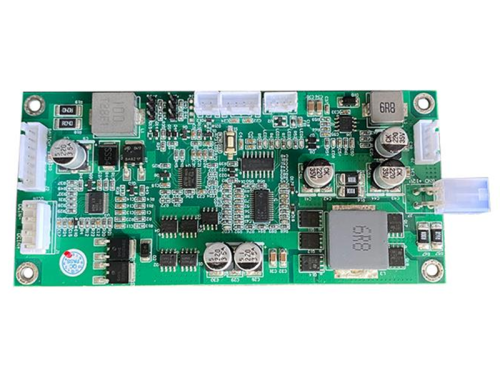
Integrating protected 18650 cells or custom multi-cell holder assemblies increases overall physical dimensions, requiring mechanical engineers to allocate additional chassis tolerances. Adding an integrated Protection Circuit Module (PCM) or Smart Battery Management System (BMS) PCB to the cell cathode or anode increases total cell length by $1.5\text{ mm}$ to $2.5\text{ mm}$ ($66.5\text{ mm}$ to $67.5\text{ mm}$ total). Applying external polyimide isolation wraps or flame-retardant heat-shrink tubing increases overall cell diameter by $0.2\text{ mm}$ to $0.4\text{ mm}$. For medical device engineers designing IP67 fluid-sealed battery compartments, comparing compact cylindrical cell options is critical—review our technical guide on [18650 vs 21700 for portable medical devices] to evaluate physical housing and volumetric energy trade-offs.
What Is the 18650 Voltage Range Across Common Lithium Cell Chemistries?
The functional 18650 voltage range spans from a maximum fully charged threshold of 4.2V DC down to an absolute discharge cut-off floor of 2.5V DC, with a nominal operating platform of 3.6V or 3.7V DC for standard NMC/NCA chemistries.
Nominal Voltage, Charging Cut-off, and Discharge Floor Parameters
Different cathode chemistries alter the nominal voltage platform and operational limits of an 18650 cell. Standard Nickel Cobalt Manganese (NCM/NMC) and Nickel Cobalt Aluminum Oxide (NCA) chemistries operate at $3.6\text{V}$ or $3.7\text{V}$ nominal. Lithium Iron Phosphate ($\text{LiFePO}_4$ / LFP) chemistries operate at a lower $3.2\text{V}$ nominal platform, offering enhanced thermal stability and extended cycle life at the expense of lower volumetric energy density.
Voltage Curves and BMS Protection Thresholds in Medical Equipment
Integrating a Smart BMS ensures that individual cells inside a multi-cell 18650 pack operate strictly within safe voltage boundaries. When a medical monitor operates under heavy current loads, parasitic voltage drops ($\Delta V = I \cdot R_{\text{DC}}$) reduce measurable terminal voltage. BMS microcontrollers (utilizing ICs such as the Texas Instruments BQ40z50) monitor individual 18650 cell voltages, triggering overvoltage protection ($V_{\text{ov}} \approx 4.25\text{V} – 4.30\text{V}$) during charging and under-voltage lockout ($\text{UVLO} \approx 2.50\text{V} – 2.80\text{V}$) during discharge to prevent permanent cell copper dissolution or cathode degradation.
How Does Li Ion Capacity and Discharging C-Rate Impact Medical Device Runtime?
Standard 18650 lithium cell capacity ranges from 1000 mAh to 3500 mAh, representing the total electrical charge a cell can deliver over time under controlled discharge rates and ambient temperatures.
Evaluating 18650 Lithium Cell Capacity (mAh vs. Wh) Under Continuous Loads
Milliamp-hours ($\text{mAh}$) measure electrical charge capacity, whereas watt-hours ($\text{Wh}$) define total usable energy by accounting for operating voltage. To calculate total stored energy ($\text{Wh}$), engineers multiply nominal cell voltage by total amp-hour capacity:
$$\text{Energy (Wh)} = \text{Nominal Voltage (V)} \times \text{Capacity (Ah)}$$
Example: A single $3.6\text{V}$, $3400\text{ mAh}$ ($3.4\text{Ah}$) high-capacity 18650 cell yields $12.24\text{ Wh}$ of energy ($3.6\text{V} \times 3.4\text{Ah} = 12.24\text{ Wh}$). When estimating overall battery system runtime ($t$), dividing total watt-hour capacity by average medical device load power ($P_{\text{load}}$) adjusted for BMS discharge efficiency ($\eta$) yields predictable runtime projections:
$$\text{Runtime (hours)} = \frac{\text{Total Pack Energy (Wh)} \times \eta}{P_{\text{load}}\text{ (W)}}$$
Trade-offs Between High-Capacity (3500mAh) and High-Drain 18650 Cells
Selecting maximum li ion capacity cells ($3400\text{ mAh} – 3500\text{ mAh}$) increases single-charge runtime but reduces maximum continuous discharge current capabilities compared to high-drain cell variants. High-capacity cells utilize thinner internal current collector foils and denser active material coatings, resulting in higher DC internal resistance ($R_{\text{DC}} \approx 25\text{ m}\Omega – 40\text{ m}\Omega$). Under high pulse current draws—such as motor start-up spikes in surgical power tools or compressor cycles in portable ventilators—high-capacity cells exhibit pronounced voltage sag ($I \times R$ drop) and elevated self-heating. High-drain cells ($2000\text{ mAh} – 2600\text{ mAh}$) feature lower internal resistance ($R_{\text{DC}} \approx 10\text{ m}\Omega – 15\text{ m}\Omega$), safely sustaining continuous discharge loads up to $20\text{A} – 30\text{A}$ while maintaining flat discharge voltage profiles.
How Do Medical OEMs Select 18650 Batteries for Custom Multi-Cell Packs?
Designing multi-cell 18650 packs requires strict cell sorting, internal resistance matching, and compliance with global safety standards including IEC 62133-2, UL 2054, and UN 38.3.
Cell Matching, Internal Resistance Grading, and Series-Parallel Configurations
Assembling series-parallel cell strings (such as 4S2P or 4S4P configurations) mandates 5-point automated cell grading prior to spot welding. Combining cells with mismatched internal resistance ($\Delta R_{\text{DC}} > 3\text{m}\Omega$) or capacity variance ($\Delta Q > 0.5\%$) causes parallel branch circulating currents and thermal imbalance during charging cycles. Precision cell matching ensures equal current distribution across parallel groups, preventing localized cell overheating and extending pack cycle life.
Regulatory Compliance: IEC 62133-2, UL 2054, and UN 38.3 Testing
Exporting medical electrical devices internationally requires verifying that chosen 18650 cell models hold active safety certifications. Medical regulators mandate compliance under the IECEE CB Scheme for IEC 62133-2 (secondary lithium cell safety) and UL 2054 (commercial battery safety). Furthermore, all custom 18650 pack assemblies must pass UN 38.3 transport testing—encompassing altitude simulation, thermal shock, vibration, impact, and forced discharge—to permit commercial air freight transport.
Frequently Asked Questions
Q1: What is an 18650 battery and what do its measurements signify?
An 18650 battery is a standardized cylindrical lithium-ion cell widely used in medical and industrial equipment.
-
18: Indicates an outer diameter of exactly $18\text{ mm}$.
-
65: Indicates a overall length of $65\text{ mm}$.
-
0: Designates a cylindrical physical form factor.
Q2: What is the normal 18650 voltage range during charge and discharge cycles?
The standard operating voltage range spans from 2.5V DC minimum up to 4.2V DC maximum.
-
Fully Charged: $4.20\text{V} \pm 0.05\text{V}$ upper charging threshold.
-
Nominal Platform: $3.60\text{V} – 3.70\text{V}$ operating plateau for NMC/NCA.
-
Cut-off Floor: $2.50\text{V} – 2.75\text{V}$ lower BMS discharge limit.
Q3: How do you calculate watt-hours (Wh) from 18650 lithium cell capacity (mAh)?
Multiply nominal cell voltage by total amp-hours (mAh divided by 1000).
-
Formula: $\text{Wh} = \text{Nominal Voltage (V)} \times (\text{Capacity (mAh)} \div 1000)$.
-
Example Calculation: $3.6\text{V} \times (3000\text{ mAh} \div 1000) = 10.8\text{ Wh}$.
-
Application: Use Wh ratings to project total medical device system runtime.
Q4: Is a higher mAh 18650 battery always better for medical devices?
No, higher mAh capacity cells often trade off lower maximum continuous discharge rates.
-
3500mAh Cells: Ideal for low-to-medium drain continuous loads (e.g., patient monitors).
-
2500mAh Cells: Preferred for high-drain pulse applications (e.g., surgical power tools).
-
BMS Selection: High-drain applications require low internal resistance ($R_{\text{DC}}$) cells to prevent voltage sag.
Q5: What safety certifications must an 18650 battery hold for medical device export?
Medical lithium-ion packs must hold IEC 62133-2, UL 2054, and UN 38.3 certifications.
-
IEC 62133-2: Mandated for medical device compliance under IEC 60601-1.
-
UL 2054: Evaluates mechanical and electrical enclosure safety.
-
UN 38.3: Required for global air and ground transport safety.
Optimize Your Medical Power Architecture with Tefoo Energy
Engineering custom medical equipment that utilizes 18650 cylindrical cells requires balancing physical dimensions, electrical voltage ranges, cell capacity, and regulatory compliance. Tefoo Energy manufactures ISO 13485-certified custom 18650, 21700, and lithium polymer battery solutions tailored for global OEM medical and instrumentation applications.
Request Custom 18650 Battery CAD Models & OEM Engineering Support
Accelerate your medical device design cycle. Contact Tefoo Energy’s application engineering team to receive custom 18650 battery pack design proposals, 3D STEP CAD models, Smart BMS protocol specifications, and turnkey IEC 62133-2 test documentation.