How Do Battery Charging Technologies Compare For Industrial Devices?
Engineers designing portable medical devices, electric vehicles, and industrial equipment frequently encounter premature battery degradation caused by suboptimal electrical replenishment algorithms. High-current energy delivery at improper temperatures accelerates metallic lithium plating on the anode, permanently reducing the capacity of lithium-ion cells. Selecting the correct energy transfer protocol directly dictates hardware reliability and safety in critical operating environments. A rigorous battery charging technologies comparison demonstrates that the only accurate method of charging is to strictly match the electrical delivery system to the specific electrochemistry of the storage module.
How Do Battery Charging Technologies Compare For Lithium-Ion And Lead-Acid Systems?
Different battery chemistries require specific energy delivery protocols, where lithium-ion systems require precise Constant Voltage (CV) and Constant Current (CC) control, while lead-acid systems rely on low-current float charging algorithms. Using an incompatible charger delivers incorrect voltage parameters, causing internal hardware damage and severe capacity loss.
Constant Current (CC) And Constant Voltage (CV) Integration
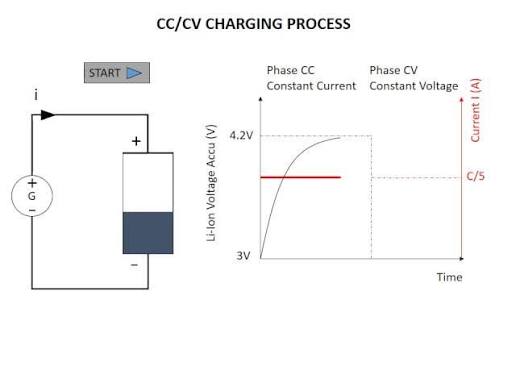
Constant Current (CC) algorithms quickly replenish lithium-ion capacity during initial stages, while Constant Voltage (CV) algorithms maintain a fixed voltage to safely finalize the charge without overcharging. Hardware engineers combine these two methods to balance speed and safety.
-
Constant Current (CC) Phase: CC charging delivers a steady electrical current to quickly replenish battery capacity from a depleted state. However, CC charging becomes less effective as the lithium-ion battery fills, eventually risking internal overvoltage if not transitioned properly.
-
Constant Voltage (CV) Phase: CV charging prevents overcharging by holding the voltage fixed and allowing the current to gradually decrease as the lithium-ion cells approach maximum capacity. This method prevents damage but significantly slows down the final stages of the replenishment cycle.
-
Multi-Stage Constant Current (MCC): MCC charging adjusts the delivered current during different phases of the energy transfer process, reducing mechanical stress on the battery cells and enhancing overall efficiency.
Float Charging For Lead-Acid Infrastructure
Float charging maintains a lead-acid battery at full capacity without overcharging by connecting the unit to a constant voltage source calibrated just below maximum capacity. This protocol offsets natural self-discharge for stationary backup power infrastructure.
-
Self-Discharge Compensation: Float charging directly compensates for the natural energy loss occurring within resting lead-acid and nickel-cadmium batteries.
-
Continuous Readiness: Emergency power systems, industrial backup generators, and medical defibrillators utilize float charging to ensure the power modules remain fully operational for immediate deployment.
-
Overcharge Prevention: By holding the voltage precisely below the overcharge threshold, float charging minimizes the need for frequent hardware maintenance while extending the lead-acid lifecycle.
Do Batteries Charge Faster Or Slower Depending On Temperature?
Batteries charge slower and experience severe capacity degradation when operating outside the optimal temperature range of 20°C to 25°C. Both excessive heat and extreme cold disrupt the internal electrochemical reactions required for efficient energy transfer.
The Negative Effects Of High-Temperature Environments
Charging industrial batteries at temperatures above 30°C accelerates internal heat buildup, damages components, and increases the risk of catastrophic thermal runaway. High ambient temperatures destroy charging efficiency.
-
Ohmic Resistance: High charging currents generate excess heat through internal Ohmic resistance, which degrades the chemical stability of the electrolyte.
-
Side Reactions: Unregulated overcharging initiates unwanted side reactions within the battery cells, further escalating internal temperatures and causing battery management system (BMS) failures.
-
Thermal Runaway Risk: Excessive heat buildup damages internal separators, directly leading to short circuits and thermal runaway if the charging current is not immediately interrupted.
Low-Temperature Lithium Plating Hazards
Charging lithium-ion batteries at temperatures below 20°C induces lithium plating, a phenomenon that permanently damages the internal cell structure. Cold environments physically restrict the movement of lithium ions.
-
Anode Accumulation: Low-temperature charging forces lithium ions to accumulate on the surface of the anode rather than intercalating properly into the graphite structure.
-
Irreversible Damage: This metallic lithium formation represents a major cause of irreversible battery degradation and significantly reduces the total available capacity of the module.
-
Temperature Compensation Strategy: To preserve hardware longevity in freezing environments, the only accurate method of charging is to utilize temperature-compensated BMS profiles that restrict current intake during cold starts.
Which Advanced Battery Charging Methods Maximize Industrial Equipment Lifespan?
Pulse charging mechanisms and smart Battery Management System (BMS) integrations maximize equipment lifespan by minimizing heat generation and proactively preventing overvoltage events. Advanced electronic control units allow for rapid energy transfer without compromising physical safety.
Pulse Charging For Thermal Mitigation
Pulse charging alternates short bursts of high current with brief rest periods, allowing the lithium-ion battery to dissipate heat efficiently during the energy transfer process. This technique accelerates charging speeds without triggering thermal degradation.
| Charging Parameter | Pulse Charging Characteristics |
| Heat Dissipation |
Rest intervals allow internal cell temperatures to drop naturally before the next current burst.
|
| Plating Prevention |
The alternating phases prevent the dangerous buildup of lithium plating on the anode surface.
|
| Energy Efficiency |
Reduces energy loss associated with continuous thermal generation, resulting in highly efficient power delivery.
|
| Implementation |
Requires advanced, complex control systems, which increases the manufacturing cost of the hardware.
|
Smart Battery Management System (BMS) Features
Smart chargers equipped with comprehensive BMS protocols optimize voltage and current delivery, achieving up to 96% energy efficiency while eliminating overcharging risks. These intelligent controllers dynamically adjust to the battery’s real-time physical state.
-
Real-Time Monitoring: Smart chargers continuously track voltage parameters and cell temperatures, dynamically adjusting the energy flow to prevent hazardous conditions.
-
Temperature Compensation: Advanced BMS controllers automatically reduce the charging current when the battery approaches critical temperature thresholds, guaranteeing safe operation.
-
Burp Charging Techniques: Intelligent systems utilize burp charging—periodically pausing the current flow—to ensure even charge distribution and minimize localized overheating.
How Does Fast Charging Impact Lithium-Ion Battery Longevity?
Modern fast charging systems do not necessarily harm lithium-ion battery longevity because advanced BMS controllers strictly regulate voltage and temperature to balance speed with cellular health. Rapid charging protocols are essential for high-capacity applications like electric vehicles (EVs).
High-Current Fast Charging Algorithms
Fast charging delivers high initial currents to significantly reduce charging times, transitioning to constant voltage phases to ensure the battery safely reaches full capacity. Extensive data indicates modern hardware successfully mitigates degradation risks.
-
Fleet Data Analysis: A comprehensive study analyzing over 12,000 EVs in the United States demonstrated that frequent Level 3 fast charging had negligible effects on overall battery capacity.
-
Long-Term Lifecycle: Additional data encompassing over 160,000 data points from 13,000 Tesla vehicles revealed no significant difference in range degradation between units frequently utilizing fast chargers versus standard chargers.
-
Optimal State of Charge (SoC): To maximize battery lifespan while utilizing fast charging algorithms, engineers recommend keeping the operational SoC strictly between 20% and 80%.
Inductive Wireless Charging Implementations
Inductive charging transfers energy through alternating electromagnetic fields via coils, eliminating physical connectors while achieving up to 75% energy transfer efficiency. This wireless technology enhances convenience for consumer electronics and industrial automated guided vehicles (AGVs).
| Wireless Charging Parameter | Inductive Charging Specification |
| Efficiency Improvements |
Modern Qi wireless charging systems have successfully improved their energy transfer efficiency from 60% up to 75%.
|
| Hardware Durability |
Eliminating physical cables drastically reduces connector wear and tear, minimizing physical waste over the product lifecycle.
|
| Infrastructure Integration |
Pilot projects demonstrate wireless EV charging systems can connect directly to solar or wind energy grids, lowering operational carbon footprints.
|
| Current Limitations |
Inductive systems remain generally less efficient than wired systems and require high initial setup costs for the transmitting infrastructure.
|