>>>Contents
How Long Will a 12 Volt Battery Last in Portable Medical Equipment?
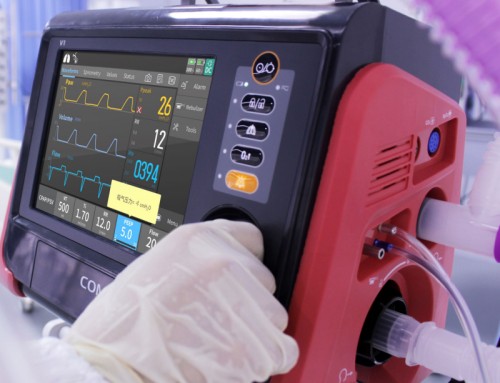
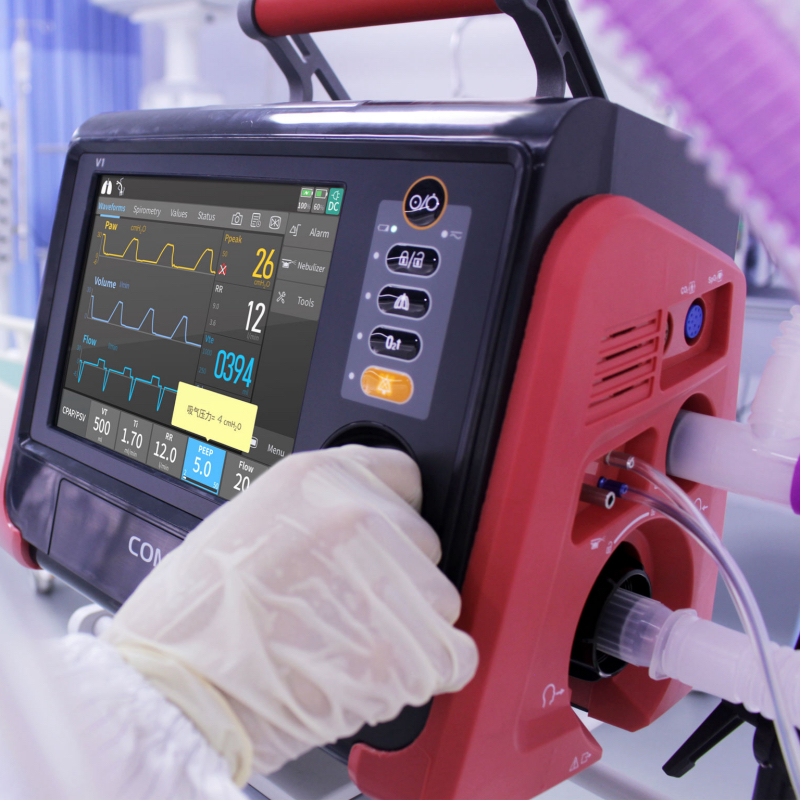
Portable medical electrical equipment—including mobile patient monitors, infusion pumps, portable oxygen concentrators, and diagnostic ultrasound instruments—requires predictable, uninterrupted power to ensure patient safety and maintain clinical workflow. Determining how long a 12v battery will last involves evaluating two distinct operational metrics: single-charge runtime (operating hours per discharge cycle) and total service lifespan (calendar years or cumulative charge-discharge cycles). Under standard medical operating conditions, a 12V battery lasts between 2 hours and 58+ hours on a single charge depending on device load wattage and amp-hour capacity, while total service lifespan ranges from 2 to 6 years for sealed lead-acid (AGM) batteries up to 10 to 18 years (2,000 to 8,500 cycles) for custom 12.8V lithium iron phosphate (LiFePO4) battery packs.

Runtime Calculations: How Long Does a 12V Battery Last Per Charge in Medical Instruments?
Single-charge battery runtime for 12V medical instruments is calculated by dividing total watt-hour capacity by device load wattage, adjusted for system discharge efficiency.
Standard Amp-Hour and Watt-Hour Discharging Formulas
Calculating operational hours requires converting amp-hour (Ah) capacity into usable watt-hours (Wh) using nominal battery voltage. Medical equipment engineers estimate runtime using two primary mathematical models:
-
Current-Based Runtime Formula:$$\text{Battery Life (hours)} = \frac{\text{Battery Capacity (Ah)}}{\text{Load Current (A)}}$$Example: A medical device drawing a steady $0.6\text{A}$ current from a $12\text{V } 35\text{Ah}$ battery pack yields approximately $58.3\text{ hours}$ of continuous operation ($35\text{Ah} \div 0.6\text{A} = 58.33\text{ hours}$).
-
Power-Based Runtime Formula:$$\text{Runtime (hours)} = \frac{\text{Capacity (Ah)} \times \text{Nominal Voltage (V)} \times \text{Discharge Efficiency}}{\text{Load Power (W)}}$$Example: A $12\text{V } 35\text{Ah}$ battery pack operating at $90\%$ discharge efficiency powering a $50\text{W}$ mobile medical workstation lasts approximately $7.56\text{ hours}$ ($(35\text{Ah} \times 12\text{V} \times 0.90) \div 50\text{W} = 7.56\text{ hours}$).
Peukert’s Law and High-C Discharging Effects in Medical Equipment
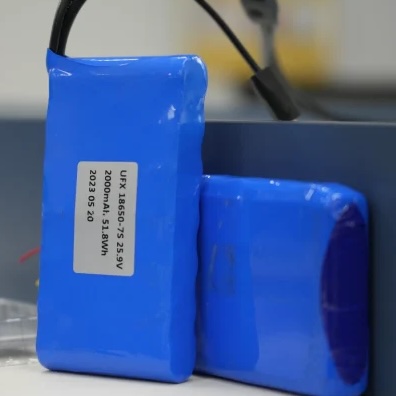
High discharge currents reduce effective usable capacity in lead-acid chemistries due to Peukert’s Law, whereas lithium-ion battery packs maintain linear discharge capacity. When a medical instrument draws high pulse currents—such as stepper motor activation in infusion pumps—lead-acid battery voltage sags rapidly, triggering premature low-voltage cutoff. Conversely, 12V lithium battery packs (such as 4S LiFePO4 or 3S NMC 18650/21700 configurations) maintain a flat voltage discharge curve, delivering $90\%\text{–}99\%$ usable capacity even under elevated C-rate discharge loads.
Service Lifespan: How Long Should a 12V Battery Last Across Battery Chemistries?
A 12V lithium-ion (LiFePO4) battery pack lasts 10 to 18 years in medical device service, delivering 2,000 to 8,500 charge cycles, whereas a 12V AGM lead-acid battery lasts 2 to 6 years (200 to 1,500 cycles).
LiFePO4 vs. AGM Cycle Life and Depth of Discharge (DoD) Ratings
LiFePO4 lithium battery packs tolerate deep discharges up to $80\%\text{–}90\%$ Depth of Discharge (DoD) without structural cathode degradation, while AGM lead-acid batteries suffer severe cycle life loss when discharged beyond $50\%$ DoD. Cycle life defines the total number of complete charge and discharge cycles a battery completes before its usable capacity degrades to $80\%$ of its original rated capacity.
| Battery Performance Attribute | Sealed Lead-Acid (AGM) | Gel Lead-Acid | Custom Lithium (LiFePO4) |
| Typical Cycle Life Range |
$200 – 1,500\text{ cycles}$
|
$500 – 1,200\text{ cycles}$
|
$2,000 – 8,500\text{ cycles}$
|
| Recommended Depth of Discharge (DoD) |
$50\%\text{ DoD}$
|
$50\%\text{ DoD}$
|
$80\% – 90\%\text{ DoD}$
|
| Usable Energy Efficiency |
$\sim 80\%$
|
$\sim 80\%$
|
$90\% – 99\%$
|
| Expected Calendar Service Life |
$3 – 6\text{ years}$
|
$3 – 6\text{ years}$
|
$10 – 18\text{ years}$
|
| Initial Procurement Cost per Wh |
$\$0.15 / \text{Wh}$
|
$\$0.20 / \text{Wh}$ |
$\$0.54 / \text{Wh}$
|
| Lifetime Cost per Usable kWh |
$\$0.55 / \text{kWh}$
|
$\$0.50 / \text{kWh}$ |
$\$0.17 / \text{kWh}$
|
Lifetime Total Cost of Ownership (TCO) Comparison for Medical OEMs
Although 12V lithium battery packs require higher initial capital investment, their extended cycle life lowers lifetime energy costs to $0.17 per usable kWh compared to $0.55 per usable kWh for lead-acid batteries. For medical equipment manufacturers, choosing LiFePO4 battery packs eliminates frequent battery replacements during the 10-year design life of capital medical equipment, drastically reducing warranty claims and field maintenance overhead.
Environmental and Electrical Factors Influencing How Long a 12 Volt Battery Will Last
Ambient operating temperatures above $77^\circ\text{F}$ ($25^\circ\text{C}$), unmanaged deep discharges, and unmonitored parasitic loads accelerate internal battery degradation.
Thermal Degradation and Operating Temperature Limits
Operating ambient temperatures exceeding $77^\circ\text{F}$ ($25^\circ\text{C}$) double internal chemical degradation rates for every $15^\circ\text{F}$ temperature rise in lead-acid batteries, whereas integrated Smart Battery Management Systems (BMS) protect lithium packs from thermal degradation.
-
High Temperature Exposure: Continuous operation at temperatures above $100^\circ\text{F}$ ($38^\circ\text{C}$) causes electrolyte drying in AGM cells and accelerates solid electrolyte interphase (SEI) layer growth in lithium cells.
-
Sub-Zero Cold Weather: Cold environments temporarily increase internal cell resistance ($R_{\text{DC}}$), reducing instant power delivery and causing severe voltage sag under load.
Depth of Discharge Management and Sulfation Risks
Discharging lead-acid batteries below $20\%$ state-of-charge causes lead sulfate crystallization on grid plates, permanently reducing capacity, whereas lithium BMS circuits prevent over-discharge damage.
-
Sulfation Damage: Leaving lead-acid batteries in a discharged state leads to irreversible grid sulfation.
-
DoD Optimization: Restricting lead-acid daily discharge to $50\%$ DoD doubles service life compared to $80\%$ DoD cycling. Lithium battery packs tolerate daily $80\%$ DoD cycles with negligible capacity decay.
OEM Design Strategies to Maximize How Long a 12V Battery Pack Lasts
Medical device engineers extend 12V battery system service life by integrating smart BMS telemetry, active cell balancing, and optimized thermal enclosure isolation.
Smart BMS Integration and SMBus Fuel Gauge Accuracy
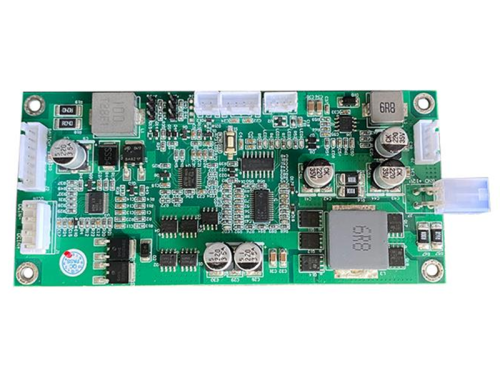
Integrating a Texas Instruments BQ40z50 or similar Impedance Track™ gas gauge IC over SMBus v1.1 or I2C protocols prevents unexpected medical device shutdowns by tracking real-time State-of-Charge (SOC) within $\pm 1\%$ accuracy. Smart BMS microcontrollers protect 12V battery packs against:
-
Over-voltage ($V_{\text{ov}}$) during charging cycles.
-
Under-voltage lockout (UVLO) during deep discharge events.
-
Over-current and short-circuit faults during motor inrush spikes.
-
Thermal runaway via multi-point NTC thermistor monitoring.
Frequently Asked Questions
Q1: How long does a 12V 35Ah battery last under a continuous 5A load?
A 12V 35Ah battery lasts approximately 6.3 to 7.0 hours under a continuous 5A load.
-
Lithium (LiFePO4): Delivers ~6.7 to 7.0 hours ($35\text{Ah} \div 5\text{A} \times 95\%\text{ efficiency}$).
-
Lead-Acid (AGM): Delivers ~4.5 to 5.5 hours due to Peukert capacity losses at higher discharge rates.
Q2: How long should a 12V battery last in a medical backup power system?
A 12V medical backup battery should last 10 to 18 years if using LiFePO4 chemistry, or 3 to 6 years if using AGM lead-acid chemistry.
-
LiFePO4: Delivers $2,000 – 8,500\text{ charge cycles}$.
-
AGM Lead-Acid: Delivers $500 – 1,000\text{ charge cycles}$ at $50\%\text{ DoD}$.
Q3: Does discharging a 12V battery below 50% damage its lifespan?
Discharging below 50% DoD degrades lead-acid batteries rapidly, but lithium batteries tolerate up to 80%–90% DoD safely.
-
Lead-Acid: Deep discharge causes plate sulfation and shortens service life.
-
Lithium: Smart BMS microcontrollers prevent over-discharge damage.
Q4: Why does a 12V lithium battery outlast a 12V AGM lead-acid battery?
Lithium batteries outlast AGM batteries due to superior chemical stability and zero sulfation risk.
-
Cycle Life: LiFePO4 yields up to $8,500\text{ cycles}$ vs. $1,000\text{ cycles}$ for AGM.
-
Efficiency: Lithium operates at $90\%\text{–}99\%$ charge efficiency vs. $80\%$ for AGM.
Q5: How does ambient temperature affect how long a 12 volt battery will last?
Temperatures above $77^\circ\text{F}$ ($25^\circ\text{C}$) accelerate internal self-discharge and grid corrosion.
-
Lead-Acid: Service life halves for every $15^\circ\text{F}$ temperature rise above $77^\circ\text{F}$.
-
Lithium: Integrated BMS thermistors restrict charging outside safe temperature windows.
Optimize Your Medical Power Architecture with Tefoo Energy
Designing portable medical instruments that deliver long battery runtime and multi-year service life requires custom battery pack engineering. Tefoo Energy manufactures ISO 13485-certified 12V LiFePO4 and custom 18650/21700 lithium battery solutions tailored for global OEM medical applications.
Request Custom 12V Battery CAD Models & OEM Engineering Support
Accelerate your medical device development cycle. Contact Tefoo Energy’s application engineering team to receive custom 12V battery design proposals, 3D STEP CAD models, SMBus telemetry documentation, and IEC 62133-2 test reports.