What Is a 3.7 V Battery?
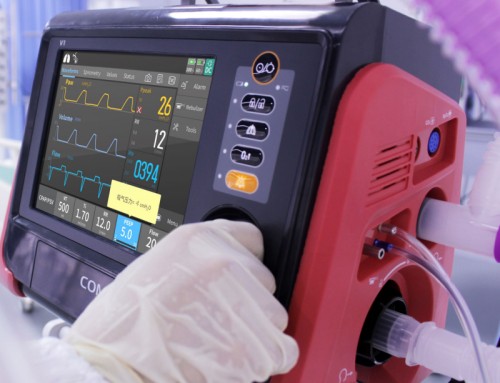
Global medical device original equipment manufacturers (OEMs) and design engineers developing portable diagnostic instruments, mobile infusion pumps, and wireless telemetry transmitters require precise electrical power management to ensure clinical device reliability. Selecting the correct secondary power source requires evaluating 3.7v lithium batteries, establishing exact 18650 battery voltage operating limits, and enforcing proper lithium ion storage voltage protocols during warehousing. A 3.7V lithium-ion battery represents a single-cell secondary lithium platform operating at a 3.7V nominal voltage, charging up to a 4.2V peak, and discharging down to a 2.8V to 3.0V cut-off threshold. Failing to monitor battery voltage ranges or storing inventory at full charge causes internal electrochemical degradation, resulting in unexpected low-voltage lockouts, reduced clinical operational runtimes, and costly warranty returns.
What Is a 3.7 V Battery and How Do 3.7v Lithium Batteries Function in Medical Equipment?
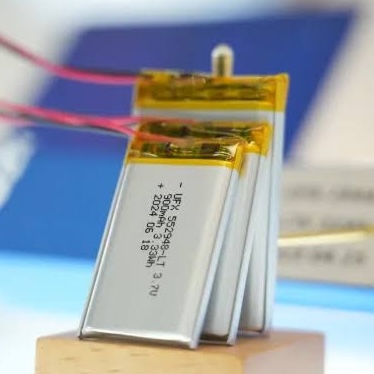
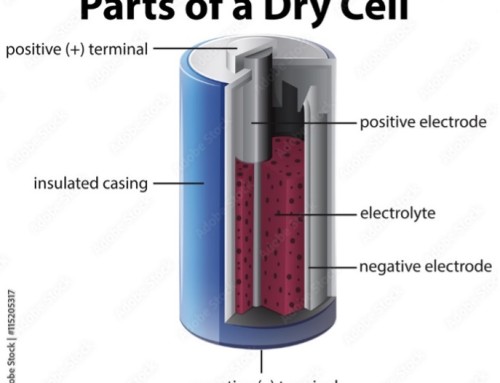
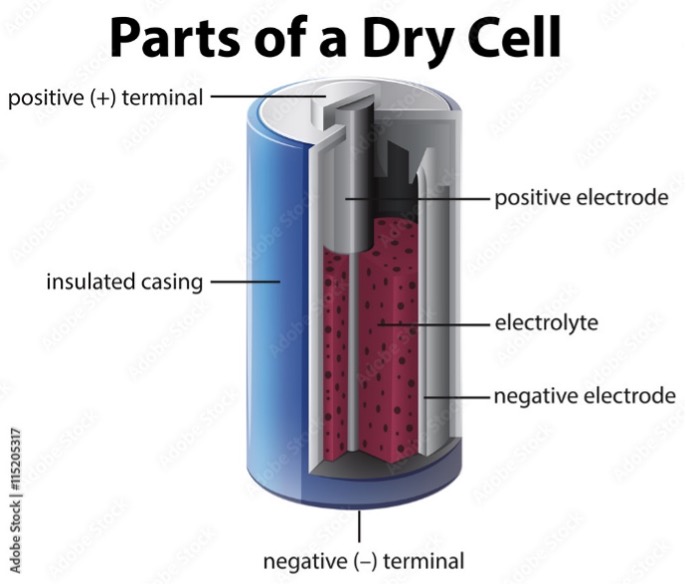
A 3.7V battery is a rechargeable lithium-ion cell operating at a 3.7V nominal voltage platform, delivering high energy density for compact medical and industrial electrical devices.
Electrochemical Nominal Voltage Platforms Across 3.7V Lithium Chemistries
The 3.7V nominal voltage rating represents the time-weighted average voltage delivered by a lithium-ion cell during discharge, determined primarily by the transition metal cathode chemistry. While standard Nickel Manganese Cobalt Oxide (NMC), Lithium Cobalt Oxide (LCO), and Nickel Cobalt Aluminum Oxide (NCA) chemistries provide nominal platform voltages around 3.6V to 3.7V, alternative chemistries exhibit different nominal baselines. For example, Lithium Iron Phosphate ($\text{LiFePO}_4$ / LFP) operates at 3.2V nominal, whereas Lithium Titanate Oxide (LTO) operates at 2.4V nominal.
Volumetric Energy Density and Form Factors in Portable Diagnostic Instrumentation
3.7V lithium-ion batteries provide high volumetric energy density across cylindrical (such as 18650) and pouch cell form factors, allowing engineers to minimize medical chassis dimensions. Single 3.7V cells deliver nominal capacities ranging from 1,500 mAh to 3,500 mAh for individual 18650 cylindrical cells, while custom multi-cell parallel configurations reach capacities up to 10,050 mAh or higher. Selecting high-energy-density NMC or NCA chemistries ensures portable patient monitors remain lightweight while sustaining continuous clinical operation.
What Are the Electrical Parameters Defining 18650 Battery Voltage and Performance Limits?
Standard 18650 battery voltage spans from a maximum fully charged limit of 4.2V DC down to a safe discharge cut-off threshold of 3.0V DC, maintaining a flat 3.7V nominal operating plateau under standard load conditions.
Operational 18650 Battery Voltage Thresholds and Two-Stage CC/CV Charging Algorithms
Charging 3.7V 18650 battery cells safely requires a two-stage Constant Current / Constant Voltage (CC/CV) algorithm that limits maximum voltage strictly to 4.2V DC. During the Constant Current (CC) phase, the charger supplies a regulated current (typically 0.5C to 1C) until individual cell voltage climbs to 4.2V. In the Constant Voltage (CV) phase, the charger maintains 4.2V while current gradually tapers off as the cell reaches full saturation. Exceeding the 4.2V charging ceiling causes severe capacity loss and thermal risks, whereas charging within a $15^\circ\text{C}$ to $35^\circ\text{C}$ ambient temperature window ensures optimal cell longevity.
Continuous Discharge Rating (CDR) and Thermal Management in High-Drain Medical Power Supplies
Exceeding an 18650 cell’s continuous discharge rating (CDR) elevates internal cell temperatures up to $50^\circ\text{C}$ and accelerates capacity loss. While standard high-capacity 18650 cells sustain continuous discharge loads of approximately 4.9A, high-drain power cells sustain continuous currents up to 20A to 30A. R&D engineers designing medical power supplies must match cell CDR ratings to peak load spikes—such as motor start-up pulses in surgical instruments. To evaluate mechanical enclosure and energy density differences between cylindrical cell sizes, review our technical guide on [18650 vs 21700 for portable medical devices].
What Is the Optimal Lithium Ion Storage Voltage for Medical OEM Warehouse Maintenance?
The optimal lithium ion storage voltage ranges from 3.70V to 3.85V per cell, corresponding to a 50% State of Charge (SOC) to prevent irreversible chemical degradation and loss of usable capacity.
Electrochemical Degradation Mechanisms Outside Safe Lithium Ion Storage Voltage Limits
Storing 3.7v lithium batteries at a full 100% charge (4.2V) accelerates electrolyte oxidation and solid electrolyte interphase (SEI) growth, whereas deep discharging below 2.5V causes irreversible current collector copper dissolution. High-quality 18650 lithium-ion cells exhibit a low self-discharge rate of 1% to 3% per month under normal storage conditions. However, storing batteries in ambient environments exceeding $30^\circ\text{C}$ significantly accelerates capacity fade. Maintaining cells at approximately 50% charge in a cool, dry environment ($15^\circ\text{C}$ to $25^\circ\text{C}$) preserves internal electrode structure over extended shelf storage.
Medical Device Battery Management System (BMS) Sleep Modes and Warehousing Schedules
Medical equipment OEMs must configure BMS firmware with low-quiescent-current sleep modes and enforce a 3-to-6-month warehousing maintenance re-charge protocol for stored inventory. Active BMS circuits consume continuous micro-currents from connected battery packs. If medical instruments remain in warehousing inventory without periodic inspection, parasitic BMS drain reduces cell voltage below the safe 3.0V discharge threshold. Re-charging stored packs every 3 to 6 months back to 3.80V nominal storage voltage prevents deep-discharge lockouts. Furthermore, verifying active compliance with the IECEE CB Scheme ensures that secondary lithium packs satisfy international safety standards under IEC 62133.
How Do Medical Engineers Ensure Safety Certification and Compliance for 3.7V Battery Assemblies?
Integrating 3.7V 18650 cells into medical devices mandates incorporating multi-layer protection circuit boards (PCM/BMS) and securing UN 38.3, UL 2054, and IEC 62133 safety certifications.
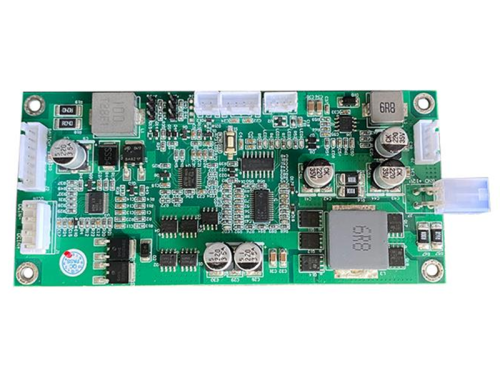
Protection Circuit Module (PCM) Features: Overvoltage, Undervoltage, and Thermal Cut-Offs
A Protection Circuit Module (PCM) guards 3.7v lithium batteries against overcharge, over-discharge, short circuit, and thermal runaway events. Integrating certified PCM hardware ensures that individual cell voltages remain strictly within safe operating parameters during charging and discharging cycles.
Global Regulatory Standards for Medical Battery Pack Compliance
Commercializing medical devices powered by 3.7V lithium-ion battery packs requires passing UL 1642, UL 2054, IEC 62133, and UN 38.3 compliance testing. UL 1642 evaluates single-cell mechanical and electrical safety, while UL 2054 certifies complete portable battery pack enclosure assemblies. IEC 62133 serves as the mandatory international safety standard for global medical equipment export under IEC 60601-1, and UN 38.3 certifies safe air and ground transportation.
Frequently Asked Questions
Q1: What is a 3.7 v battery and how does its voltage change during operation?
A 3.7V battery is a single-cell rechargeable lithium-ion battery with a 3.7V nominal operating platform. Fully charged, it reaches a peak voltage of 4.2V DC, and discharges down to a cut-off threshold between 2.8V and 3.0V DC.
Q2: What is the normal 18650 battery voltage range for safe operation?
The safe operating 18650 battery voltage range spans from 3.0V DC minimum up to 4.2V DC maximum. Operating or charging cells outside these thresholds risks permanent capacity loss or thermal runaway.
Q3: What is the ideal lithium ion storage voltage for inventory maintenance?
The ideal lithium ion storage voltage is 3.70V to 3.85V per cell, representing approximately 50% State of Charge (SOC). Storing cells at 50% SOC in a cool, dry place preserves electrode stability and minimizes self-discharge.
Q4: Why must a 3.7v lithium battery use a CC/CV charging process?
A two-stage Constant Current / Constant Voltage (CC/CV) algorithm prevents cell overcharging by supplying steady current until cell voltage hits 4.2V, then tapering current down while maintaining 4.2V.
Q5: What safety certifications are required for 3.7V medical battery packs?
Medical lithium-ion battery packs require IEC 62133 international safety certification, UN 38.3 transport testing, UL 2054 pack certification, and CE compliance.
Optimize Your Medical Power Architecture with Tefoo Energy
Designing portable medical equipment that utilizes 3.7v lithium batteries requires balancing 18650 battery voltage operating limits, lithium ion storage voltage management, and regulatory compliance. Tefoo Energy manufactures ISO 13485-certified custom 18650, 21700, and lithium polymer battery solutions engineered specifically for global OEM medical and instrumentation applications.