>>>Contents
1.
What Is an Intelligence Battery and How Do AI-Driven BMS Architectures Optimize Industrial Power?
What Is an Intelligence Battery and How Do AI-Driven BMS Architectures Optimize Industrial Power?
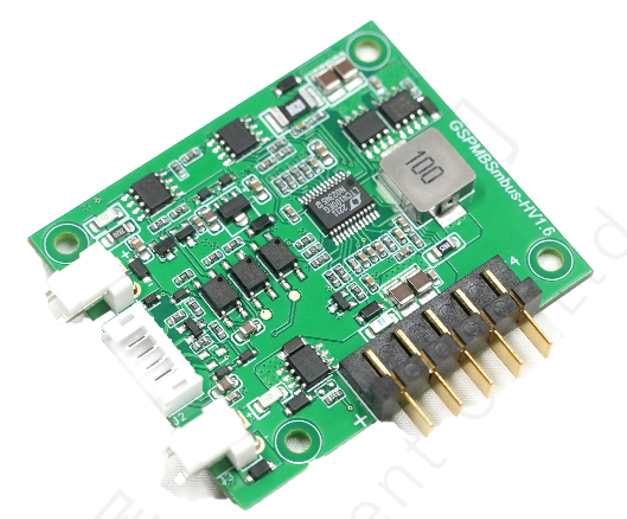
Industrial automated guided vehicles (AGVs) and life-critical medical hardware face a severe engineering bottleneck: unpredictable lithium-ion cell degradation and thermal runaway under continuous heavy-duty cycles. An intelligence battery resolves these failure points by integrating an AI-driven Battery Management System (BMS) that actively optimizes energy utilization, safety protocols, and electrochemical sustainability.
Key Takeaways
How Does an Intelligence Battery Monitor Cell Health and Prevent System Failures?
Advanced hardware deployment requires transitioning from passive protection circuits to active diagnostic algorithms that preemptively calculate cell fatigue before physical symptoms manifest in the field.
What Metrics Do AI-Driven Diagnostics Track in Real-Time?
An intelligence battery continuously tracks State of Health (SOH), State of Charge (SOC), and Remaining Useful Life (RUL) with unprecedented accuracy by leveraging advanced algorithmic processing. Traditional BMS hardware relies on static voltage look-up tables, whereas an AI-powered system provides dynamic, real-time insights into critical electrochemical parameters.
| Diagnostic Metric | AI-Enhanced Engineering Function | Hardware Application Impact |
| State of Health (SOH) |
Indicates the overall condition and capacity retention of the battery compared to its ideal factory state.
|
Triggers predictive maintenance alerts for medical diagnostic monitors. |
| State of Charge (SOC) |
Reflects the precise remaining available capacity of the battery at the current moment.
|
Prevents deep-discharge damage in 24/7 autonomous robotics. |
| Remaining Useful Life (RUL) |
Estimates the exact remaining operational lifespan of the battery before full replacement is required.
|
Optimizes industrial fleet procurement and replacement scheduling. |
Monitoring these specific metrics enables procurement managers and maintenance engineers to predict potential hardware failures, such as thermal runaway or internal cell imbalance, before they escalate into system outages.
How Does Predictive Analytics Prevent Unplanned Downtime?
Predictive analytics algorithms inside an intelligence battery forecast lithium-ion cell lifespan with 95% accuracy, utilizing neural networks to reduce complex phenomena detection errors to less than 3%. By continuously analyzing both historical cycle data and real-time current draws, the BMS generates adaptive predictions regarding the exact moment a battery pack will require servicing.
In sectors like medical device manufacturing, where uninterrupted power supplies are mandated by IEC 60601-1 standards, this predictive maintenance capability identifies early signs of battery degradation, enabling timely interventions that prevent costly, unexpected downtimes.
What Advanced Algorithms Drive Adaptive Battery Management Systems?
Maximizing the cycle life of a lithium-ion pack requires dynamically adjusting charge and discharge parameters in response to fluctuating environmental temperatures and variable load conditions.
How Do Genetic Algorithms and Adaptive Charging Improve Efficiency?
Adaptive intelligence battery management utilizes Genetic Algorithms (GA) and Ant Colony Optimization (ACO) to dynamically adjust energy usage, successfully reducing long-term battery degradation by 30%. Unlike conventional constant-current/constant-voltage (CC/CV) charging methods that stress battery cells and accelerate degradation, adaptive charging algorithms dynamically adjust charge rates based on real-time internal resistance and temperature readings.
-
Genetic Algorithms (GA): Enhances internal energy management routing, significantly reducing operational costs and thermal emissions during high-drain cycles.
-
Ant Colony Optimization (ACO): Optimizes the charging station scheduling and load balancing, extending the lifespan of large-scale industrial battery systems.
By avoiding constant voltage profiles and adapting to real-time cell conditions, these intelligent charging strategies minimize energy waste, balance cell voltages, and maximize overall energy efficiency.

How Does AI-Powered Thermal Management Reduce Industrial Hazards?
AI-driven anomaly detection within an intelligence battery reduces fire risks by up to 70% by predicting thermal runaway events before critical temperature thresholds are breached. The onboard analytics engine continuously scans for unexpected voltage drops, ambient temperature spikes, or charging current inconsistencies.
If an anomaly is detected, the BMS takes immediate preventive action, such as dynamically reducing charge rates or communicating with the host device via SMBus protocols to activate external cooling systems.
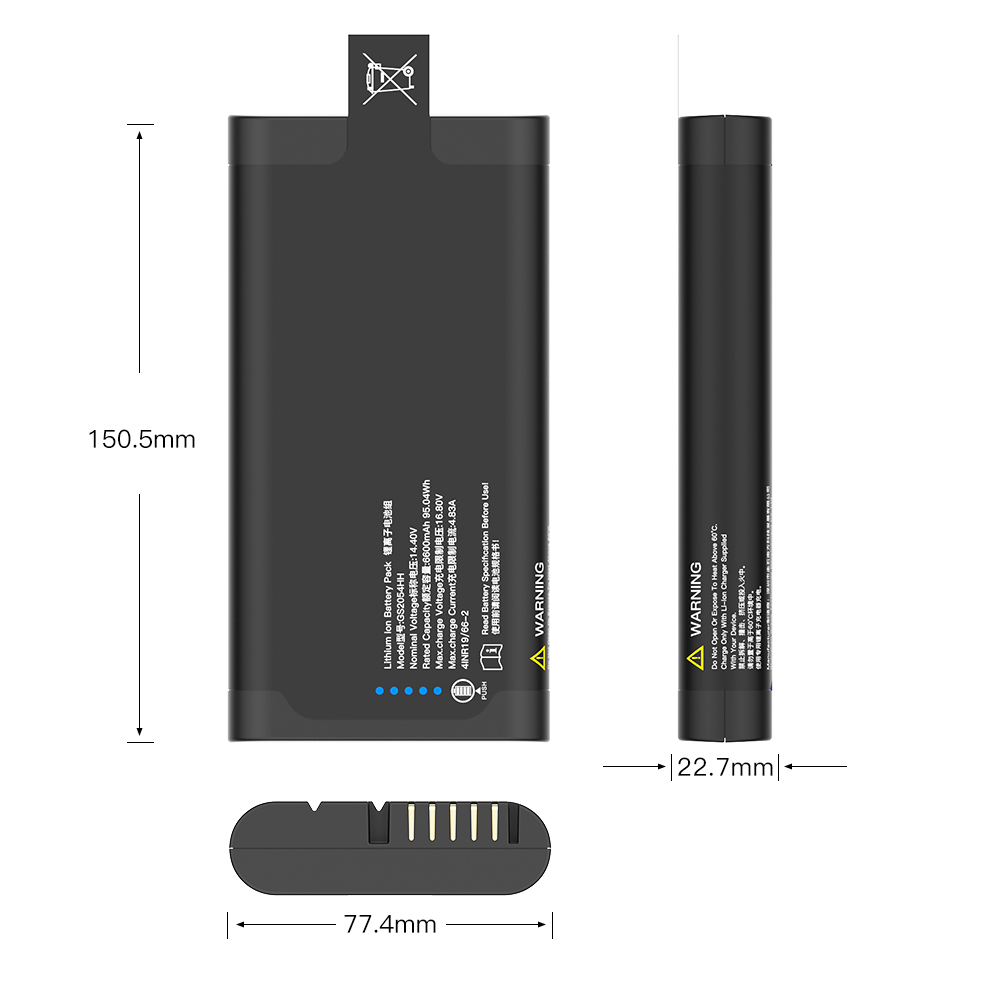
Custom Engineering Solutions: If your industrial OEM requires customized intelligence battery solutions—featuring SMBus communication protocols, IP67-rated ultrasonically welded PC/ABS enclosures, NTC thermistors, and precision-welded nickel strips (0.15 mm / 0.006 in thickness)—contact our engineering team for specialized pack architectures designed to meet UL 2054 and IEC 62133-2 standards.
How Do Intelligence Battery Solutions Impact B2B Total Cost of Ownership (TCO)?
Procurement engineers must weigh the higher initial capital expenditure of AI-equipped power modules against the long-term operational savings generated by extended cycle life and reduced maintenance labor.
What Is the Financial Return on AI-Driven Battery Procurement?
Deploying an intelligence battery fleet enhances overall system efficiency by 10-15% and leverages machine learning models, such as Linear Quadratic Models (LQMs), to discover material alternatives that boost pack energy density by 15-25%.
By accurately categorizing battery life expectancy during the initial charge/discharge cycle analysis, facilities reduce the frequency of physical battery replacements. Furthermore, AI integration drastically accelerates the research and development phase for next-generation chemistries, reducing testing times by 95% and improving accuracy by 35x using 50x less data.
B2B TCO / Selection Matrix: Standard BMS vs. Intelligence Battery
| Evaluation Parameter | Standard Passive BMS | AI-Driven Intelligence Battery | Engineering & TCO Impact |
| Lifespan Prediction | Reactive (Voltage drop only) |
Predictive (95% accuracy via AI)
|
Eliminates unexpected field failures. |
| Fire Risk Mitigation | Hardware thermal fuses only |
AI anomaly detection (70% risk reduction)
|
Secures UN 38.3 transport & facility safety. |
| Charge Degradation | High (Static CC/CV profiles) |
Low (Adaptive charging reduces degradation by 30%)
|
Extends replacement intervals to 5+ years. |
| Energy Optimization | Fixed physical cell balancing |
Dynamic allocation via GA and ACO algorithms
|
Maximizes runtime for high-drain robotics. |
Summary & Quick-Reference Guide
An intelligence battery fundamentally shifts industrial power management from a passive consumable to an active, data-driven system component. By integrating neural networks, predictive analytics, and adaptive charging algorithms, these systems enhance energy efficiency, reduce catastrophic thermal risks, and drastically lower the Total Cost of Ownership (TCO) for automated fleets and medical hardware.
Intelligence Battery Parameter Quick-Reference Table
| Parameter / Feature | Engineering Specification |
| Lifespan Prediction Accuracy |
95% (Using neural networks and initial cycle analysis)
|
| System Efficiency Increase |
10% to 15% improvement over standard BMS
|
| Thermal Fire Risk Reduction |
Up to 70% decrease via real-time anomaly detection
|
| Degradation Reduction |
30% decrease via AI-powered adaptive charging
|
| Core Algorithms Utilized |
Genetic Algorithms (GA), Ant Colony Optimization (ACO), Linear Quadratic Models (LQMs)
|
Frequently Asked Questions
What is an intelligence battery and how does it differ from a standard lithium-ion pack? An intelligence battery integrates an AI-driven Battery Management System (BMS) that uses advanced algorithms to process real-time data, whereas standard packs rely on passive hardware protection circuits.
How does an intelligence battery predict when it will fail? The AI algorithms embedded in the BMS analyze real-time metrics like State of Health (SOH) and State of Charge (SOC) alongside historical data to forecast lithium-ion battery lifespan with 95% accuracy.
Can an intelligence battery prevent thermal runaway and fire risks? Yes, the BMS utilizes AI-driven anomaly detection to identify unexpected voltage drops and temperature spikes in real-time, effectively reducing battery fire risks by up to 70%.
How does adaptive charging improve the lifespan of an intelligence battery? Adaptive charging algorithms dynamically adjust the charge rate based on real-time cell conditions to avoid constant voltage profiles, reducing overall battery degradation by 30%.
Is an intelligence battery compatible with sustainable recycling processes? Yes, AI-driven systems analyze end-of-life battery data to optimize material recovery rates during recycling, ensuring valuable elements like lithium and cobalt are extracted with minimal environmental waste.